Best Sushi in Palm Beach? Imoto Earns the Title
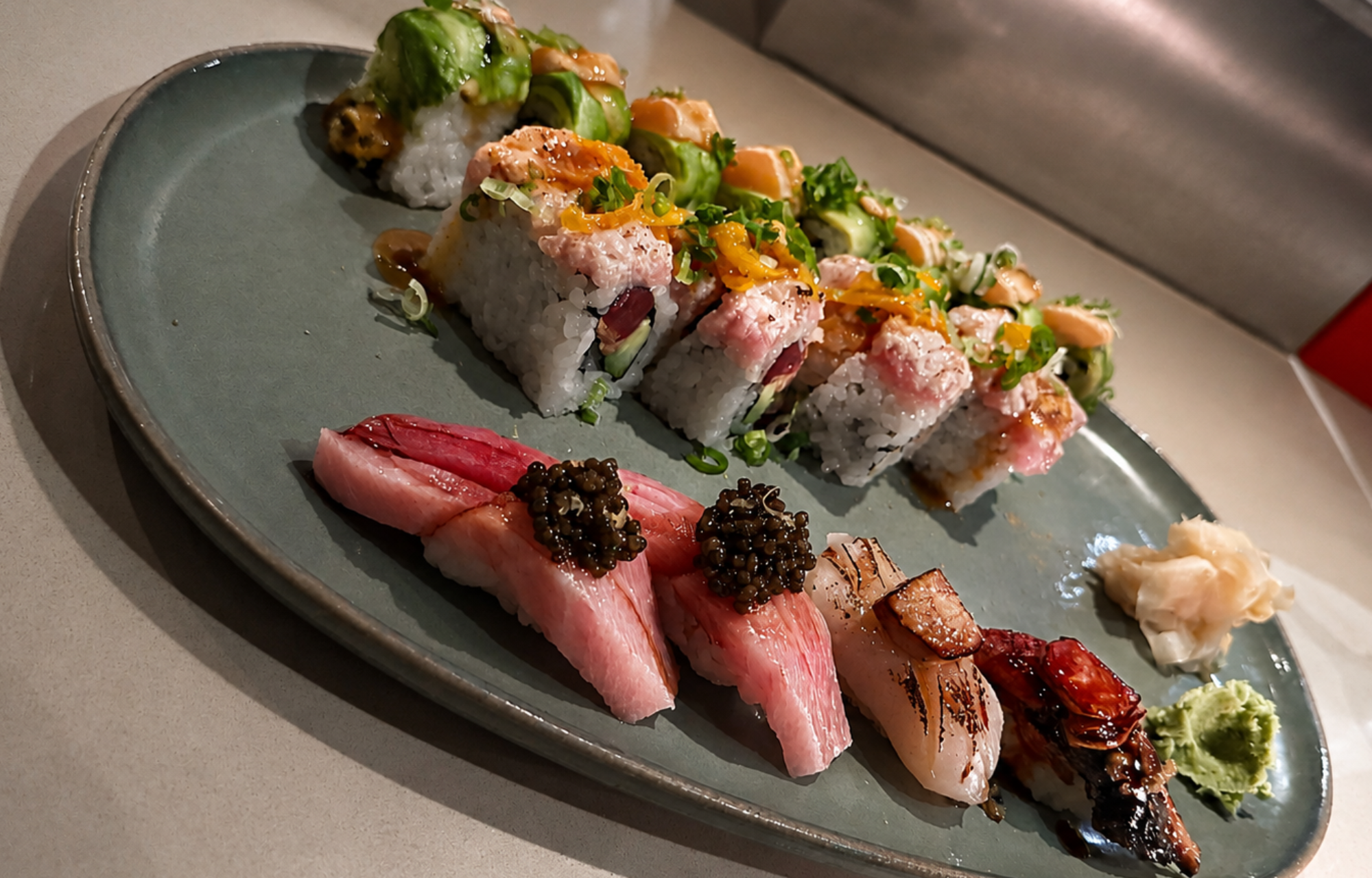
In a town built around seeing and being seen, Imoto’s best view is into the kitchen.
That may sound almost rebellious for Palm Beach, where the dining room can be as closely watched as the menu. Yet the most compelling seats inside this intimate Japanese restaurant are not angled toward the room. They line the sushi bar, where every slice, brushstroke, and final flourish happens within arm’s reach.
From our candlelit seats at the counter, dinner unfolded less like a parade of plates and more like a tightly choreographed performance. Knives moved with quiet precision. Rice was shaped by hand. Fish was scored, dressed, and passed across the bar at exactly the right moment. Nothing felt rushed, yet nothing stood still.
It was a front-row ticket to Palm Beach’s most precise culinary performance. By the end of the evening, it became a convincing case that Imoto serves the best sushi in Palm Beach.
Buccan’s “Little Sister,” With an Identity of Her Own
The name Imoto means “little sister” in Japanese, an affectionate reference to the restaurant’s relationship with Buccan next door. Chef Clay Conley opened Buccan in 2011, establishing the energetic small-plates restaurant that would become one of the anchors of Palm Beach dining. When the adjacent space became available, the original idea was to expand Buccan’s back-of-house and private-dining capacity. Instead, Conley saw an opportunity to give the Asian influences already running through Buccan’s menu a room of their own.
Imoto debuted in March 2012 as a modern Japanese restaurant and sushi bar. The sibling relationship remains apparent: both restaurants favor bold flavor, shared plates, and a room with genuine energy. But Imoto is not Buccan dressed in Japanese vocabulary. It is smaller, moodier, and more concentrated, with a culinary rhythm entirely its own.
The space originally opened with roughly 40 seats, a compact sushi bar, and a restrained, Zen-influenced interior. More than a decade later, that scale still works in its favor. Imoto feels polished without becoming ceremonious and lively without losing intimacy. The low light casts a flattering glow across the room, but the bar remains bright enough to keep the craftsmanship in focus.
How Japan Shaped Chef Clay Conley’s Imoto
Conley arrived at Imoto with a reputation already extending well beyond Palm Beach. As executive chef and co-owner of Buccan Palm Beach, he has been named a James Beard Award semifinalist for Best Chef: South seven times. This sustained recognition is due to the influence and consistency of his cooking, rather than to a single-season accolade.
Long before Imoto opened, Conley and his wife, Averill, spent more than seven months living in Japan while he opened a restaurant for Todd English. The experience was not a brief research trip. It placed him inside the country’s restaurant culture long enough to absorb its discipline, respect for ingredients and devotion to detail.
Conley has recalled early-morning sushi at the Tsukiji fish market, deeply flavored tonkotsu ramen and the quality of food found even in everyday convenience stores. More importantly, he came away impressed by the integrity surrounding Japanese cuisine. That influence can still be felt at Imoto, though the restaurant has never claimed to reproduce a traditional Tokyo sushi counter. Its cooking is contemporary and distinctly Palm Beach: Japanese technique and ingredients expressed through Conley’s preference for brightness, contrast, and generous flavor.
It is also important to state the history accurately. Conley went to Japan to open a restaurant for Todd English; available published interviews do not establish that he worked there as a sushi chef. Imoto’s sushi program has instead been shaped at the counter by a remarkably small succession of specialists.
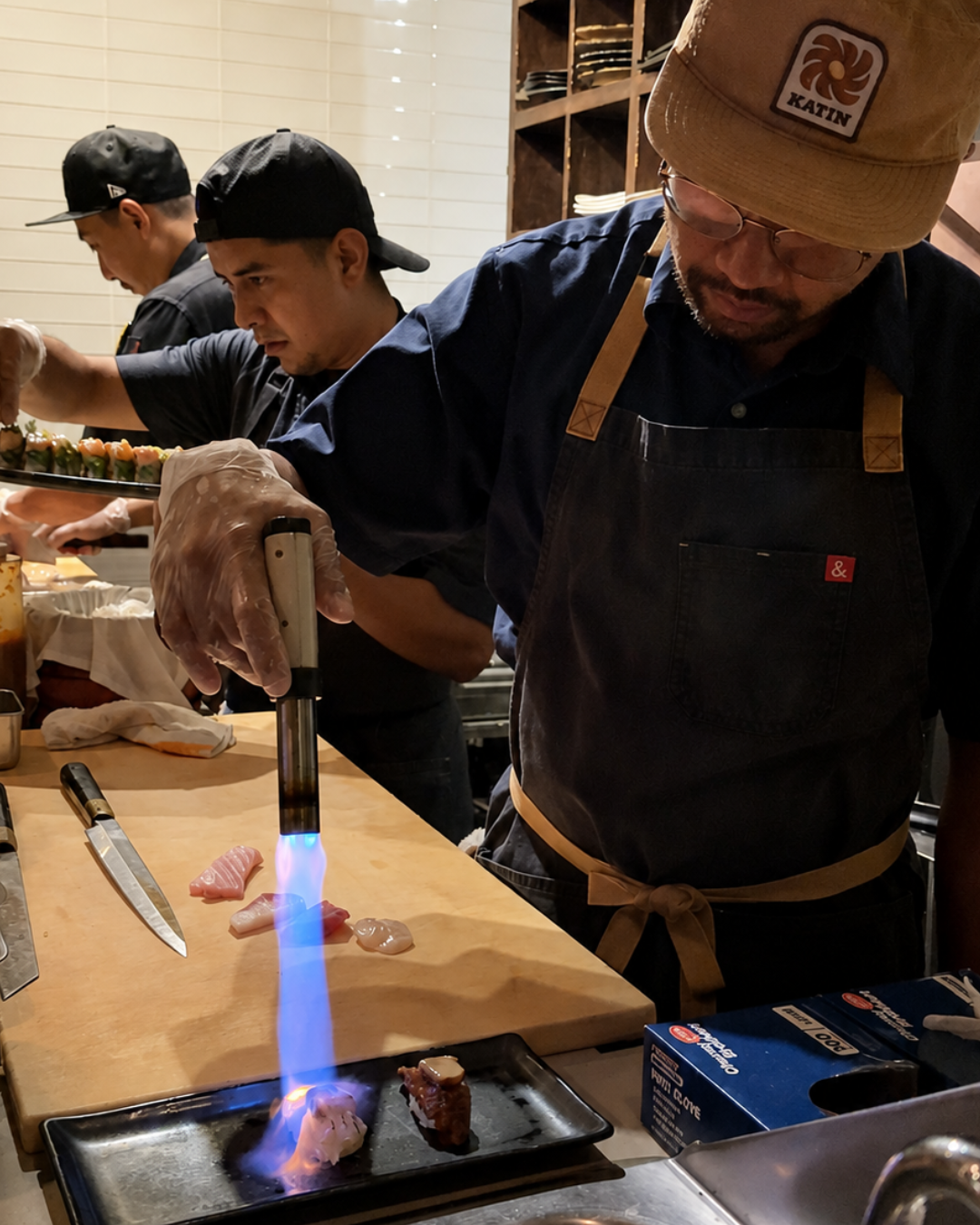
Chef Gede Adnyana and the Discipline Behind the Bar
According to the Imoto team, only four sushi chefs have led the bar during the restaurant’s history. Its current sushi chef, Gede Adnyana, may be its most accomplished yet.
Adnyana has the sort of presence that suits the room: focused, composed and generous without turning the counter into theater for theater’s sake. He makes exacting work look natural. Watching him prepare nigiri reveals how many small decisions separate competent sushi from exceptional sushi: the direction of the knife, the pressure used to shape the rice, the proportion of fish to rice, and the restraint to stop before garnish overwhelms the main ingredient.
The restaurant describes Adnyana as its longtime sushi chef, whose work balances Japanese tradition with the bolder creative language of the Buccan group. From the counter, that balance becomes tangible. His food respects the clarity of pristine fish while allowing room for caviar, citrus, miso and carefully calibrated heat.
Longevity extends beyond the sushi bar. Management shared that many members of the Imoto staff have worked at the restaurant for more than ten years. This is an unusually long tenure in hospitality, and it registers in the dining room. Service feels intuitive because the team knows not only the menu, but the cadence of the restaurant itself. Courses arrive with purpose. Recommendations feel personal rather than rehearsed. There is warmth without hovering and polish without stiffness.
Restaurants often speak about family culture. At Imoto, the length of the staff’s tenure lends credibility to the sentiment.
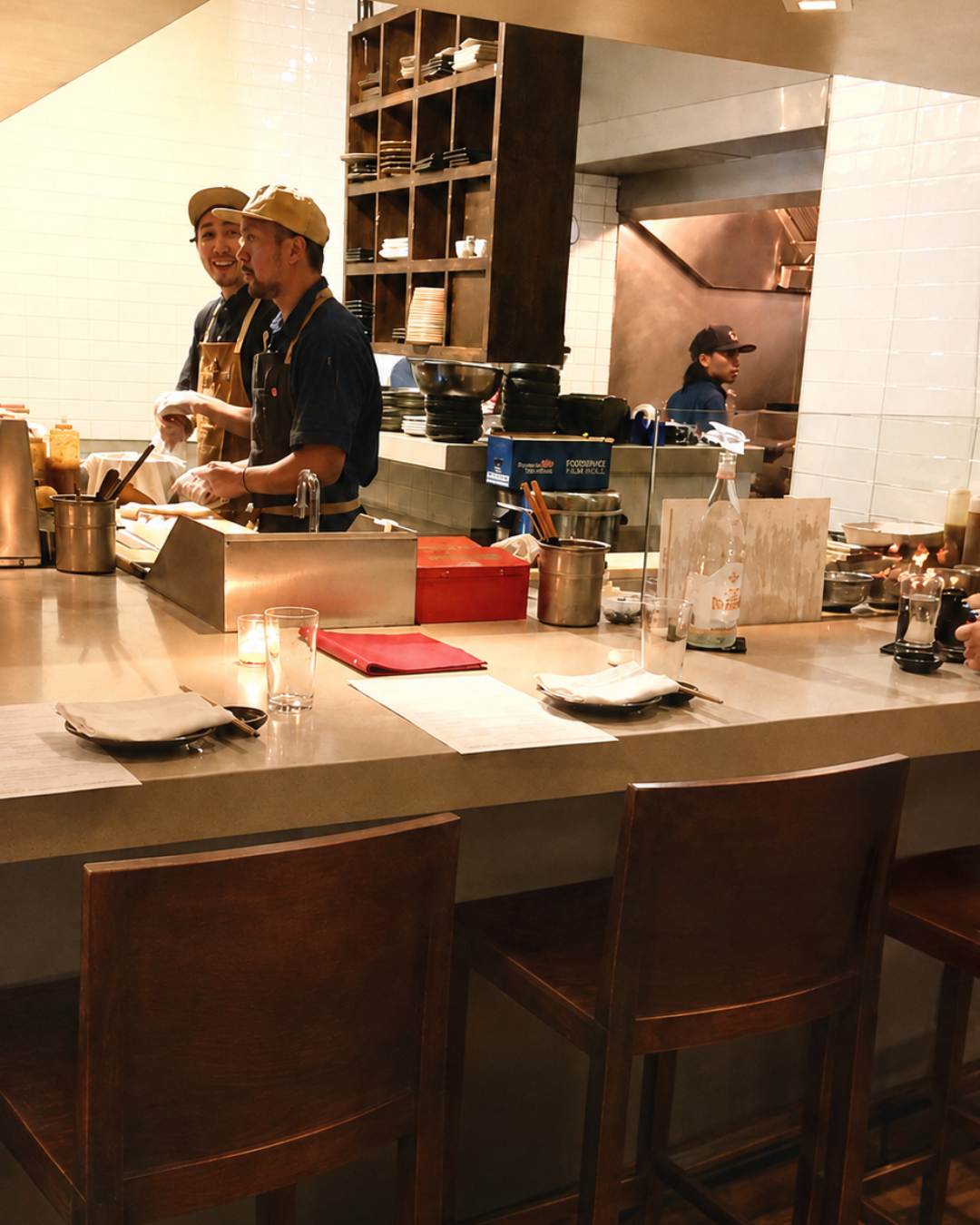
The Sushi Bar: The Best Seat in the House
If this is your first visit, reserve a seat at the sushi bar.
At a table, Imoto is an intimate Japanese restaurant with a set menu. At the counter, it becomes something more absorbing. You see the communication between the chefs, the inspection of each piece of fish, and the last-second decisions that never appear on a printed menu. The experience brings you closer to the intelligence behind the food.
It also changes the pacing of dinner. Rather than receiving a finished plate from an anonymous pass, you witness the transition from ingredient to composition.
A piece of toro is cut, slightly warmed by the chef’s hand, set over rice, brushed with nikiri soy, and topped with caviar. The distance between preparation and first bite is measured in seconds.
Palm Beach has no shortage of glamorous rooms, but few offer a better argument for looking inward: toward the counter, the knife and the hands doing the work.
First Bites: Edamame and Lobster Potstickers
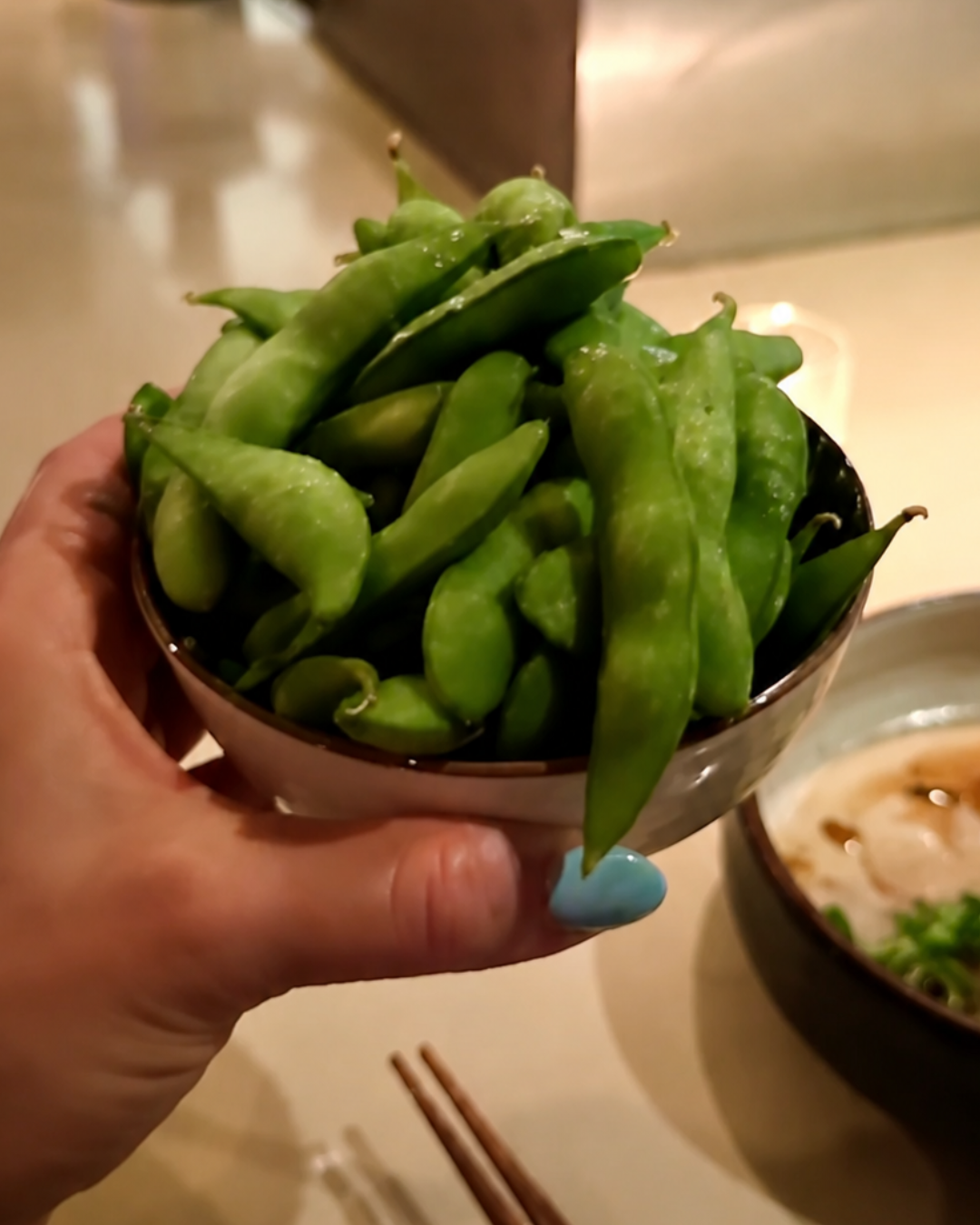
Dinner began with fresh edamame dressed in sweet soy and sea salt, with sesame and scallion adding aroma and texture. It is a familiar opening, but the sweet-savory glaze gives the pods enough character to make them feel intentional rather than automatic. The dish sets Imoto’s flavor vocabulary early: recognizable foundations sharpened by a small, confident twist.
The lobster potstickers followed, their delicate wrappers holding a sweet, generous filling. Soy, sesame, and scallion kept the richness in check, while the contrast between the tender interior and lightly seared exterior gave the dumplings definition. They disappeared quickly, which may be the most honest measure of a successful shared plate.
Japanese Snapper Crudo: Brightness, Texture and Restraint
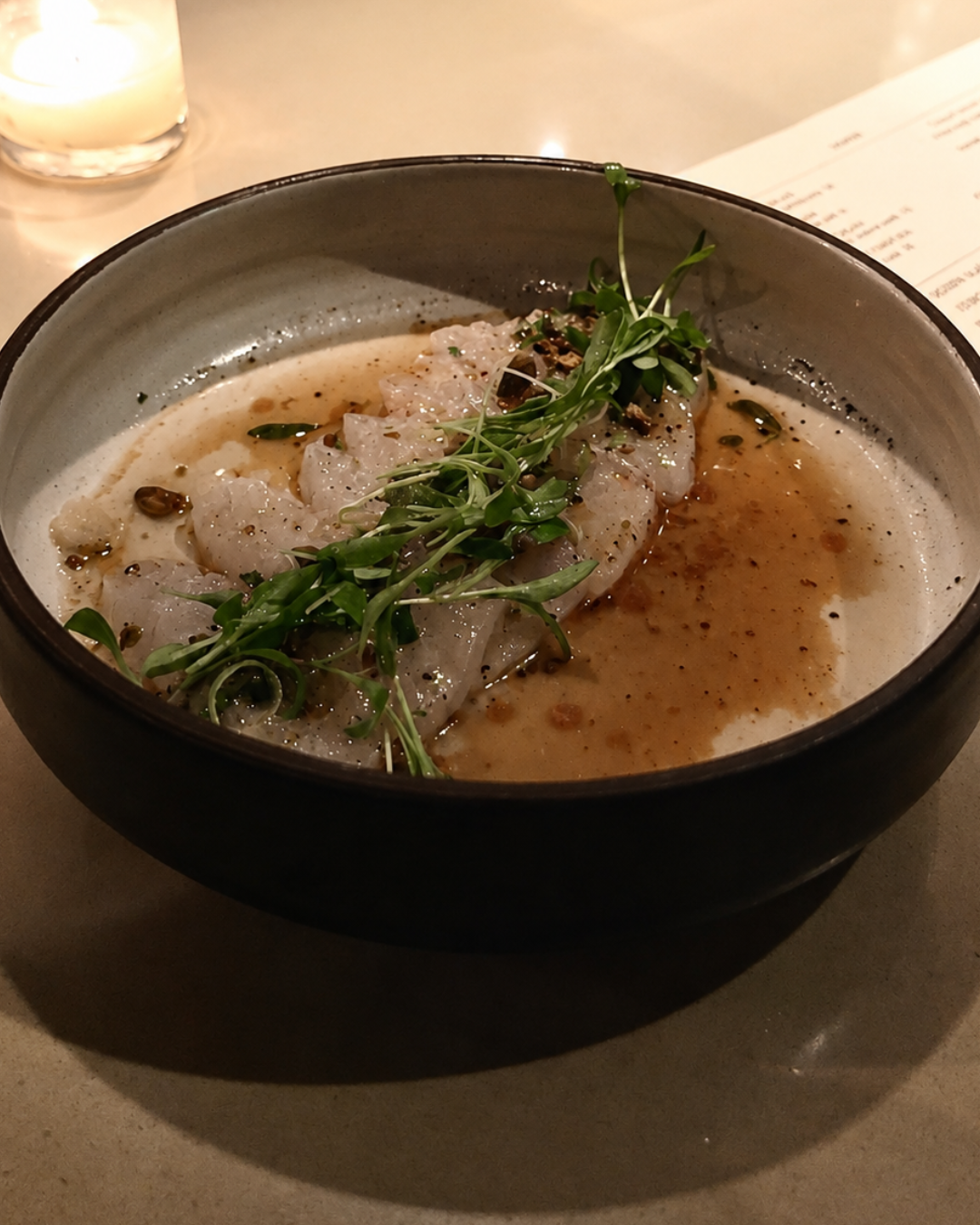
The Japanese snapper crudo brought the meal into sharper focus, and it’s my personal favorite. Yuzu dressing lifted the fish's clean sweetness, pistachio introduced an unexpected buttery crunch, and micro cilantro added a fresh, herbal finish.
Crudo can easily become a competition between fish and garnish. Here, the supporting ingredients framed the snapper rather than disguising it. The citrus was vivid yet controlled, and the pistachio added texture without compromising the delicacy of the fish. It was a thoughtful study in contrast: soft and crisp, subtle and bright.
The Tuna Foie Slider: Imoto’s Decadent Signature
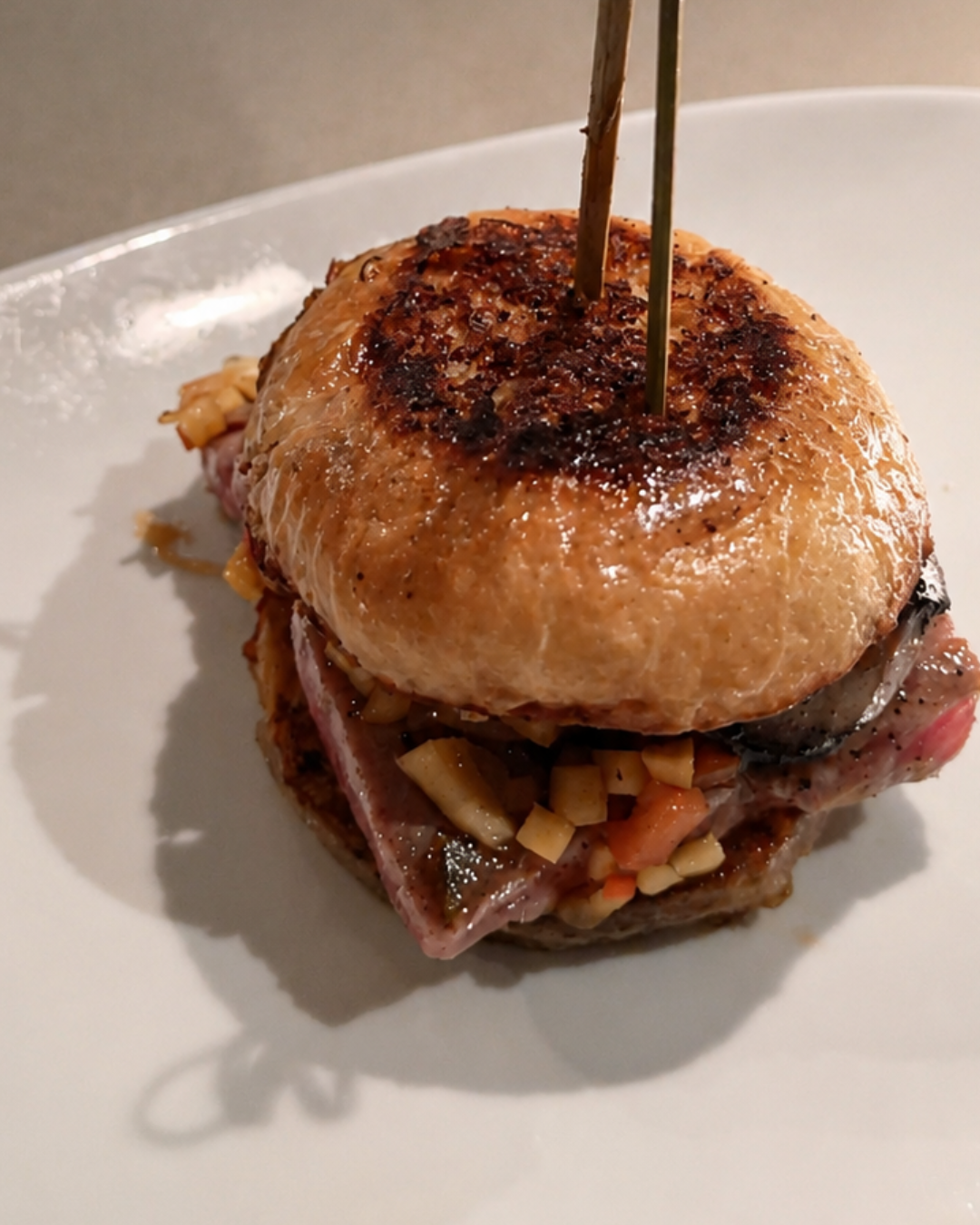
Then came the tuna foie slider, one of Imoto’s most unapologetically indulgent plates.
The name suggests a playful bite; the execution is far more substantial. Inside the slider sat a notably thick, juicy cut of foie gras. It’s not a token shaving or a thin layer added for effect, but a generous centerpiece. Its richness met the tuna's clean, meaty character, while mango salsa supplied the acidity and fruit needed to keep the combination from becoming heavy.
Tuna and foie gras can sound excessive on paper. What makes the slider work is not merely luxury piled upon luxury, but the control of contrast. Cool tuna meets warm richness; supple textures meet the bun's structure; mango cuts through both. It is extravagant, certainly, but also carefully reasoned.
Bluefin Toro Nigiri With Caviar: The Ultimate Splurge
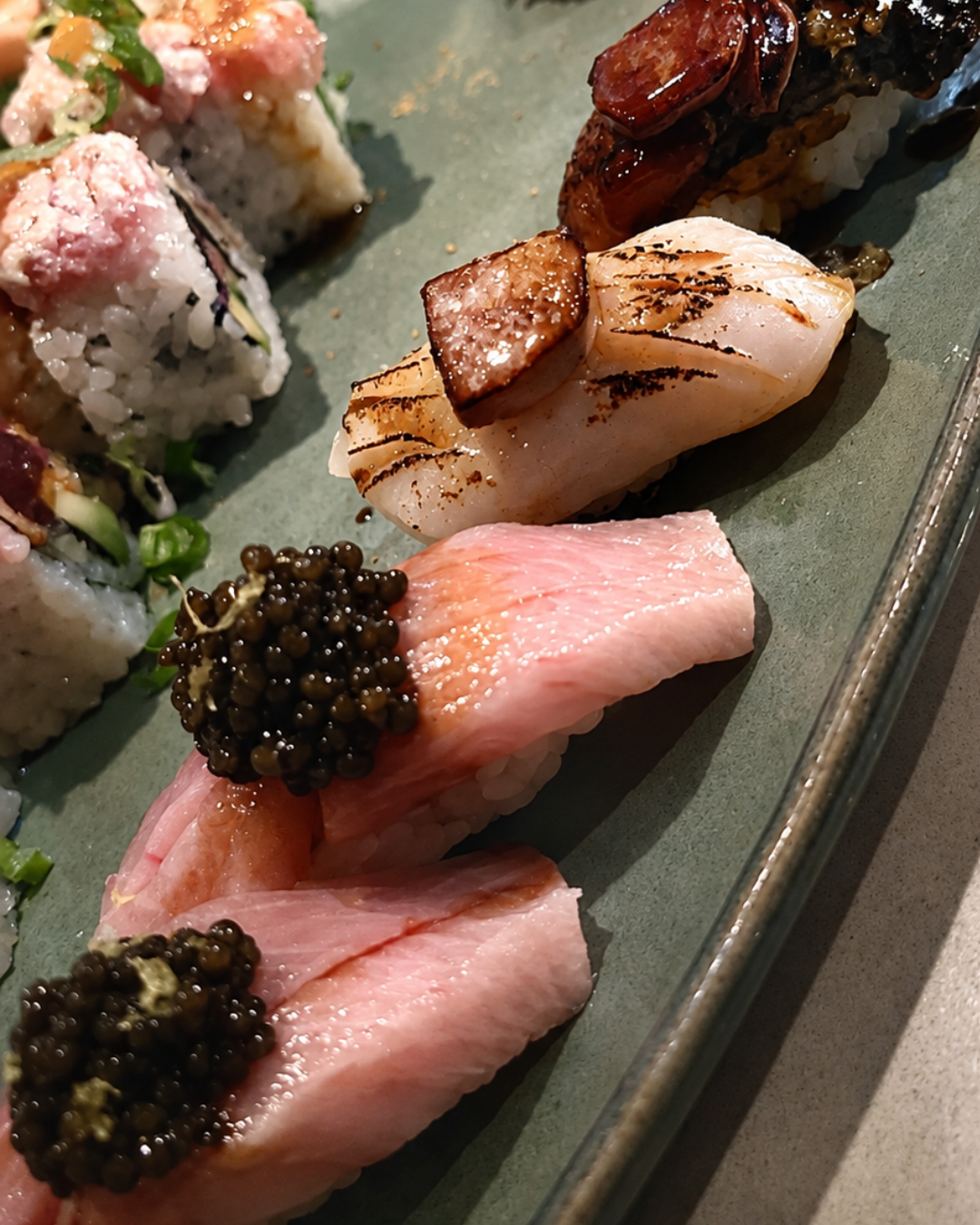
The evening’s ultimate splurge arrived as bluefin toro nigiri topped with caviar, lemon zest and nikiri soy.
Toro already carries a luxurious richness, melting almost immediately against the warmth of properly seasoned rice. The caviar extended its salinity, while the lemon zest interrupted the richness with a precise flash of citrus. Nikiri soy (the seasoned soy glaze brushed directly onto the fish) completed the bite without requiring an extra dip or adjustment.
At $21 per piece on the current menu, this is not an everyday order. Nor should it pretend to be. It is a composed luxury bite, best appreciated slowly, and one that makes particular sense at the sushi bar where you can watch every step of its construction.
Two Rolls We Would Order Every Time
Our longtime favorite, the Imoto Roll, remains the signature for a reason. Inari, miso sauce, otoro, tuna, orange peel, avocado, and scallion create a roll with remarkable range. Otoro adds depth; avocado lends creaminess; miso adds savory concentration; and orange peel provides the aromatic lift that prevents the roll from settling into uniform richness.
It is unmistakably a house creation: more expressive than a classic maki, yet coherent enough that every element earns its place. The orange peel is especially clever. Used with restraint, it acts almost like perfume, brightening the fatty tuna without competing with it.
The Super Salmon Roll takes a different route to the same destination. Spicy king salmon and cucumber form the center, topped with avocado, seared salmon, and miso sauce. The interplay between raw and seared salmon gives the roll more dimension than its name initially suggests. Cucumber adds necessary snap, avocado softens the edges, and miso binds the flavors with a gentle savory sweetness.
Both rolls are generous and richly composed, but neither loses sight of balance. We have returned to them repeatedly because they deliver the pleasure of a specialty roll while retaining the precision expected of a serious sushi bar.
Is Imoto the Best Sushi in Palm Beach?
The local sushi landscape has grown considerably since Imoto’s opening. The area now has more omakase counters, luxury hotel dining rooms and ambitious Japanese menus than it did when Conley’s “little sister” first arrived. Competition is no longer theoretical.
Yet Imoto’s longevity has not dulled its relevance. If anything, the restaurant now benefits from what newer openings cannot manufacture: a mature identity, a deeply tenured team, and a sushi program refined over years rather than assembled for a debut.
The final verdict is clear. Imoto serves the best sushi in Palm Beach. And it’s not because it follows the strictest traditional format or offers the flashiest room, but because it brings together the qualities that matter most: pristine fish, disciplined technique, inventive flavor, assured pacing, and hospitality that feels genuinely lived-in.
The restaurant understands when to embellish and when to step aside. It can crown toro with caviar, tuck foie gras into a slider and build a roll around miso and orange peel, yet still preserve the identity of the ingredient at the center. That is a difficult balance, and Imoto achieves it with uncommon consistency.
Come for the name that connects it to Buccan. Return because the little sister has long since established her own authority.
And when you book, choose the sushi bar. The finest show in the room is happening on the other side of the counter.
Imoto Palm Beach: What to Know
Address: 350 South County Road, Palm Beach, Florida 33480
Cuisine: Contemporary Japanese, sushi and Asian-inspired small plates
Best seats: The sushi bar
Best for: Date night, an intimate dinner, sushi devotees and celebratory splurges
Do not miss: Japanese Snapper Crudo, Tuna Foie Slider, Bluefin Toro Nigiri, Imoto Roll and Super Salmon Roll
Reservations: Recommended, particularly for sushi-bar seating
Official website: Imoto Palm Beach