Fire, Phyllo, and Family: Inside Mana Greek Fusion in Jupiter
Editor’s note: Mana Greek Fusion hosted this dinner. As always, the observations and conclusions below reflect my own experience.
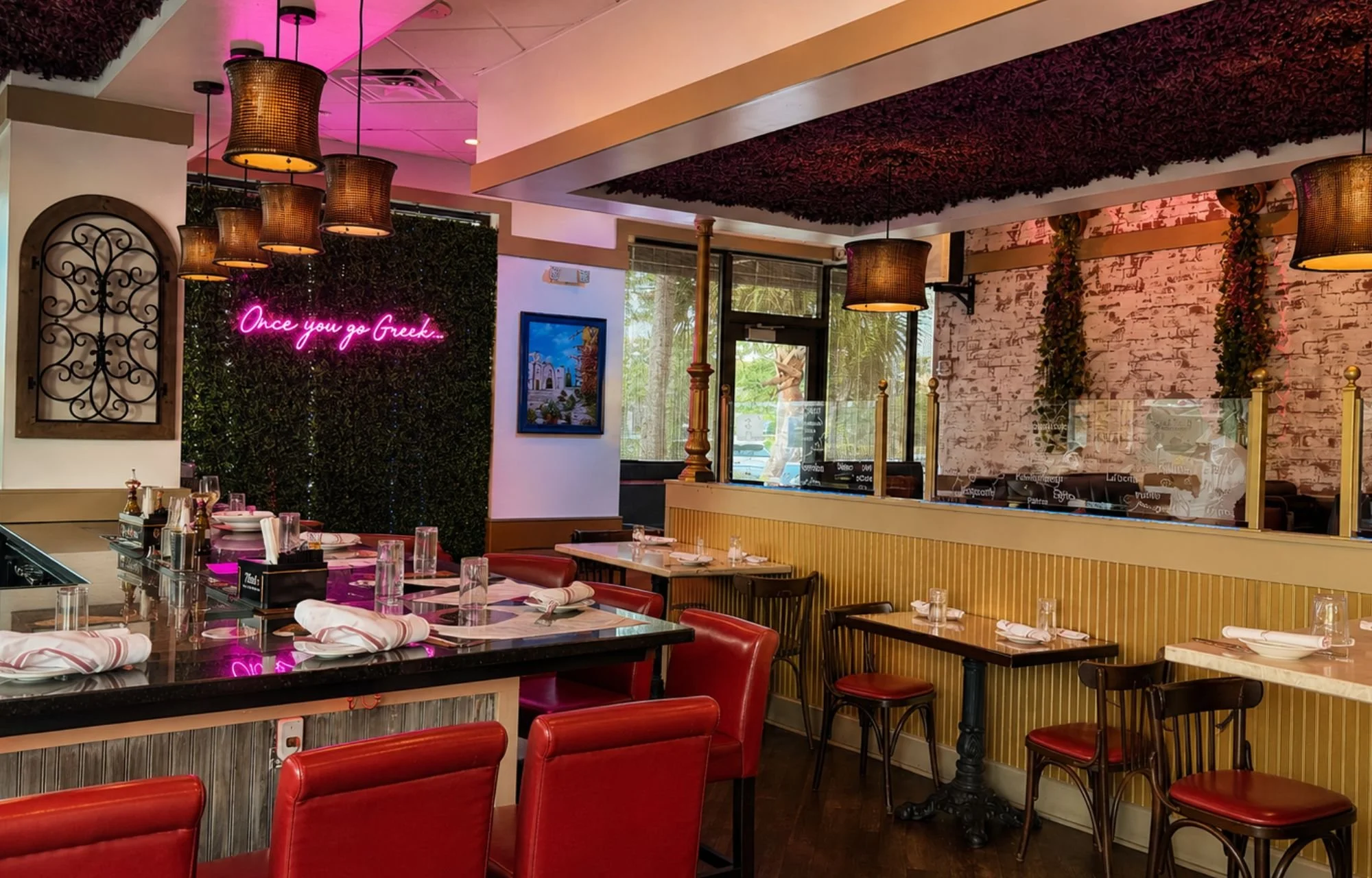
Jupiter has never lacked waterfront restaurants. What it has had less of are dining rooms that feel unmistakably personal, the kind where the menu, the mood, and even the evening’s more theatrical flourishes can be traced back to a family rather than a restaurant-group playbook.
Mana Greek Fusion is one of those places.
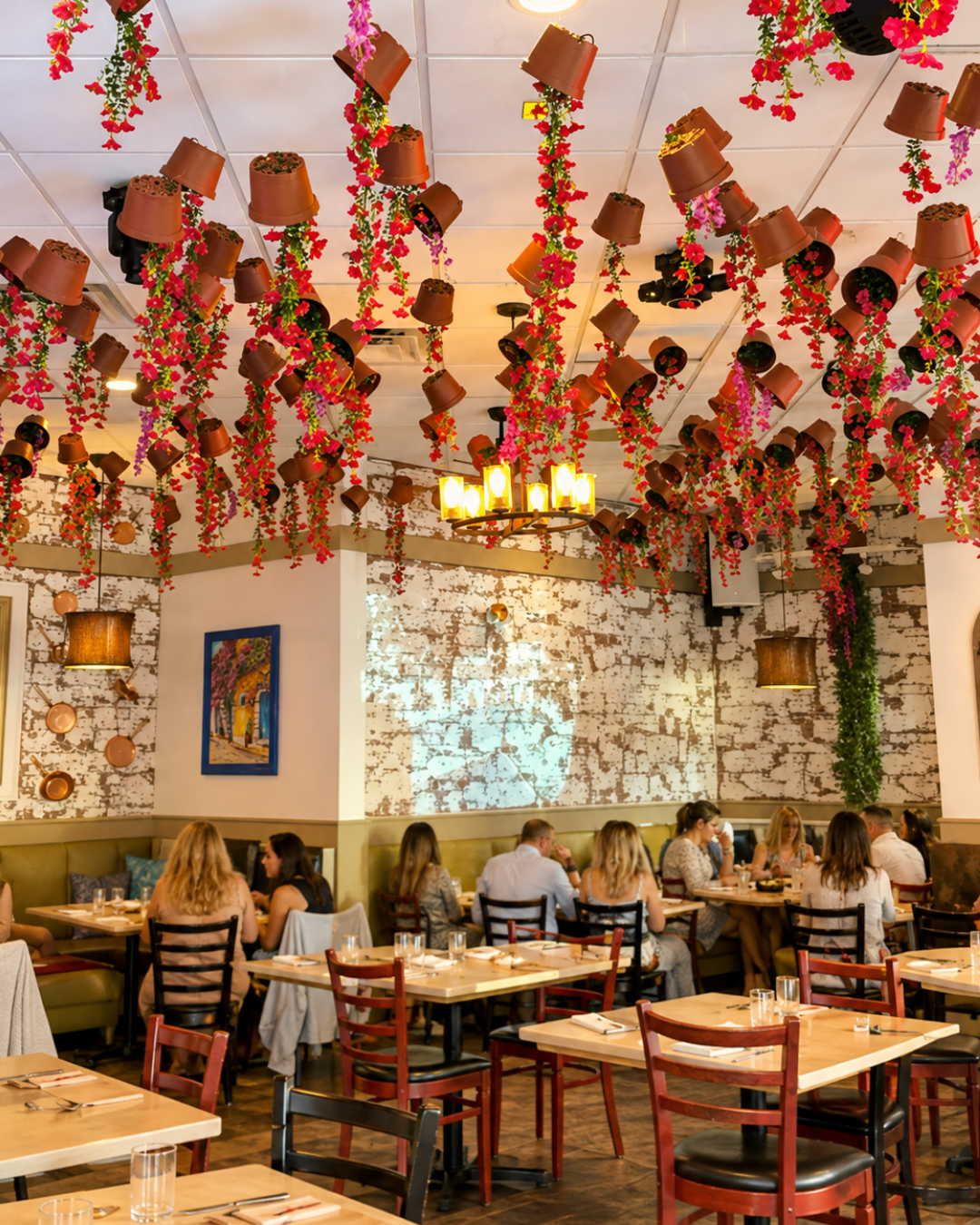
Set within Harbourside Place, the restaurant does not present itself as a hushed neighborhood taverna. The room is vivid and deliberately abundant, its ceiling animated by suspended pots and cascading florals. Conversations rise, tables fill with shareable plates, and the service team moves with the pace of a restaurant that expects dinner to become an occasion.
The first impression is spectacle. The more lasting one is family.
Why “Mana” Means More Than a Name
“Mana” means “mother” in Greek, and here the word functions as the restaurant’s organizing idea. Siblings and co-owners Lazarus and Anna Chasomeris built the concept around recipes passed through their family, with the siblings speaking of roots stretching to Crete and Piraeus.
That history is divided into complementary responsibilities. Lazarus oversees the savory side of the kitchen, while Anna manages the restaurant’s pastry program as well as key parts of the operation. The distinction is useful, but the meal never felt split into two separate visions. The same impulse runs through both: preserve the emotional familiarity of Greek home cooking, then loosen the boundaries just enough to let South Florida enter the conversation.
That last part matters. “Fusion” can be an imprecise promise, sometimes used to excuse combinations that have little to say to one another. At Mana, the better dishes use it more thoughtfully. Chimichurri does not erase pastitsio; it gives its richness a brighter exit. An empanada shell does not turn Greek comfort food into a novelty; it makes the familiar portable, crisp, and distinctly local.
The restaurant’s following has become measurable as well as anecdotal. In 2025, readers of Jupiter Magazine voted Mana Best Mediterranean Food in Jupiter, a distinction that reflects what the busy dining room already suggests: Mana has built a loyal local audience.
A Dining Room Designed for Celebration
There is nothing restrained about the visual language here. The hanging planters, bright floral accents, saturated color, and busy tables create a room that seems to bloom overhead. It is cheerful, photogenic, and slightly theatrical before the first flame ever reaches the dining room.
That energy will be part of the appeal for many guests. Mana is well suited to birthdays, group dinners, and evenings when conversation can comfortably compete with the room. Those looking for a quiet, minimalist setting may find the volume and visual density less restorative. This is not a flaw so much as a useful distinction: the restaurant is celebratory by design.
Our waiter, Yannie, understood how to guide us through that energy. He did not simply recite ingredients. He explained the logic behind the dishes, the family references embedded in them, and the preparations that required advance timing. On a menu that moves between Greek tradition and Latin American and South Florida influences, that fluency made the meal feel coherent rather than crowded.
Zucchini, Pastitsio, and the Point of Fusion
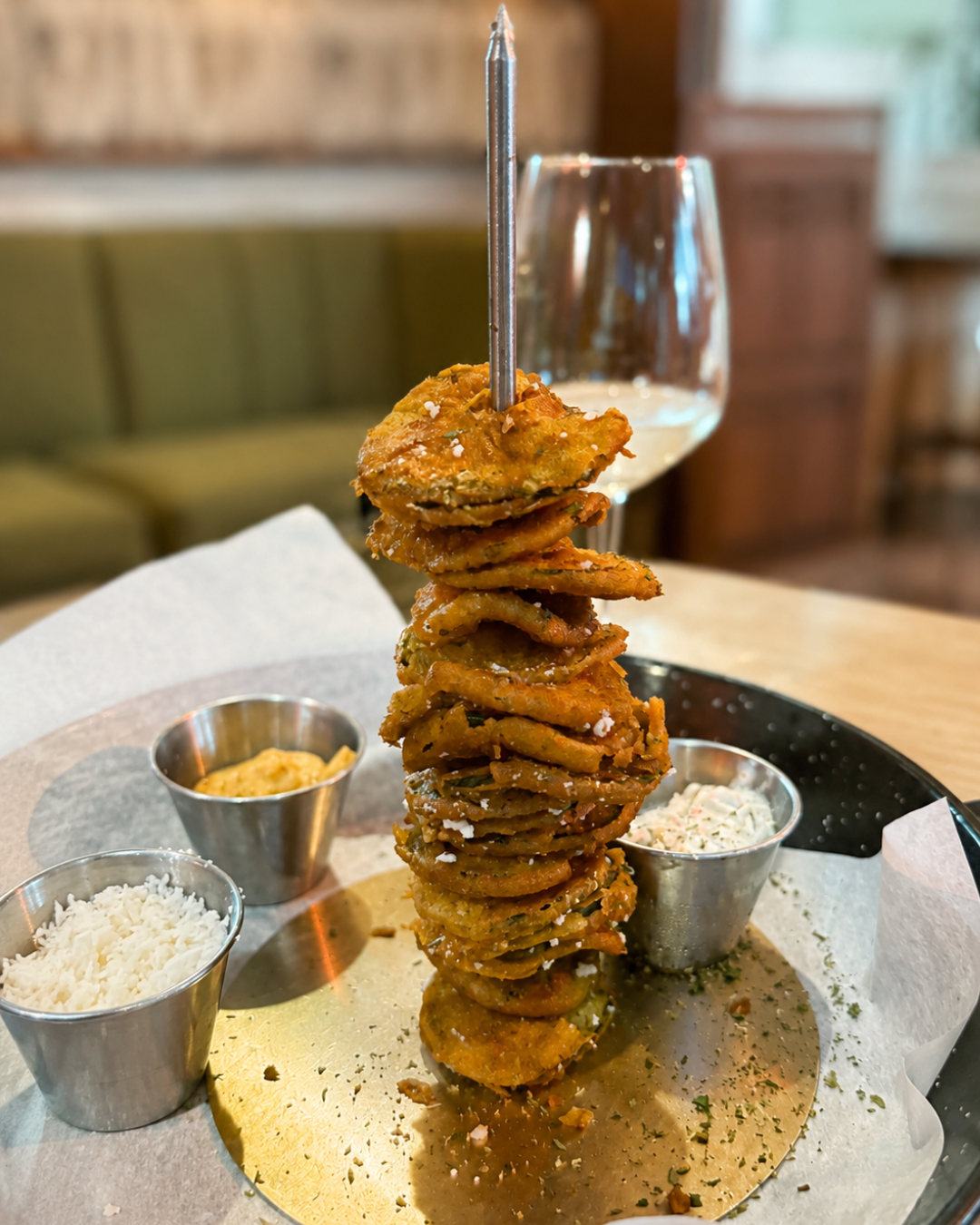
The Zucchini Tower arrived first as architecture: a tall, improbable stack of nearly translucent slices, lightly dusted in rice flour and fried until the edges fractured at the touch.
The silhouette inevitably recalls the Milos Special, perhaps the region’s best-known expression of the paper-thin zucchini tower. Mana’s version, however, felt less ceremonious and more playful. Despite its height, the coating remained light, allowing the squash to retain a trace of sweetness beneath the crisp exterior. It was a strong opening dish because it delivered drama without the heaviness that often follows fried food.
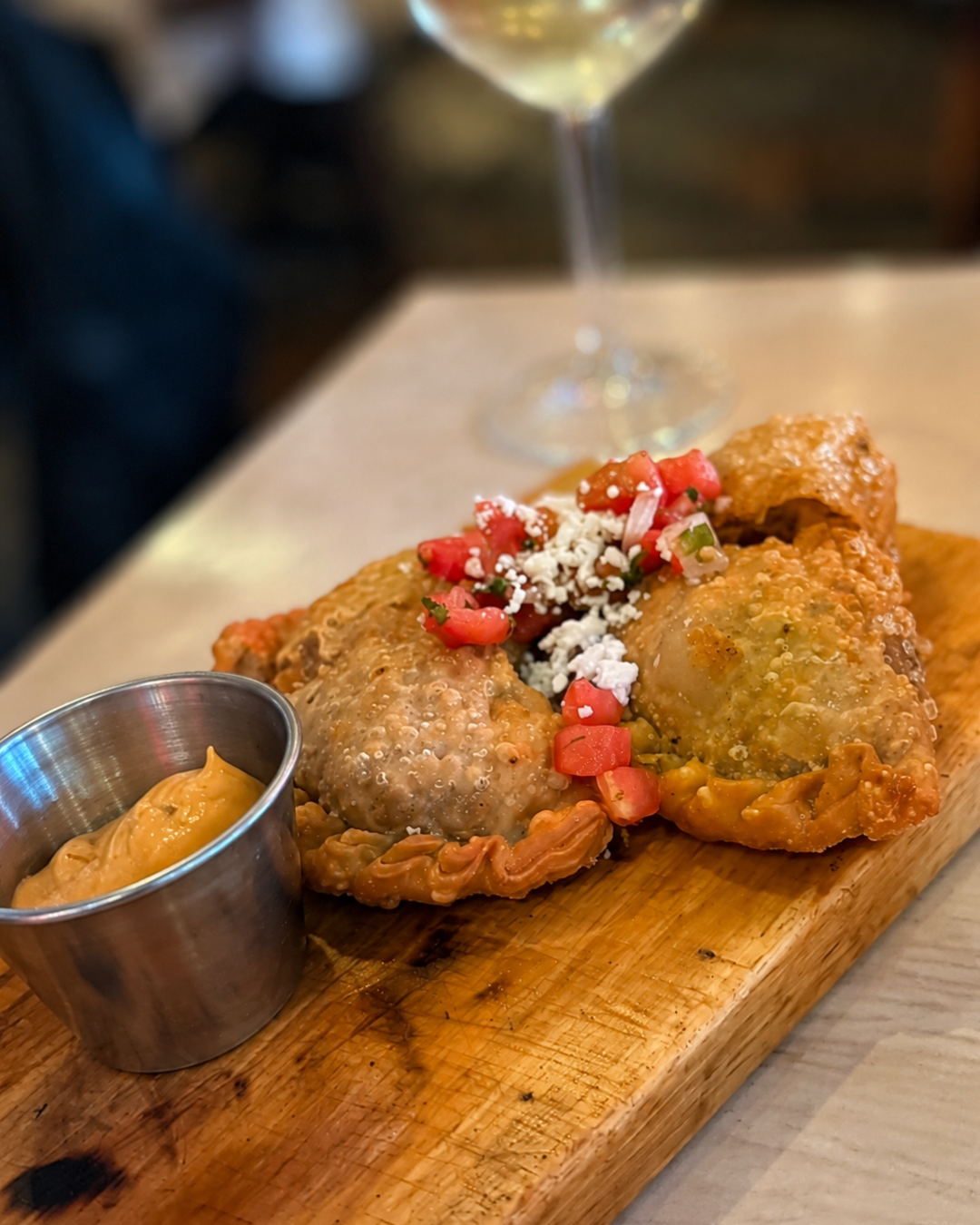
The Pastitsio Empanadas made the restaurant’s cross-cultural argument more explicitly. Pastitsio is usually an exercise in layers: tubular pasta, seasoned beef, and béchamel baked into a deeply comforting Greek casserole. Here, those flavors were condensed inside a crisp empanada shell, then finished with feta and served with chimichurri.
The cleverness was not merely in putting one familiar dish inside another. The chimichurri gave the beef and béchamel the acidity and herbal lift they needed, while the feta sharpened the finish. It was recognizably inspired by pastitsio without becoming a mere imitation: Greek in memory, South Florida in accent.
Char-Grilled Octopus with Restraint
Octopus is an unforgiving measure of a Mediterranean kitchen. Too little preparation and it becomes rubbery; too much and it loses the spring and definition that make it worth ordering.
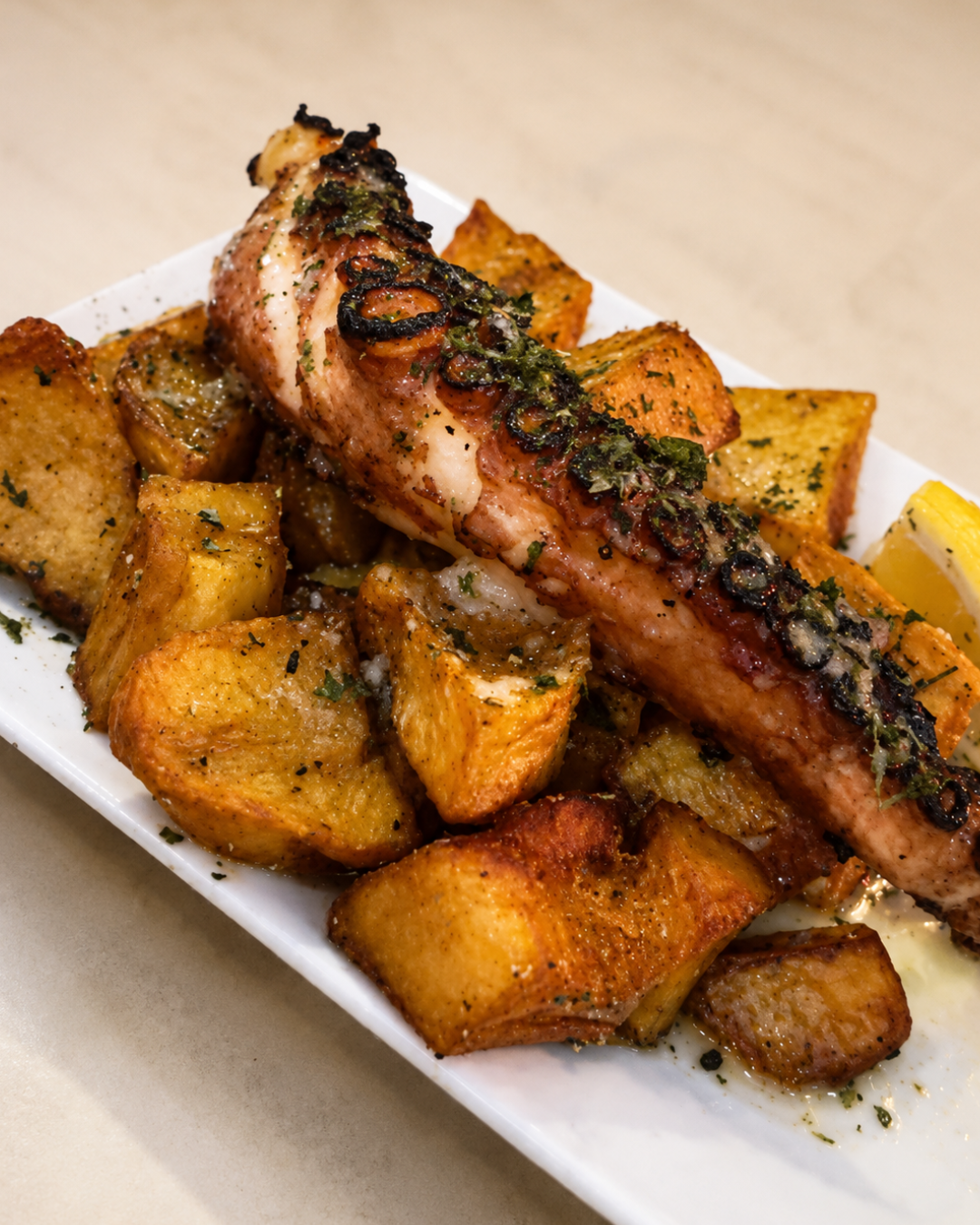
Mana’s Char-Grilled Octopus found the balance. The slow-cooked tentacle was tender enough to yield to a butter knife, yet it retained structure. A deep char along the exterior brought smoke and a slight bitterness without drying the flesh, while the roasted potatoes beneath it absorbed the seafood’s juices and seasoning.
What made the dish work was restraint. It did not need an elaborate sauce or an architectural presentation. The kitchen allowed the contrast between the charred exterior, the supple center, and the soft potato to carry the plate.
When the Lamb Catches Fire
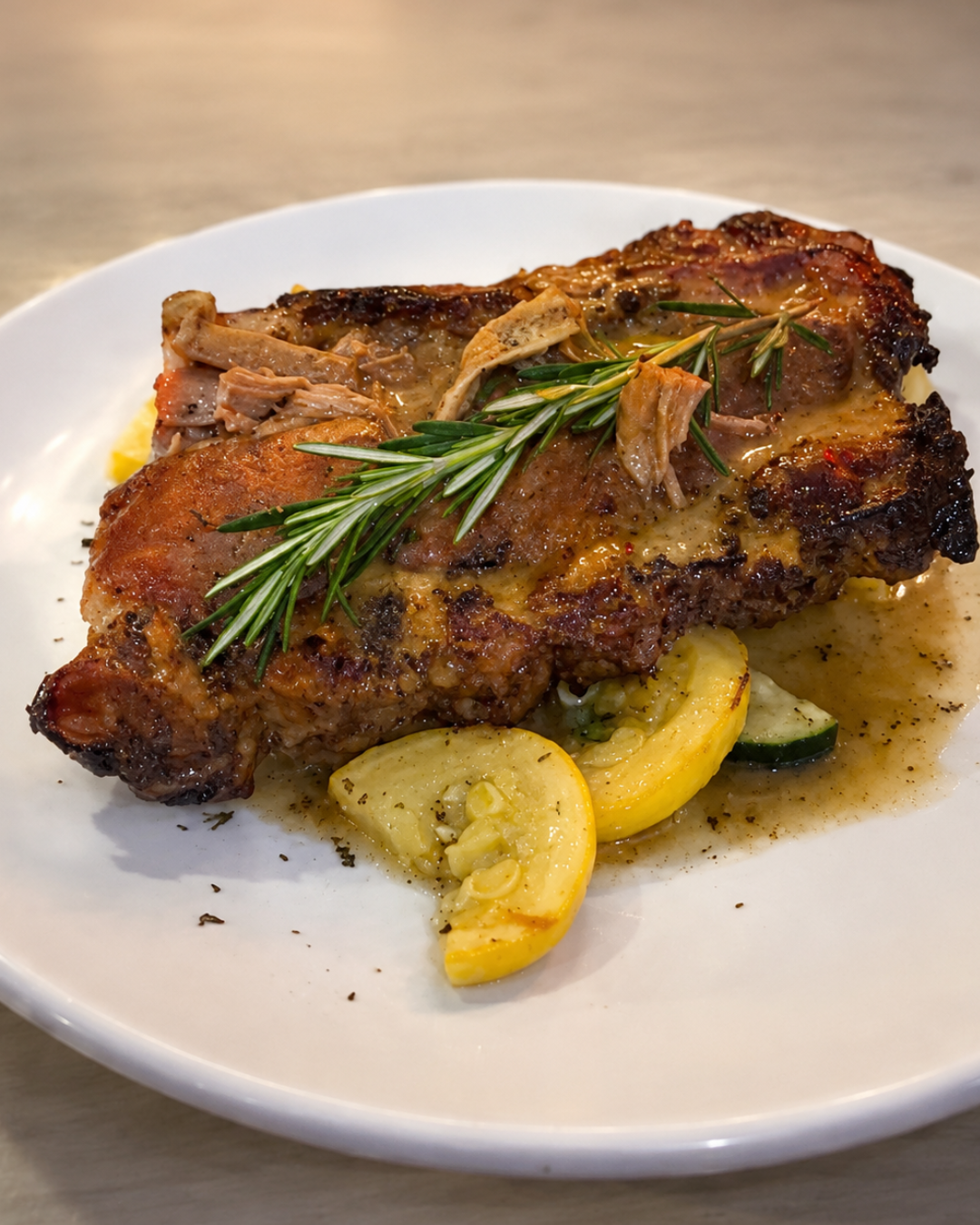
The Village Lamb Ribs were the evening’s undisputed showpiece, but the tableside flame was only the final step in a much longer preparation.
We were told the dish grew out of the family’s Easter tradition of roasting lamb outdoors. At the restaurant, the ribs spend 48 hours in a closely guarded family marinade before being slow-cooked for five hours. By the time they reach the dining room, the connective tissue has surrendered, and the exterior has developed the sticky, caramelized edges that long cooking rewards.
Then came the fire.
The ribs were flambéed tableside, sending a sudden plume above the platter and the aroma of caramelized meat through the room. It was exactly the sort of moment cameras appear for instinctively. Yet spectacle only works when the food beneath it can survive the attention. Here, it could. The meat separated easily from the bone, but it did not collapse into shapeless softness; the marinade had penetrated deeply, building sweetness and savor rather than sitting on the surface as a glaze.
Mana is not alone in recognizing that Greek dining can support a little theater. Kyma West Palm Beach makes celebration part of its identity on a much larger scale, but the fire at Mana felt more closely tied to the food. It was not a pause in dinner for entertainment. It was the completion of the dish.
Anna’s Pastry Program and the Patience of Phyllo
Dessert is where Mana’s family structure becomes most visible. Anna’s pastry program is not a short appendix of bought-in sweets, but a continuation of the restaurant’s central story. It’s built around labor, memory, and the belief that a meal should end with a little theater.
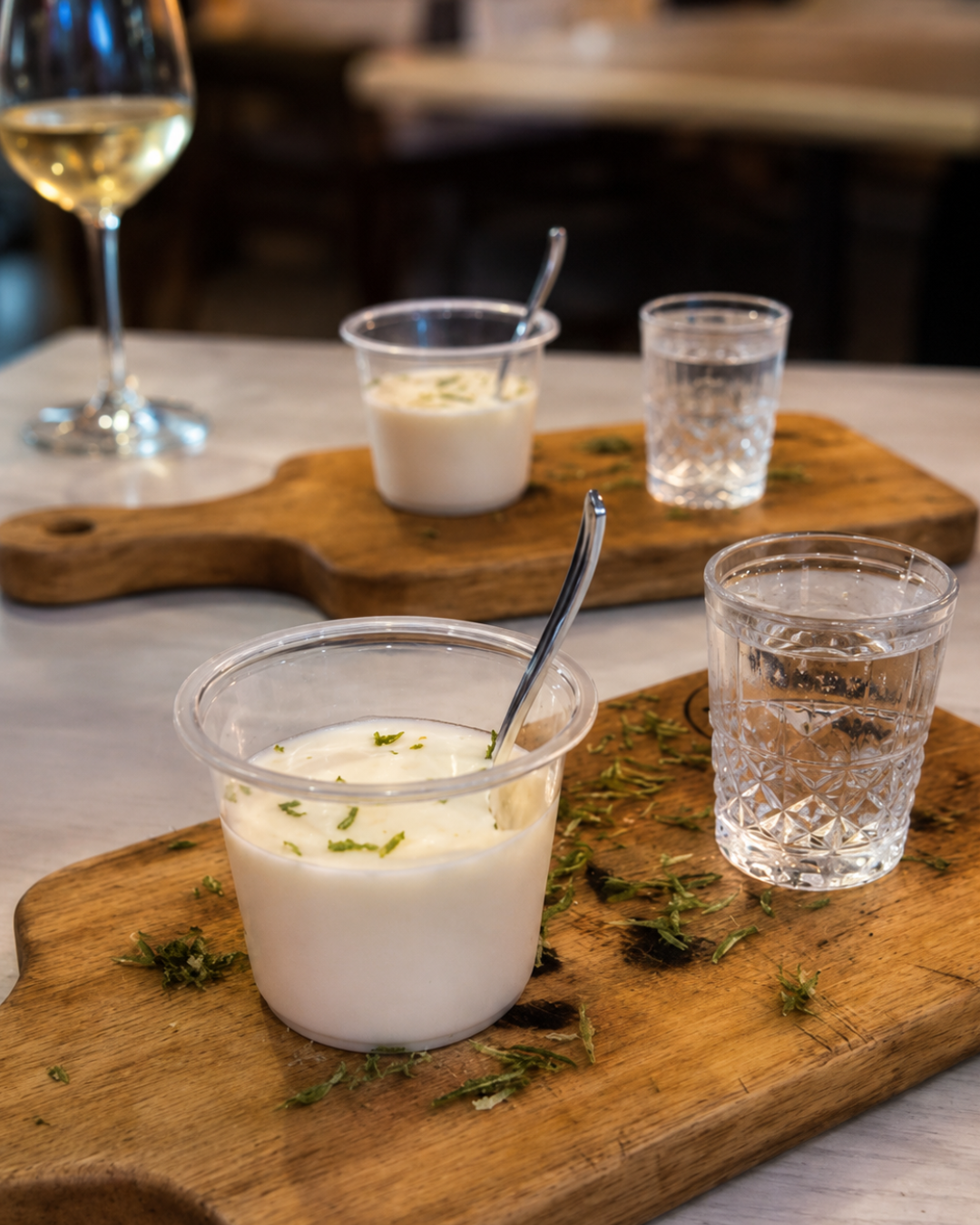
The ceremony began with a bright Lemon Mousse, presented on a wooden board alongside chilled tequila shots. Anna explained the ritual with a smile: take a bite of mousse, then a sip of tequila - “very romantic.”
The pairing sounded mischievous, and it was, but it also made surprising sense. The mousse softened the tequila’s heat, while the spirit cut through the cream and sharpened the citrus. After slow-cooked lamb, béchamel, and phyllo, it worked as both a palate cleanser and a playful burst of the restaurant’s personality.
A Nostalgic Finale
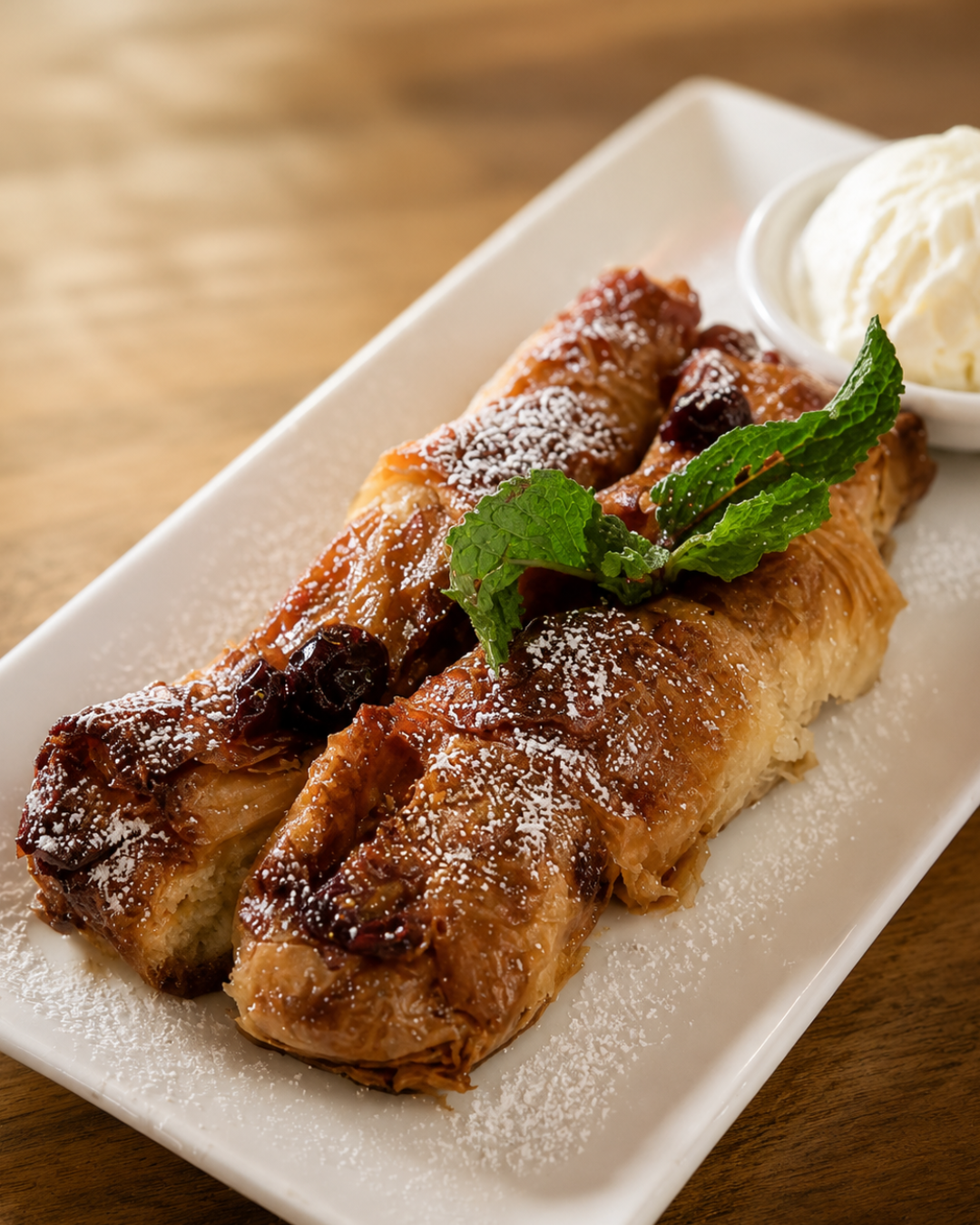
Then came the slower, more nostalgic finale. The Bougatsa requires roughly 25 minutes, which is why the service team wisely recommends ordering it with the main course. That wait matters. Bougatsa depends on contrast: phyllo should arrive brittle and warm; semolina custard should remain soft and soothing; cinnamon and powdered sugar should perfume rather than bury the pastry.
Anna serves hers chopped rather than presented as a tidy slice, a reference to childhood memories of chasing a pastry truck in Greece with the urgency American children reserve for an ice-cream van. Warm cherries brought acidity and fruit to the custard, keeping the sweetness from becoming monotonous.
The result was among the most memorable versions I have encountered in South Florida: rustic in presentation, precise in texture, and comforting without becoming leaden. My boyfriend ordered an entire box to take home, nominally “for later”. We both understood “later” meant sometime around midnight.
Hospitality Without Pretense
A family restaurant can speak endlessly about warmth, but that claim only matters if guests can feel it in the mechanics of service. At Mana, hospitality was not limited to the owners stopping by the table. It appeared in Yannie’s menu knowledge, the timing of dishes that required advance preparation, and the ease with which the team managed an animated room.
Lazarus, Anna, and the team hosted us with considerable generosity, and that hospitality deserves acknowledgment. It does not, however, replace the critical question: did the cooking support the story being told around it? Across the dishes we tasted, it did.
The restaurant was at its most convincing when technique came before novelty: the tenderness beneath the octopus’s char, the long marinade behind the lamb’s flame, the freshly baked phyllo surrounding warm custard. Those details gave substance to a room that could otherwise risk being remembered only for its visuals.
Go For
A lively dinner with personality rather than a quiet, conventional Greek meal.
Tableside theater that remains connected to the cooking.
Greek family recipes interpreted through a distinctly South Florida lens.
A serious pastry finale, particularly Anna’s made-to-order bougatsa.
Be Prepared To
Dine in a high-energy room where noise is part of the experience.
Order the Bougatsa early and allow approximately 25 minutes for preparation.
Share. The menu’s range and portioning reward a table willing to pass plates.
Confirm the availability of special preparations when booking.
The Dining with Maria Verdict
9.5 / 10
Mana Greek Fusion succeeds because it understands that spectacle must be earned. The zucchini tower has height, but also delicacy. The lamb arrives in flames, but only after two days of marination and hours of slow cooking. The bougatsa asks for patience, then rewards it with crisp phyllo and warm custard made for the moment rather than the display case.
More importantly, the restaurant’s family story can be tasted rather than merely read in a brand statement. Lazaro and Anna Chasomeris have built a Jupiter dining room where Greek memory and South Florida exuberance meet without canceling each other out.
You leave full, certainly. Perhaps slightly spoiled. But also with the sense that you were not simply served a sequence of dishes. You were invited into the Chasomeris family’s argument that tradition does not need to remain still in order to remain sincere.
Mana Greek Fusion
117 N. Coastal Way, Jupiter, FL 33477
managreekfusion.com