Harry’s West Palm Beach: Wall Street Tradition Comes South
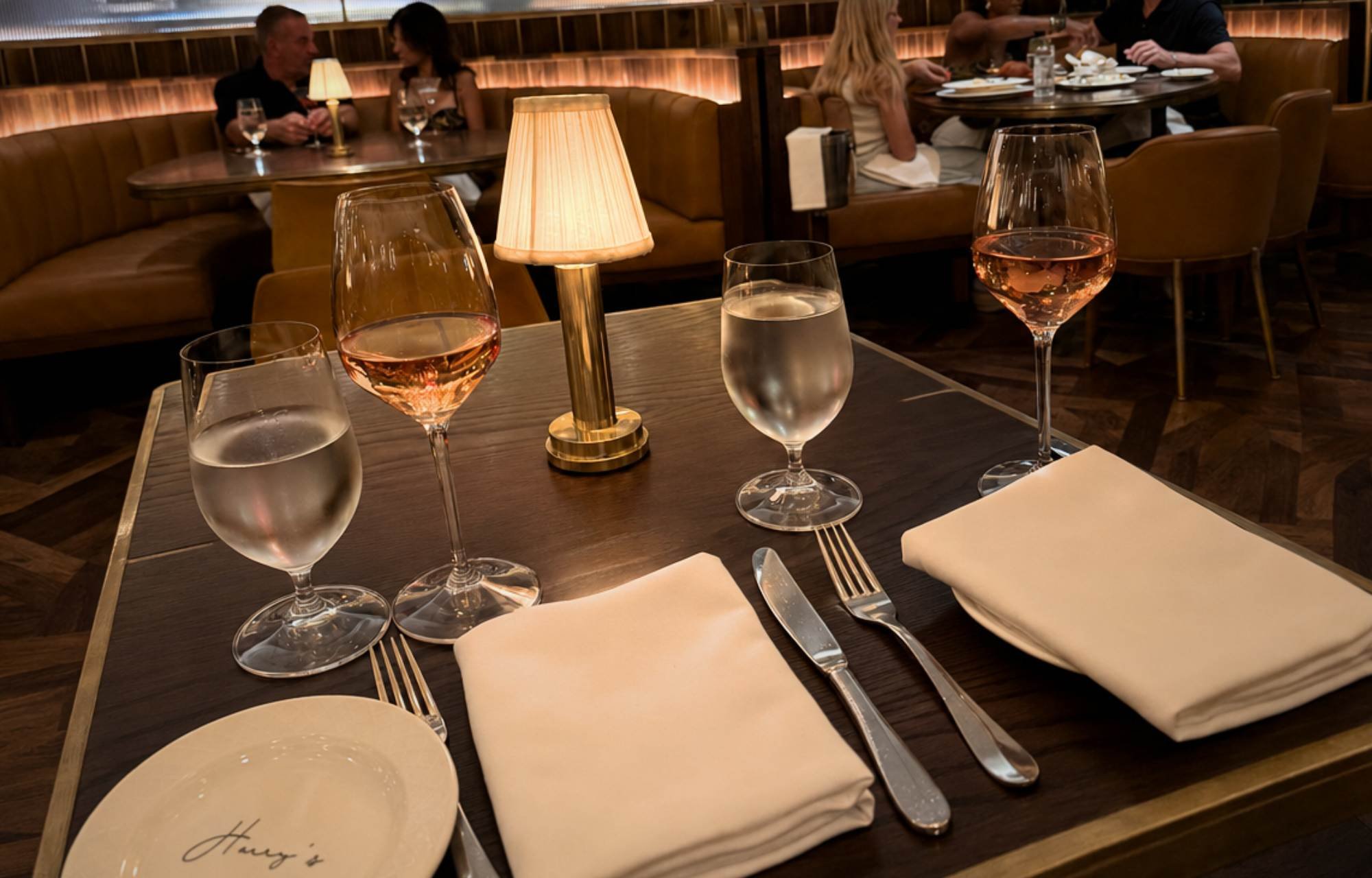
Saturday evenings in downtown West Palm Beach have developed a rhythm of their own. As the late sun slips behind the towers surrounding CityPlace, Rosemary Avenue fills with dinner-bound couples, sharply dressed groups, and patrons moving between cocktails and reservations. At 384 South Rosemary Avenue, Harry’s occupies one of the neighborhood’s most conspicuous dining rooms, and one of its most sought-after tables.
Set within the 360 Rosemary tower, the restaurant brings the traditions of a Lower Manhattan power-dining institution to South Florida. The result is neither a casual coastal steakhouse nor a nostalgic copy of the New York original. Harry’s West Palm Beach is polished, theatrical, and unmistakably tailored to its new address.
From Hanover Square to Rosemary Avenue
The Harry’s story began in 1972, when Greek immigrant Harry Poulakakos and his wife, Adrienne, opened the original restaurant at Hanover Square in Lower Manhattan. Located inside the historic India House, it became closely associated with Wall Street’s culture of expense-account lunches, discreet conversations, and long dinners conducted over steak and wine.
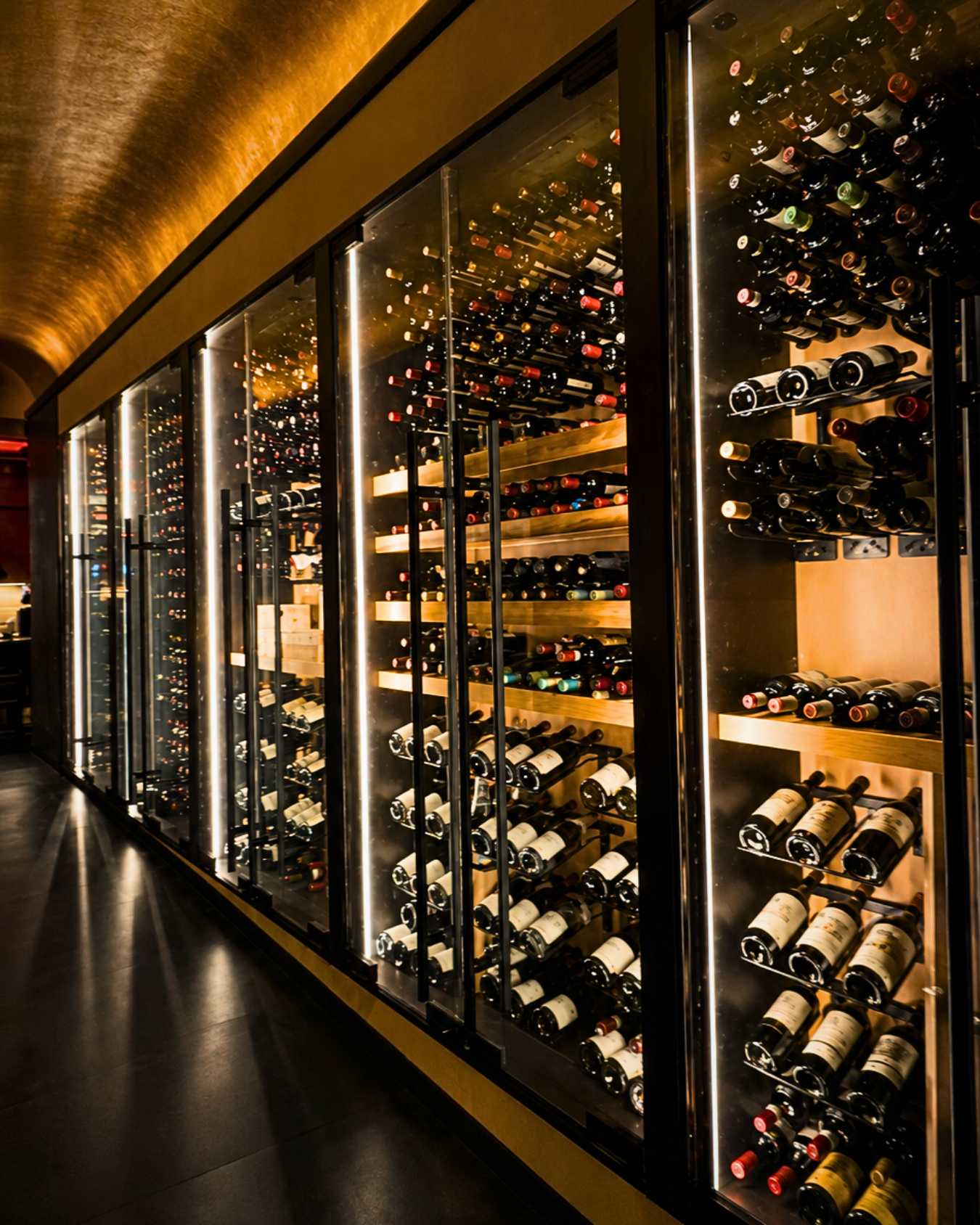
Today, Harry’s son, Peter Poulakakos, carries that legacy forward. The West Palm Beach location retains the visual vocabulary of a traditional New York dining room. Still, it loosens it for Florida: honeyed wood, curved leather banquettes, globe pendants, chevron floors, and a glass-enclosed wine cellar that functions as both centerpiece and statement of intent.
There is a sense of occasion from the moment you enter. White-jacketed servers move through the room with practiced formality, while the bar builds into a lively Saturday-night scene. The atmosphere is energetic without becoming unruly, although guests seeking a hushed steakhouse experience may prefer an earlier reservation or a weeknight table.
A Cellar That Signals Serious Intent
The floor-to-ceiling, glass-enclosed wine cellar is one of the restaurant’s defining architectural features. More than decoration, it reflects the seriousness of Harry’s wine program: the cellar holds more than 1,200 bottles, while an extensive Reserve List includes over 1,000 selections. A frequently changing Carte du Jour, chosen by the restaurant’s sommeliers, offers a more concise introduction to the collection.
The list spans the classic regions one expects from a restaurant grounded in steakhouse tradition, including Champagne, Burgundy, Bordeaux, Napa Valley, and Italy, as well as wines from other established and emerging regions. Older vintages and large-format bottles are particular strengths, with notable depth in Burgundy, Bordeaux, and California Cabernet. Burgundy feels especially well-suited to the menu, offering whites that pair well with the raw bar and more structured reds that can hold their own against dry-aged beef, braised meats, and the mushroom duxelles of the Beef Wellington.
Harry’s notes that founder Harry Poulakakos personally curated the collection, sourcing many bottles directly from trusted growers rather than through auctions. That involvement gives the cellar a meaningful connection to the restaurant’s New York heritage and ensures that it’s meant to be more than just an architectural theater.
Wine and Raw Bar Openers
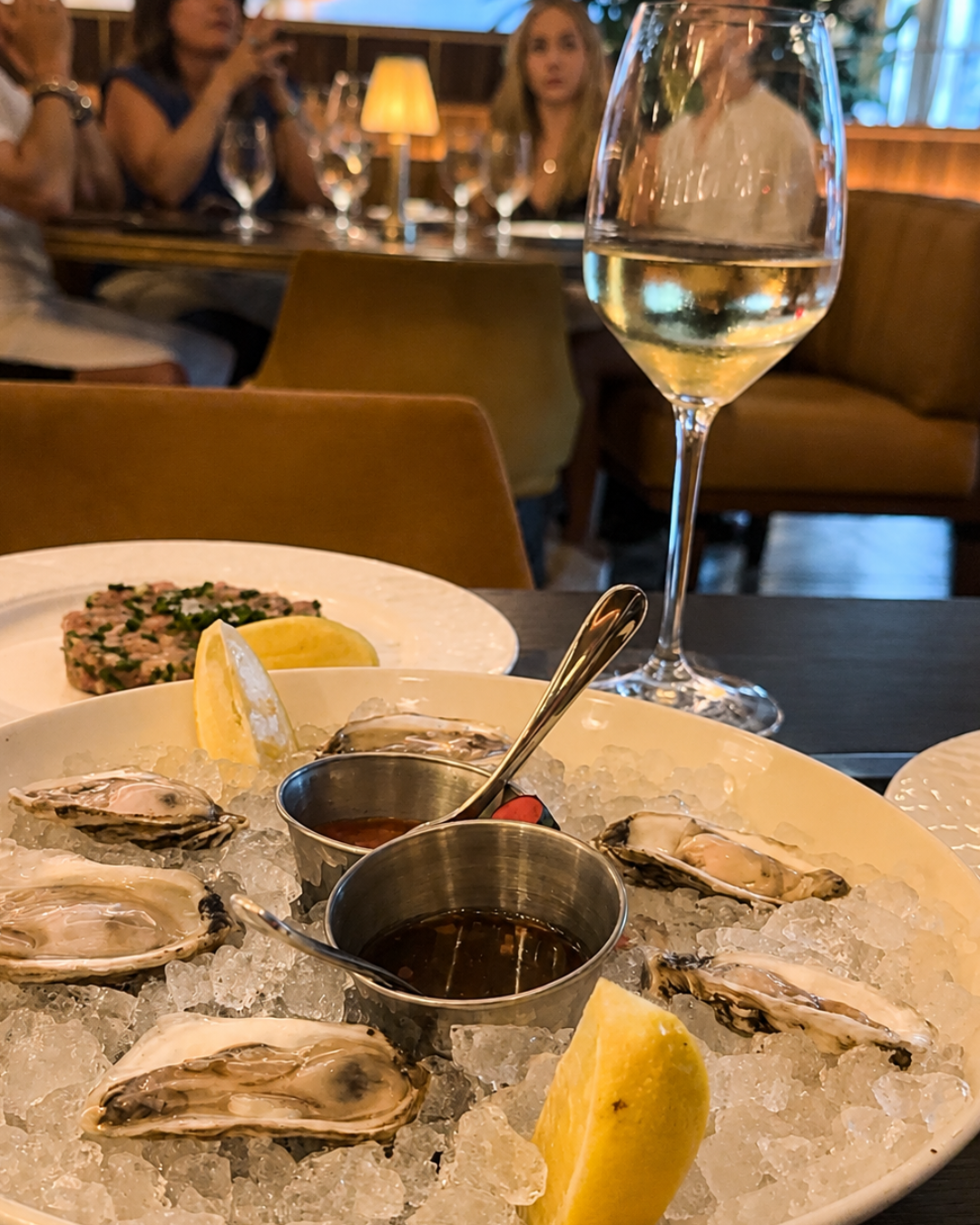
We began with a white Burgundy showing stone fruit, restrained oak, and a clean mineral finish. Served at our booth in generously proportioned stems, it provided a precise counterpoint to the oysters and tuna tartare that opened the meal.
The oysters arrived over crushed ice with lemon, cocktail sauce, and mignonette. Cold and properly handled, they retained their natural liquor and a clear saline character. Nothing extraneous interfered with the pleasure of a well-sourced oyster served at the correct temperature.
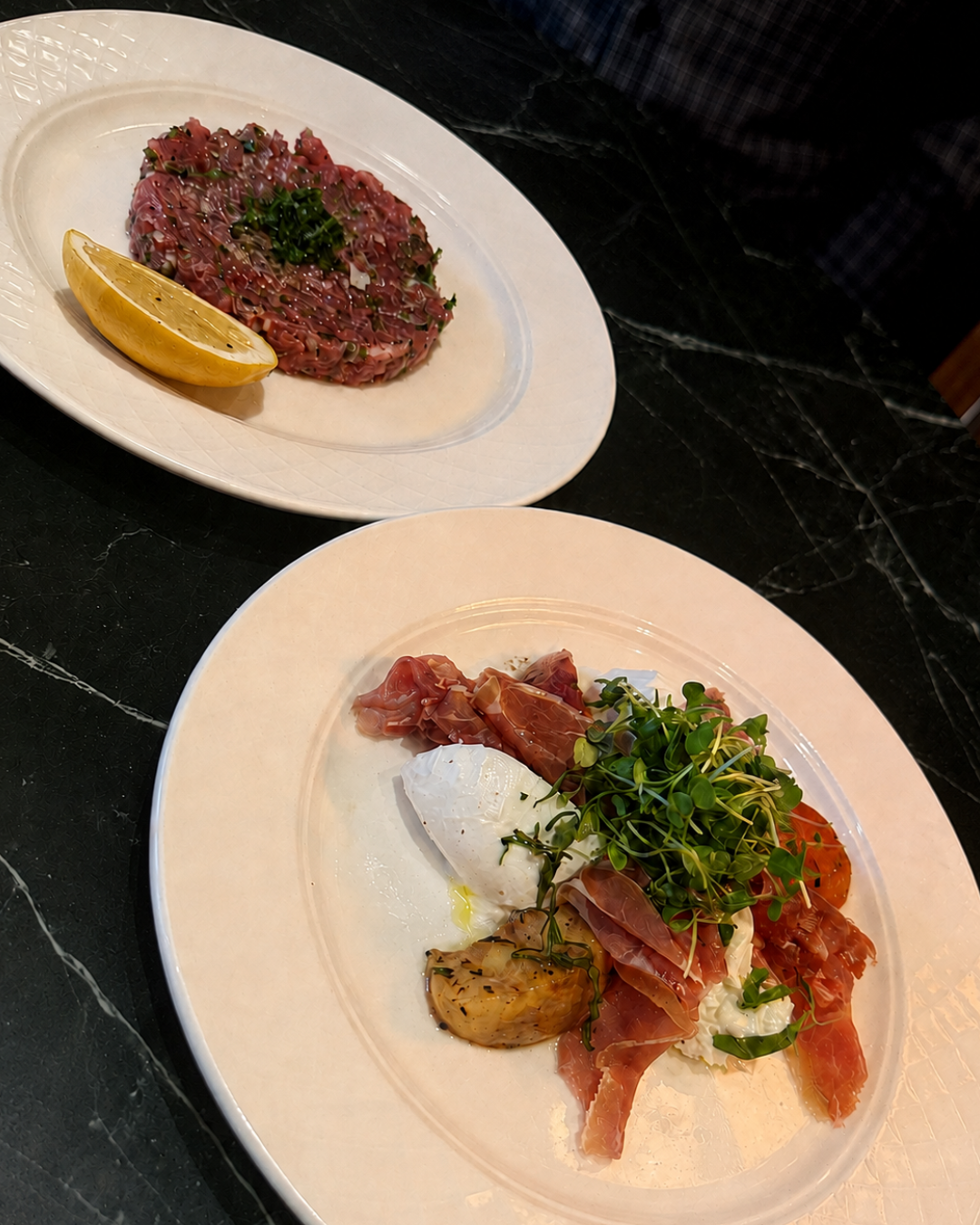
The ahi tuna tartare was cut into neat pieces rather than reduced to a paste, preserving the fish’s texture. Shallot, chive, and flaky salt supplied measured seasoning, while endive leaves and toasted crostini provided two different forms of crunch. This precise preparation allowed the tuna to remain the focus.
Small Plates with a Classical Point of View
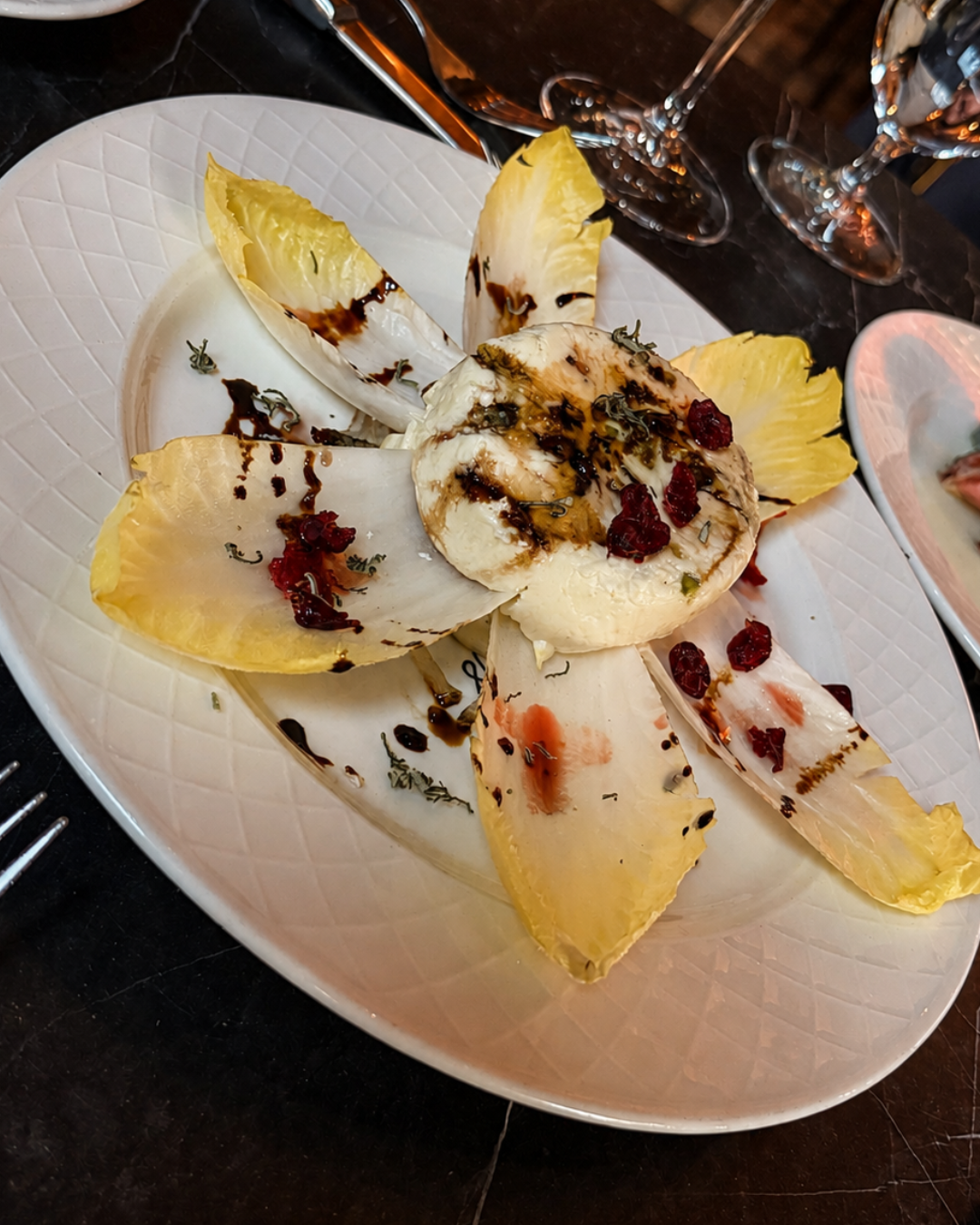
The endive and warm goat cheese salad relied on familiar contrasts: bitter leaves, creamy cheese, dried cranberries, and balsamic reduction. The arrangement was elegant, and the acidity helped temper the richness of the caramelized goat cheese. Of the opening plates, it was among the more traditional, but it demonstrated the kitchen’s preference for recognizable combinations executed with restraint.
Grilled peaches with Prosciutto di Parma and fresh mozzarella brought a softer, more summery composition. Charring concentrated the fruit’s sweetness, while the prosciutto contributed salt and depth. The mozzarella acted as a quiet intermediary between the two. It was an appropriate bridge between Palm Beach seasonality and the restaurant’s Italian-American influences.
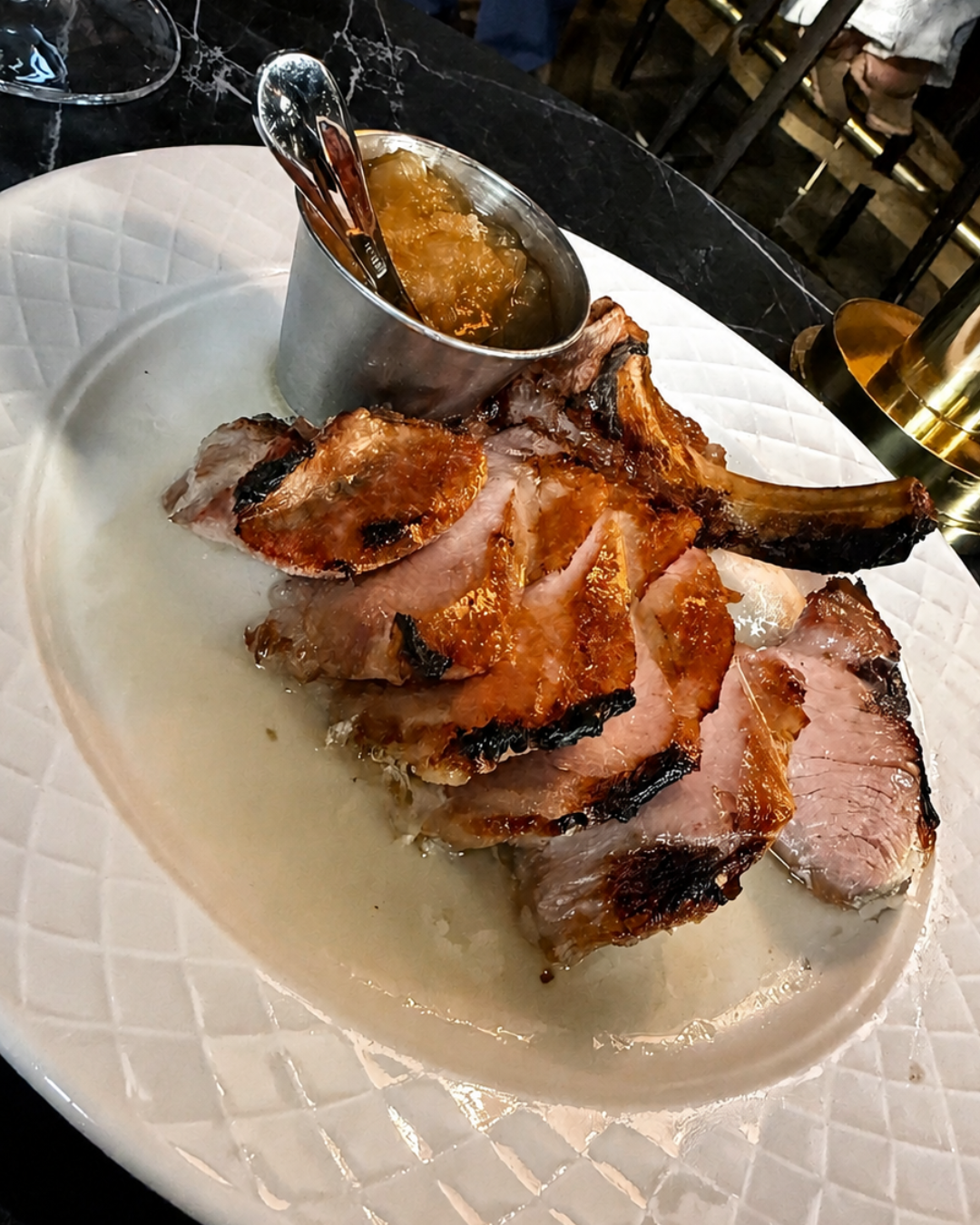
Harry’s house-smoked Canadian bacon was considerably less subtle. Presented as a thick, bone-in cut, it carried pronounced hickory smoke beneath a lacquered, caramelized exterior. The accompanying serrano-spiked apple preserve cut through the meat’s considerable richness with fruit, acidity, and heat. This is a plate designed for the table rather than the individual, and one worth ordering if the evening calls for a degree of indulgence.
Steaks Are Not the Only Reason to Dine at Harry’s
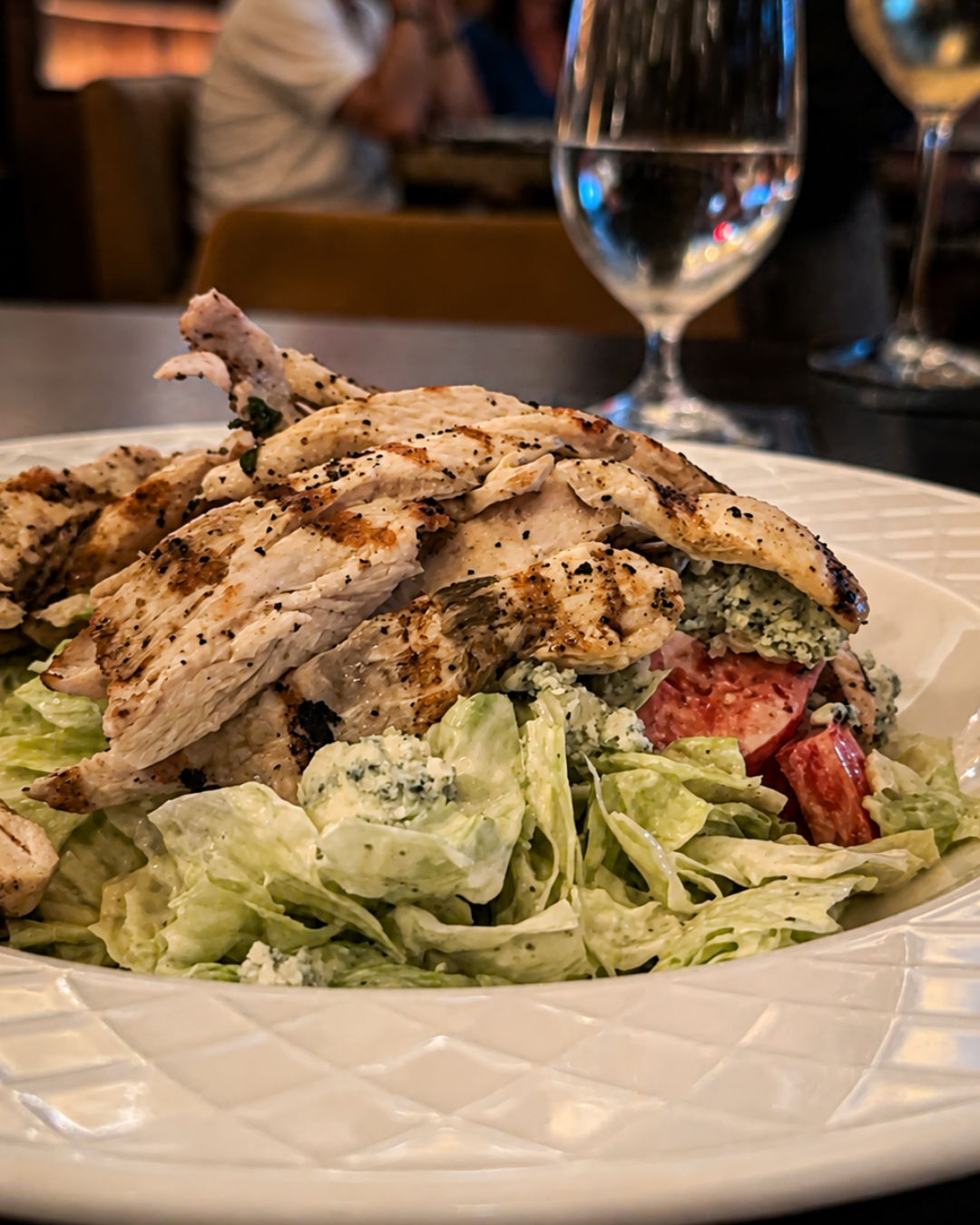
A chopped chicken Caesar salad offered a more restrained interlude. The romaine remained crisp beneath a creamy dressing, with Parmesan adding salinity and grilled chicken turning it into a substantial course. It was competently prepared, though less distinctive than the dishes surrounding it.
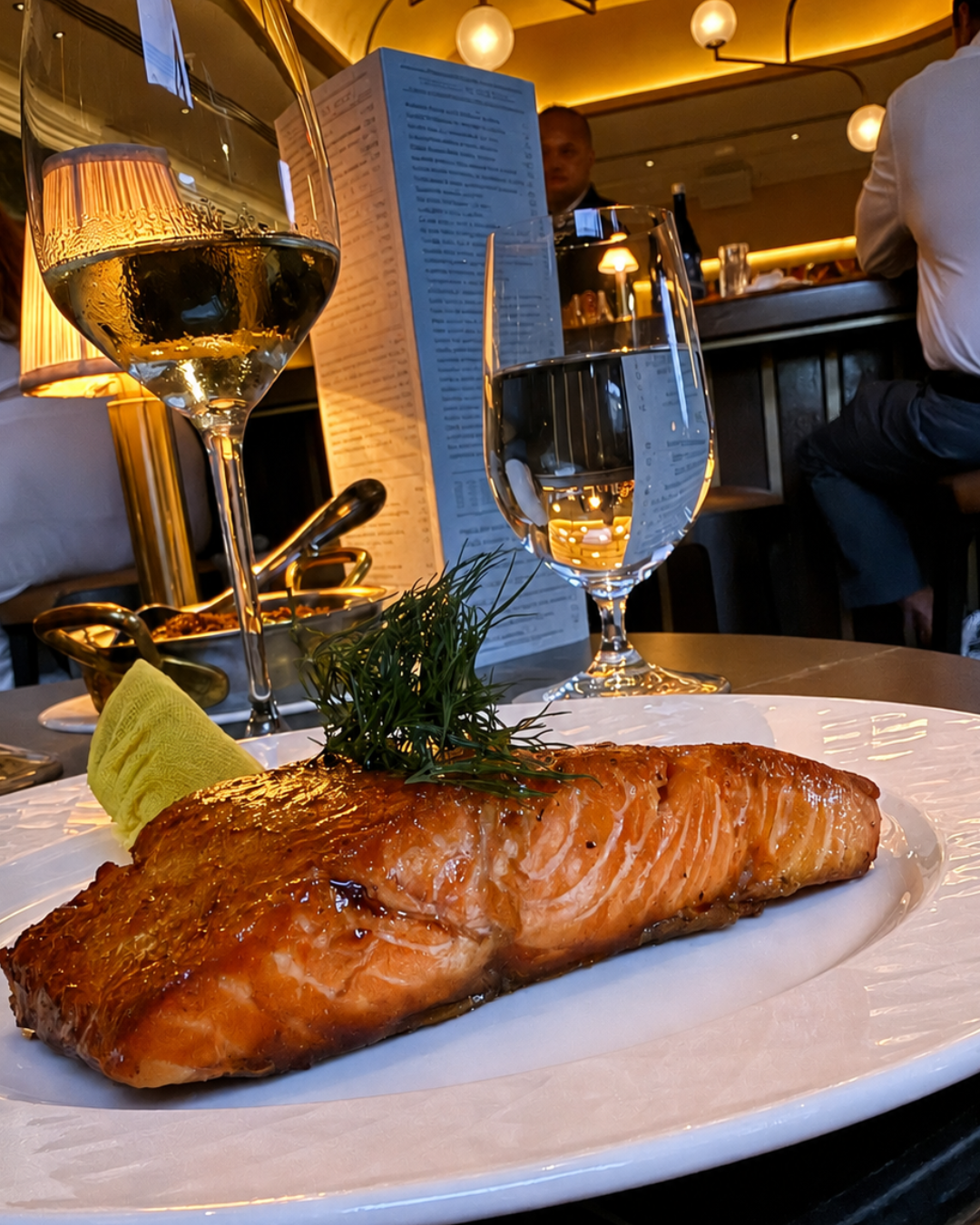
The pan-seared king salmon made a stronger impression. Its deeply browned exterior gave way to a rare, buttery center, with dill and lemon providing freshness rather than disguising the quality of the fish. The contrast between the crisp surface and yielding interior demonstrated confident temperature control.
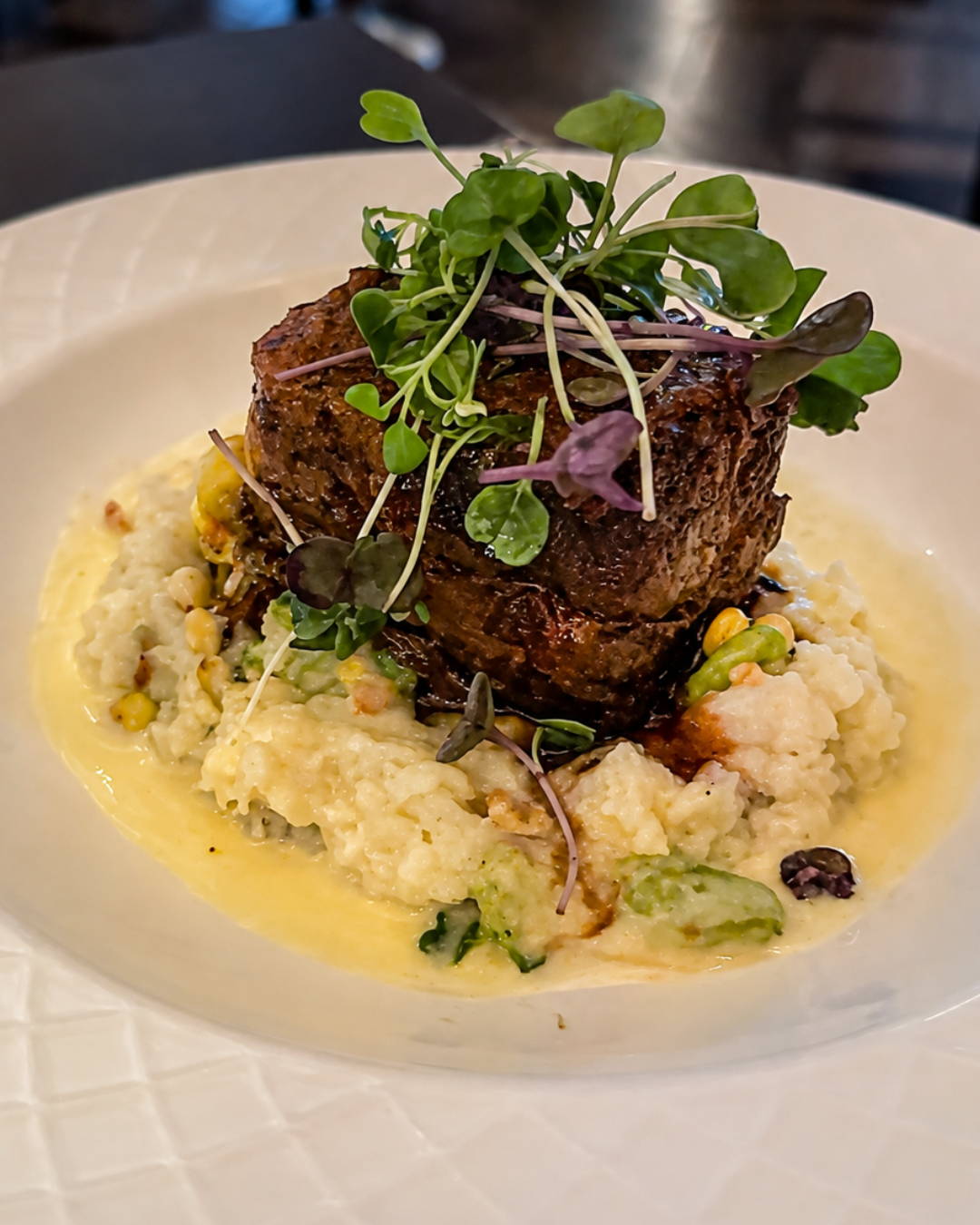
Braised short rib arrived over whipped polenta, finished with reduced cooking juices and greens. The beef separated easily under the fork, while the polenta absorbed the sauce without losing its own texture. Richness was the point, but the dish remained composed rather than collapsing into heaviness.
The Beef Wellington Earns Its Ceremony
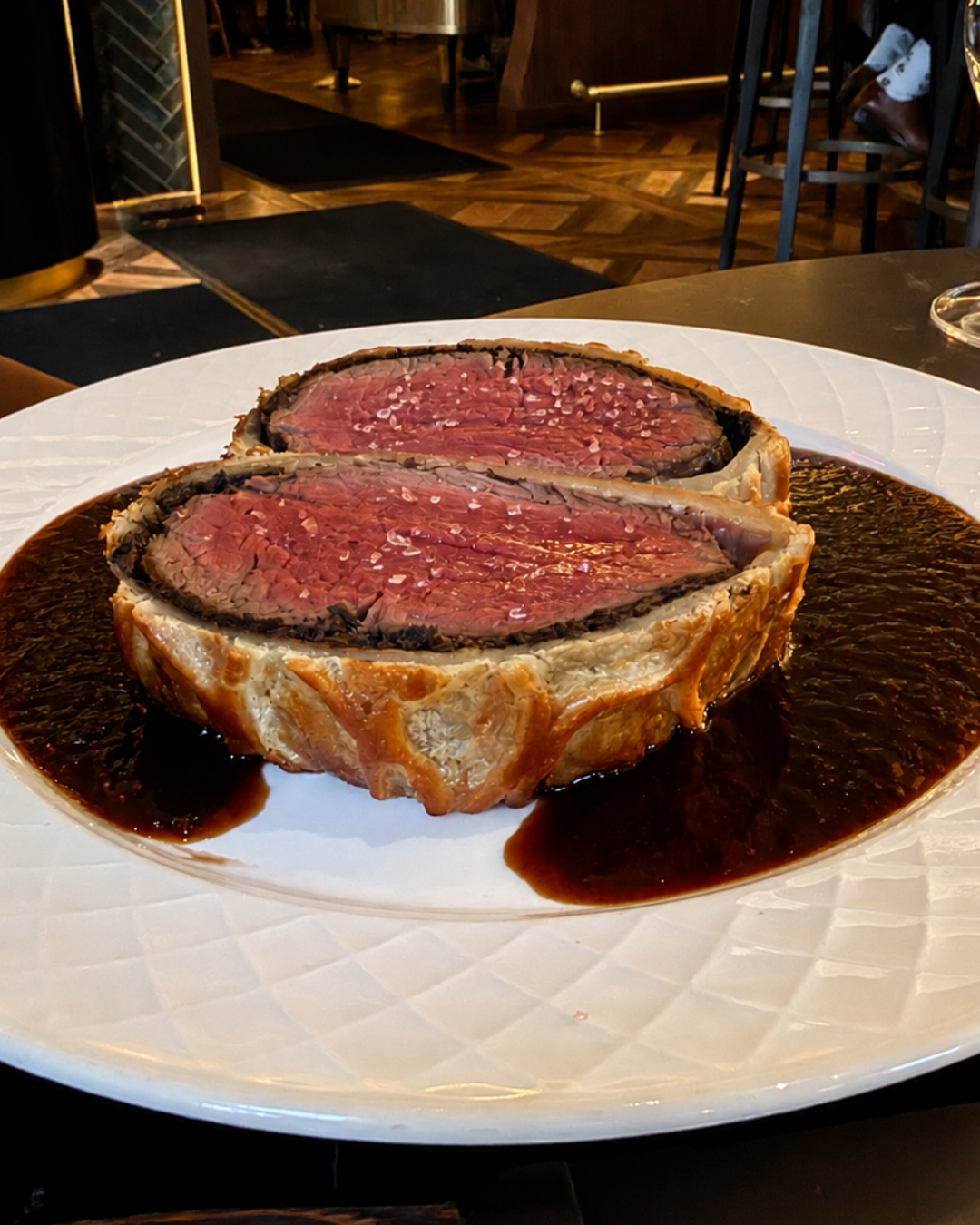
The Beef Wellington was the evening’s centerpiece, both visually and technically. Wrapped in lattice-patterned puff pastry, the filet was layered with mushroom duxelles and prosciutto before being carved at the table.
Tableside service can occasionally feel like theater in search of substance. Here, the ceremony suited the dish. The pastry was bronzed and crisp, the beef held a uniform medium-rare center, and the mushroom layer contributed earthiness without overwhelming the filet. Truffle jus, poured at the table, added depth and moisture while preserving the pastry’s structure.
Wellington is an unforgiving preparation: pastry, duxelles, and beef must reach their proper states at nearly the same moment. Harry’s version succeeded because each component remained identifiable. It was not merely the most dramatic course of the evening; it was also the most technically convincing.
Cheesecake Without Excess
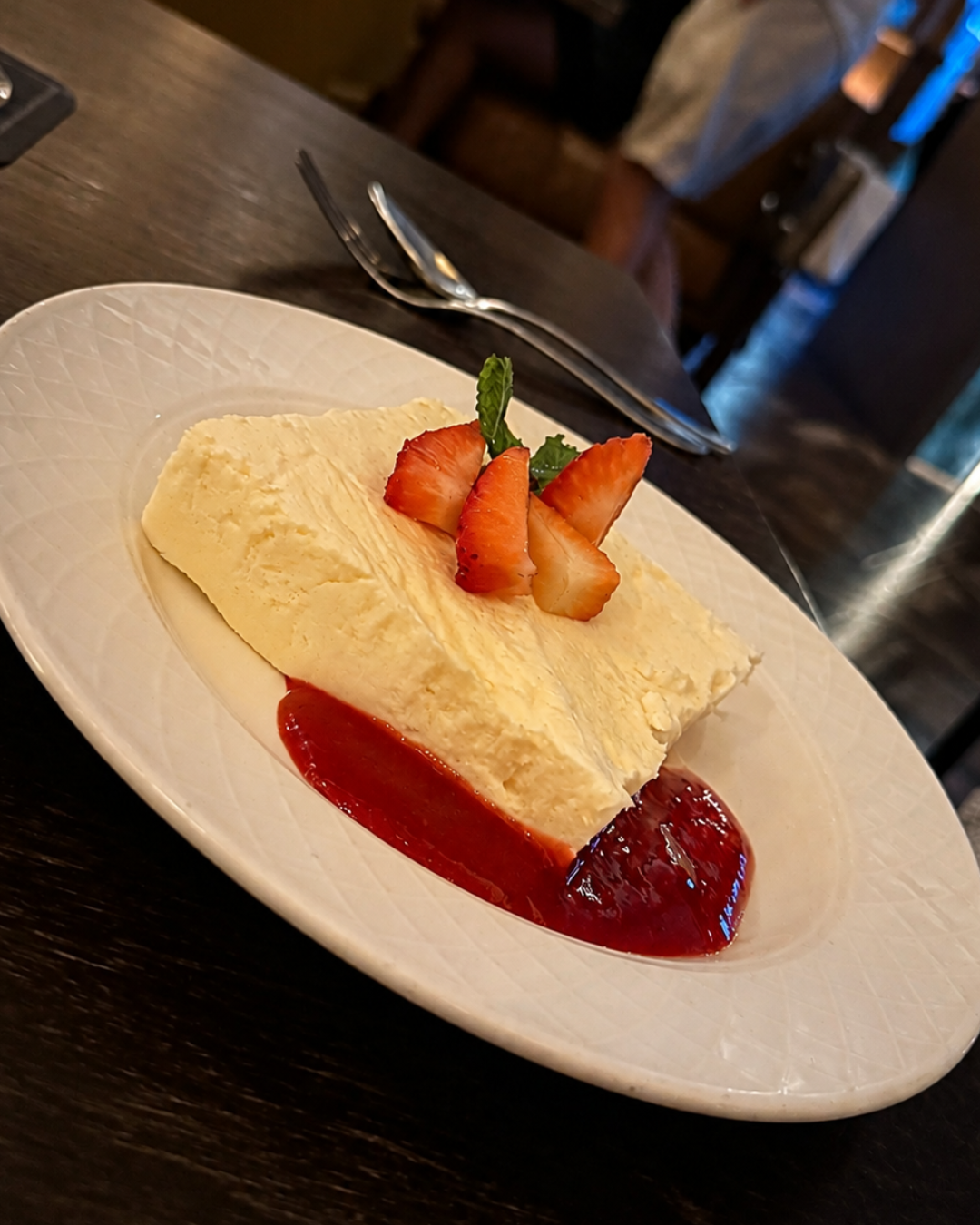
Dessert brought a tall slice of cheesecake set over raspberry coulis and finished with strawberries and mint. Despite its scale, the filling was comparatively light, with enough acidity from the fruit to keep the finish from becoming burdensome. After a meal built around smoke, puff pastry, braised meat, and reduction sauces, that balance mattered.
The dessert program itself follows the traditional steakhouse model: a concise collection of familiar, generously portioned cakes and fruit-based finales rather than highly conceptual plated pastry. The current list extends beyond cheesecake to coconut cake with coconut cream cheese frosting and passion-fruit sorbet; a chocolate layer cake constructed from a brownie base, chocolate mousse, and ganache; Dutch apple crumble in puff pastry with almond streusel, vanilla ice cream, and caramel; and a restrained bowl of seasonal berries and cream.
Service and Atmosphere
Harry’s operates with the choreography expected of an established fine-dining room. Servers were comfortable with tableside presentation, wine service, and the pacing required for a multi-course meal. The formality never became stiff, and the restaurant understood when to create a moment without drawing attention away from the table itself.
On a busy Saturday, however, the room is undeniably social. The bar fills early, conversations rise as the evening progresses, and the atmosphere approaches supper-club energy. For some diners, that pulse will be central to the appeal. Those prioritizing intimacy should choose their reservation time carefully.
What to Know Before Dining at Harry’s West Palm Beach
Go for:
The Beef Wellington, which justifies both its tableside presentation and its place as a signature dish.
A serious wine program presented in a room designed to celebrate it.
Formal service with enough warmth to feel hospitable rather than ceremonial.
A traditional steakhouse experience adapted convincingly to contemporary Palm Beach.
Keep in mind:
Prime weekend reservations can be difficult to secure during Palm Beach’s busiest months.
Saturday evenings are lively, particularly near the bar.
Pricing reflects the setting, service model, wine program, and premium ingredients.
Several of the richer dishes are better shared across the table.
Final Verdict: 9.2/10
Harry’s West Palm Beach does more than reproduce a familiar New York steakhouse formula beneath the palms. It understands which traditions are worth preserving: assured service, a substantial cellar, tableside ceremony, and technically disciplined cooking.
The restaurant is at its best when that tradition is expressed through substance rather than spectacle, the clean sear of the salmon, the smoke and acidity of the Canadian bacon, and especially the precise construction of the Beef Wellington. Not every plate carries the same distinction, but the experience as a whole feels coherent, considered, and suited to its surroundings.
Harry’s has brought a piece of Lower Manhattan dining culture to Rosemary Avenue without treating Palm Beach as a decorative afterthought. In a neighborhood still defining its modern dining identity, it already feels less like an import than an institution taking root.
Harry’s succeeds because it understands that tradition is most persuasive when it is supported by execution. The assured service, carefully structured wine program, and technically precise Beef Wellington give the restaurant substance beyond its Wall Street pedigree. It is a polished addition to downtown West Palm Beach, and a reminder that the area’s most compelling dining experiences can take markedly different forms. For a waterfront counterpoint across the bridge, read my honest review of Tutto Mare Palm Beach, where an exceptional setting encounters a far less consistent kitchen.
Harry’s West Palm Beach
384 S Rosemary Ave, West Palm Beach, FL 33401