Moxies West Palm Beach: Unreasonable Hospitality, Until It Wasn’t
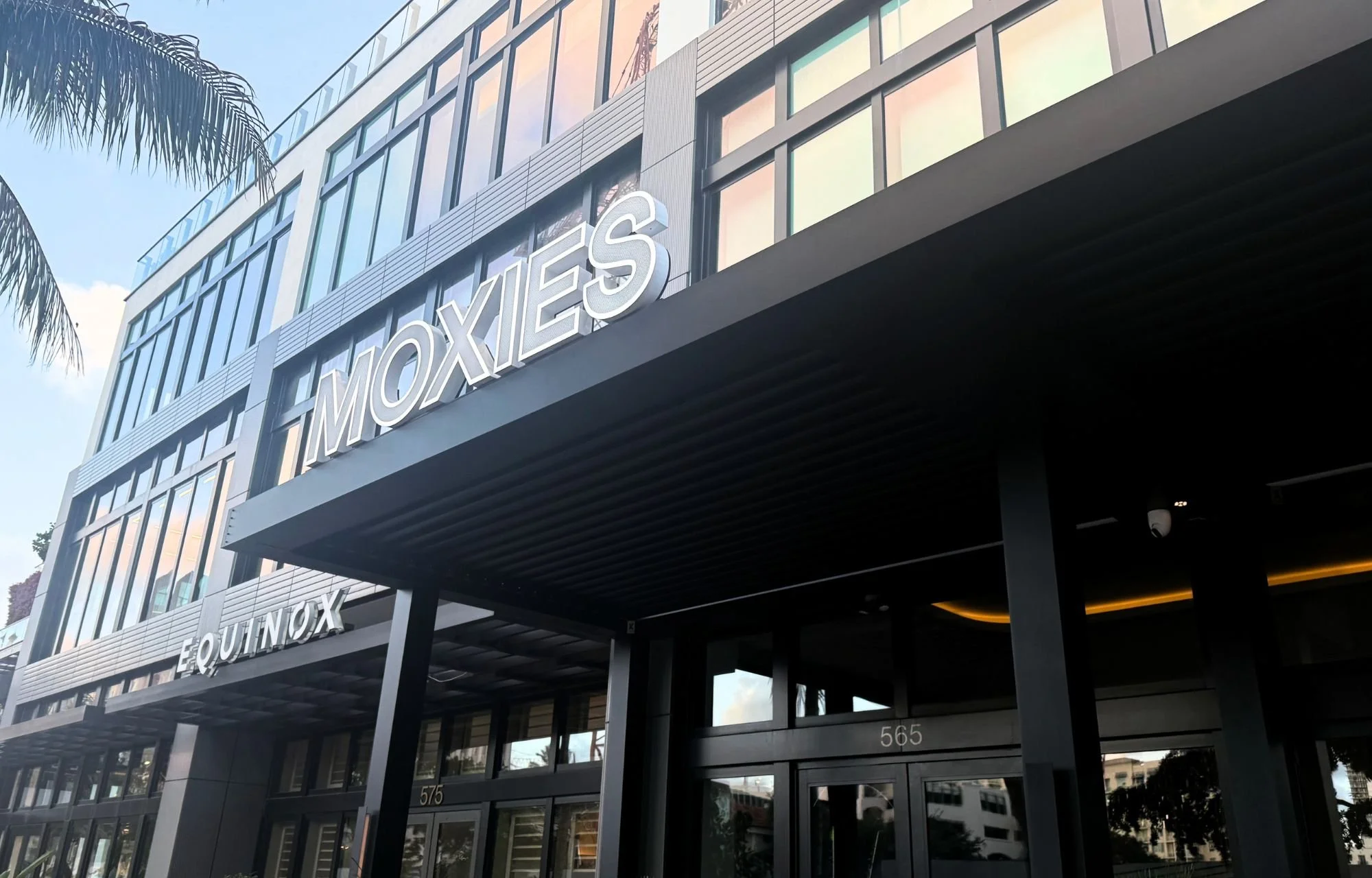
Moxies West Palm Beach opened in CityPlace with all the right ingredients: a prime downtown location, a polished dining room, a statement bar, a broad globally inspired menu, and the kind of upscale-casual energy that West Palm Beach seems to be multiplying by the week.
Located at 565 S. Rosemary Avenue, Moxies sits in the heart of CityPlace, steps from shopping, nightlife, offices, and the downtown dinner-and-drinks circuit. The brand officially opened its West Palm Beach restaurant in March 2026, marking its third Florida location and another signal that CityPlace is leaning hard into the polished social-dining lane.
On paper, it makes sense.
Moxies is built for this moment in West Palm Beach: the after-work drink, the girls’ night, the date night, the “we need somewhere lively but not too formal” dinner, the late-night cocktail, the group reservation where nobody can agree on one cuisine. The restaurant describes itself as a social hub with an elevated dining room, covered patio, lounge, two bars, happy hour, brunch, late-night dining, and a globally inspired menu.
And after three visits, here is my honest take: the food is genuinely good. The space works. The restaurant has real potential. But the hospitality depends very much on where you sit, and who is managing the moment.
Because my first two visits had me ready to call Moxies one of the best customer-service stories in downtown West Palm Beach.
Then the third visit happened.
First, What Is Moxies?
Moxies is a Canadian-born restaurant brand that has grown into a premium casual concept across Canada and the United States. The company describes itself as having 50+ locationsand a menu led by Executive Chef Brandon Thordarson, whose background includes Michelin-recognized restaurant experience and a James Beard House Canada 150 menu.
That “premium casual” label is important because it explains the whole Moxies formula.
This is not fine dining, but it is not a basic sports bar either. It is dressed-up casual. It has TVs, but also managers in suits. It has burgers and sushi. It has cocktails and wine specials. It wants to be lively without being sloppy, polished without being stiff, and approachable without feeling cheap.
OpenTable currently lists Moxies West Palm Beach as American, casual dining, and “$30 and under,” with the restaurant’s own description emphasizing a trendy, lively atmosphere, handcrafted cocktails, an extensive wine list, brunch, lunch, dinner, happy hour, late night, and private events.
In other words, Moxies is trying to be a little bit of everything, and surprisingly, the food holds up better than that usually suggests.
The Local Response So Far
Early public reviews appear mostly positive. OpenTable’s listing shows strong ratings for food, service, and ambience, and its AI-generated summary highlights the “super chic” vibe, “excellent service,” and “delicious” food, while noting that the atmosphere can be lively and loud.
There is also some local skepticism, especially in Reddit conversations, where locals debate whether Moxies is a good addition to CityPlace or another polished, expensive, out-of-town concept in a downtown already filling with upscale-casual restaurants. Some comments praise the service and atmosphere; others compare the menu to familiar South Florida bar-and-grill formulas.
That tracks with my experience almost perfectly.
Moxies is not reinventing dining. It is not trying to. It is trying to execute the upscale-casual formula well.
And when it does, it is a very enjoyable night out. When it does not, the cracks show fast.
First Visit: Girls’ Night at the Bar
My first visit was a girls’ night at the bar. The restaurant was new, the room had energy, and the menu had enough options to make it easy for a casual meet-up.
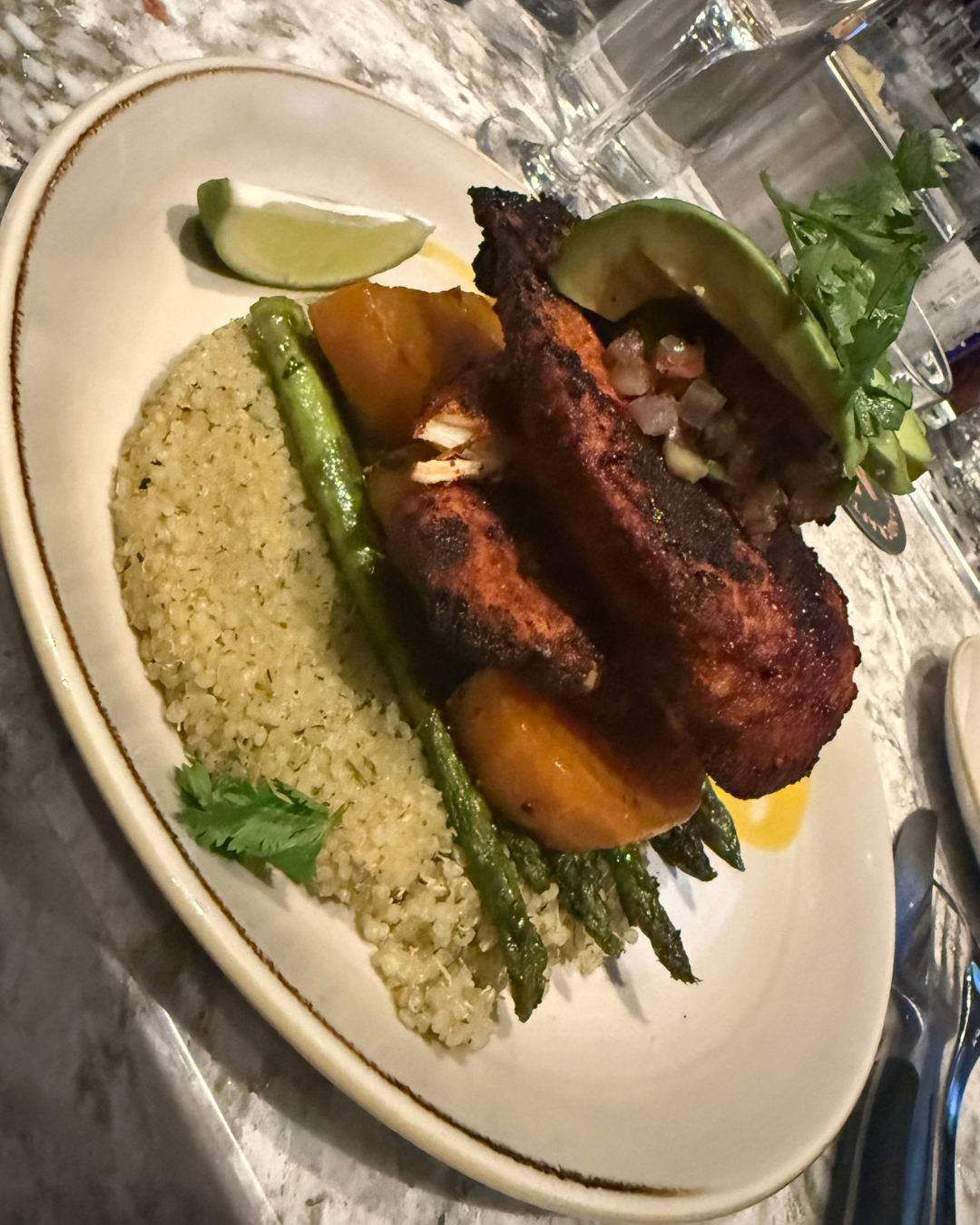
I ordered the Chipotle Mango Chicken, one of Moxies’ signature-style entrées. The menu describes it as chicken with a sweet and smoky dry rub, served with lemon quinoa, seasonal vegetables, avocado, and pico de gallo.
From the plate, it looked exactly like the kind of dish people want when they are trying to order something flavorful but not heavy. The chicken had a charred, spice-rubbed exterior, with warm smoky-sweet color and enough richness to make it feel satisfying. The quinoa kept it lighter, the asparagus added freshness, and the avocado/pico moment gave the dish a bright, casual California-meets-South-Florida feel.
It was better than expected.
So let’s say this plainly: double-check your check at Moxies, especially at the bar.
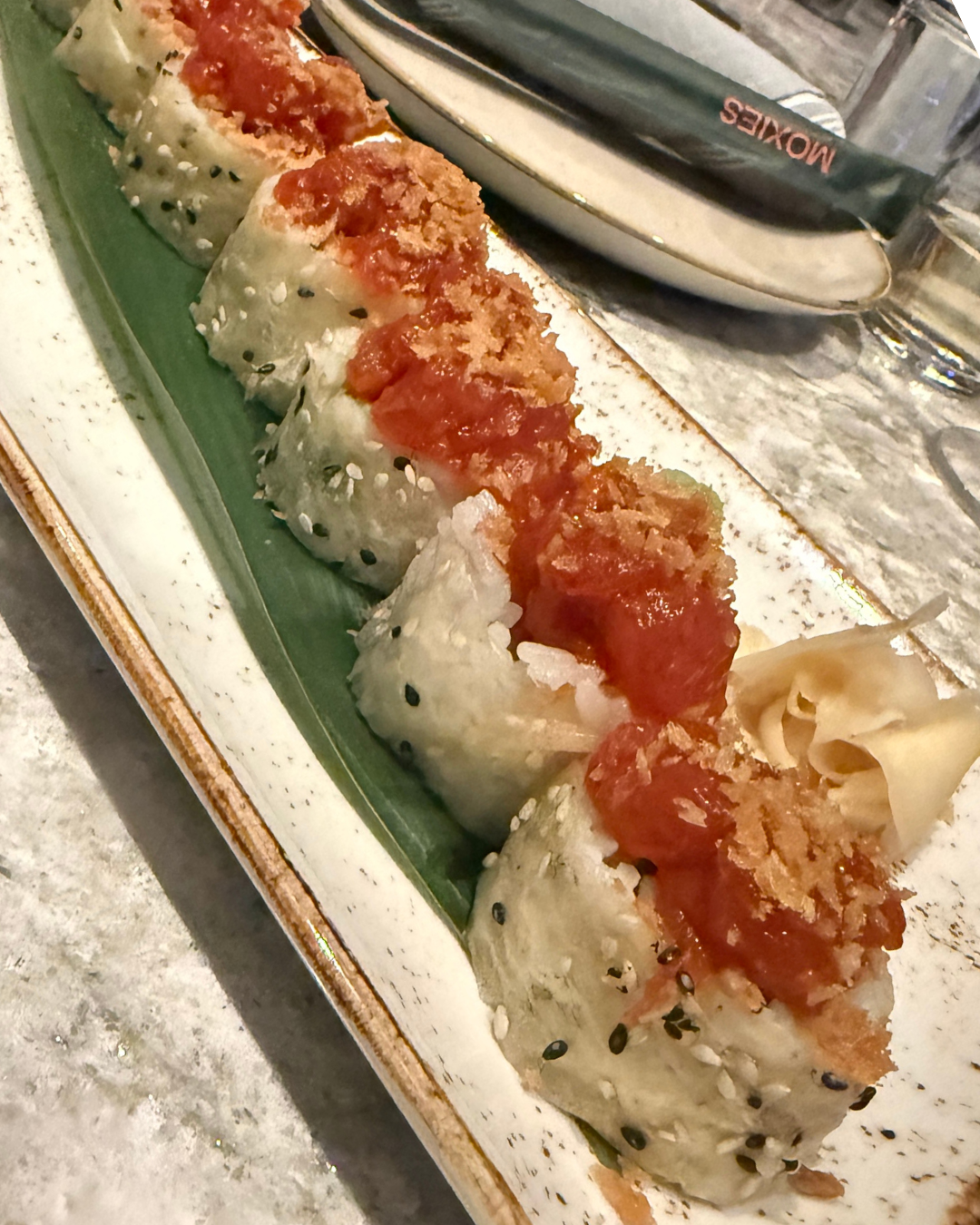
My girlfriend ordered a tuna sushi roll, and that was also surprisingly good: clean, fresh, nicely presented, and not the “why does this restaurant even have sushi?” kind of sushi. Moxies has a whole sushi/raw section, including items like the Tuna Sushi Stack and sushi rolls, and that part of the menu seems to be one of the better reasons to go.
But then came the check.
I was overcharged by mistake. It looked like I had been charged for more wine than I ordered, and another item ended up on my bill that did not belong to me. Was it malicious? I do not think so. Was it annoying? Absolutely.
Also worth mentioning: at the bar, we were asked to provide a credit card before placing the first order so they could authorize it. I understand why restaurants do this. I understand bar tabs. I understand downtown foot traffic. I understand protecting the business. But in a restaurant selling polished hospitality, it does create a slightly bitter first impression. Before the first drink even arrives, the interaction already has a little “we don’t fully trust you” energy. Not a dealbreaker. But noticeable.
Second Visit: Date Night, Great Recovery, and the Moxies I Wanted to Love
The second visit was a date night reservation, and this is where Moxies almost won me over completely.
We had requested standard seating, but for some reason we were placed at a high-top even though there appeared to be plenty of booths available. It was a strange choice for a reservation, especially when the requested seating type was clear. But then the service started, and the restaurant recovered quickly.
Our server was genuinely friendly, attentive, and warm. Drinks were delivered by well-trained managers in suits. The room had that newly opened, highly managed, high-touch energy: people watching tables, checking in, keeping the flow moving.
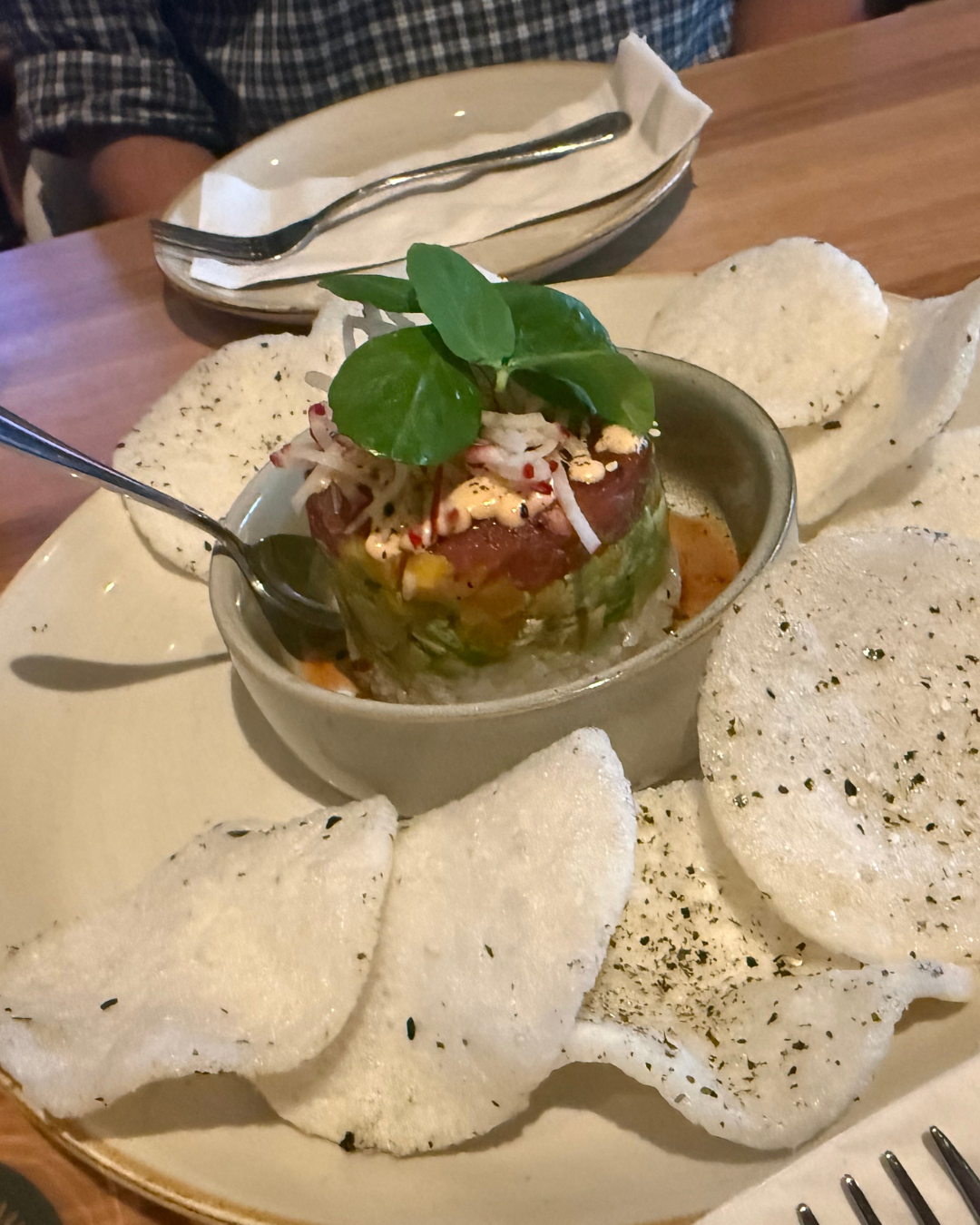
We started with the Tuna Sushi Stack, which is one of the standout appetizers on the menu. It is made with sushi-grade tuna, seasoned rice, avocado, mango, soy ginger glaze, spicy mayo, and prawn crackers.
This was the version of Moxies that works.
Visually, it is fun without being ridiculous: a neat stack in the center, surrounded by airy prawn chips that act like edible scoops. It has texture, freshness, creaminess, a little spice, a little sweetness, and enough presentation to make it feel like a proper shareable starter.
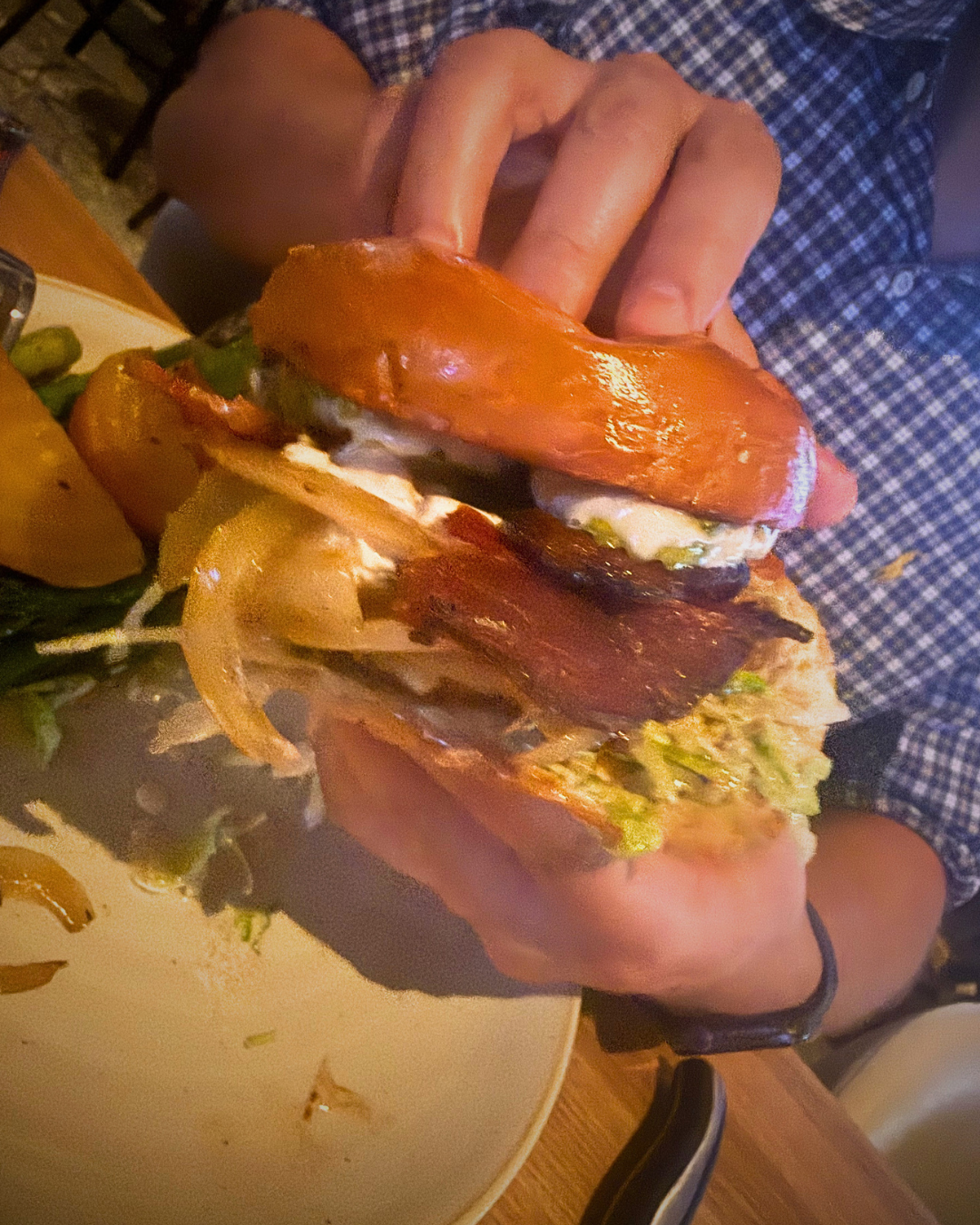
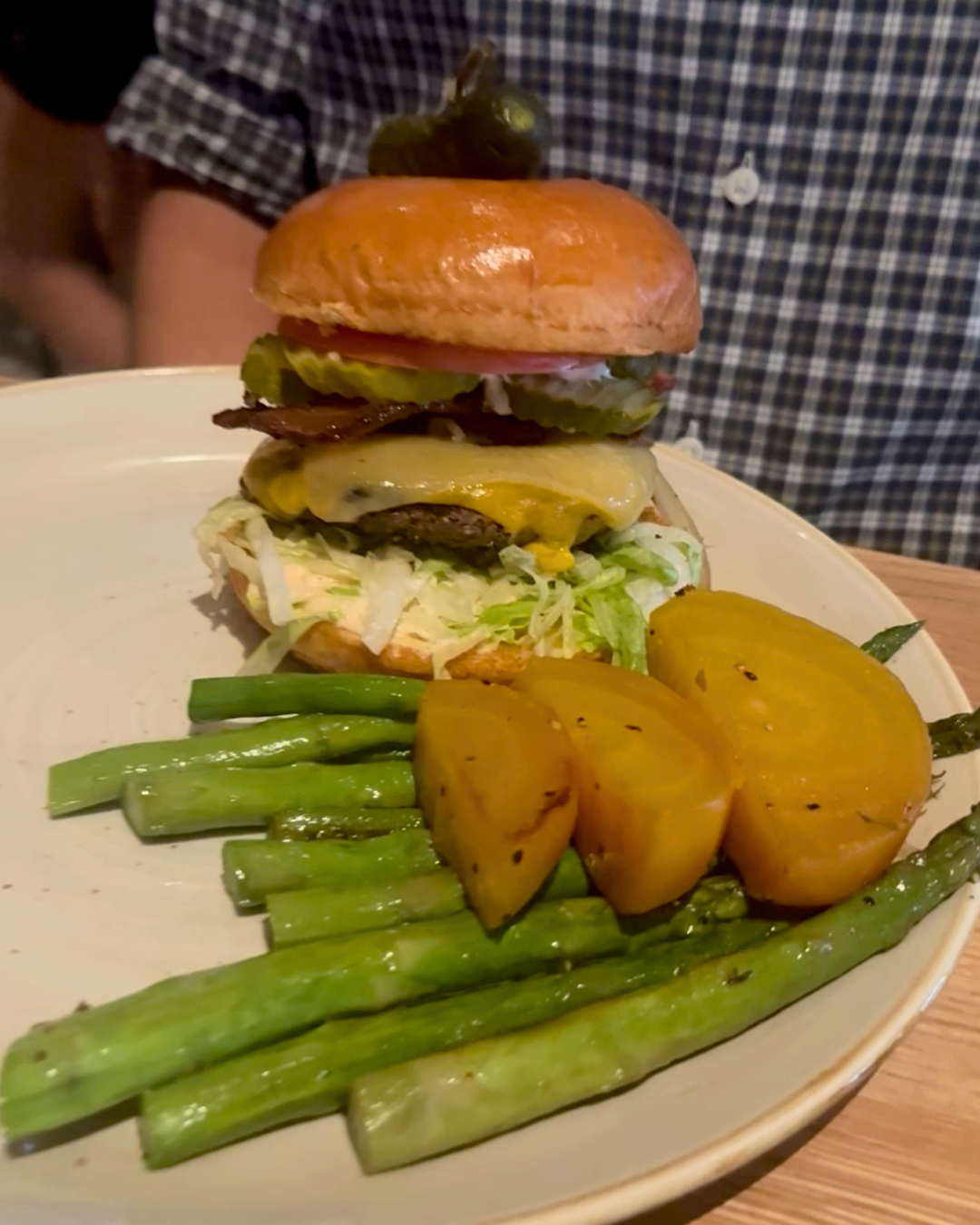
For entrées, he ordered a burger. He liked the flavor, but it came out well done instead of medium rare. That is a kitchen miss. If someone orders a burger medium rare and it arrives well done, it should be acknowledged.
And to Moxies’ credit, it was. He mentioned the temperature to the waitress, and she immediately told the manager. The manager came over, handled it professionally, comped 50% of the burger, and offered dessert on the house. That is hospitality.
Not because everything was perfect. Hospitality is rarely about perfection. It is about what happens after something goes wrong.
This was the kind of recovery that makes a guest feel seen instead of difficult.
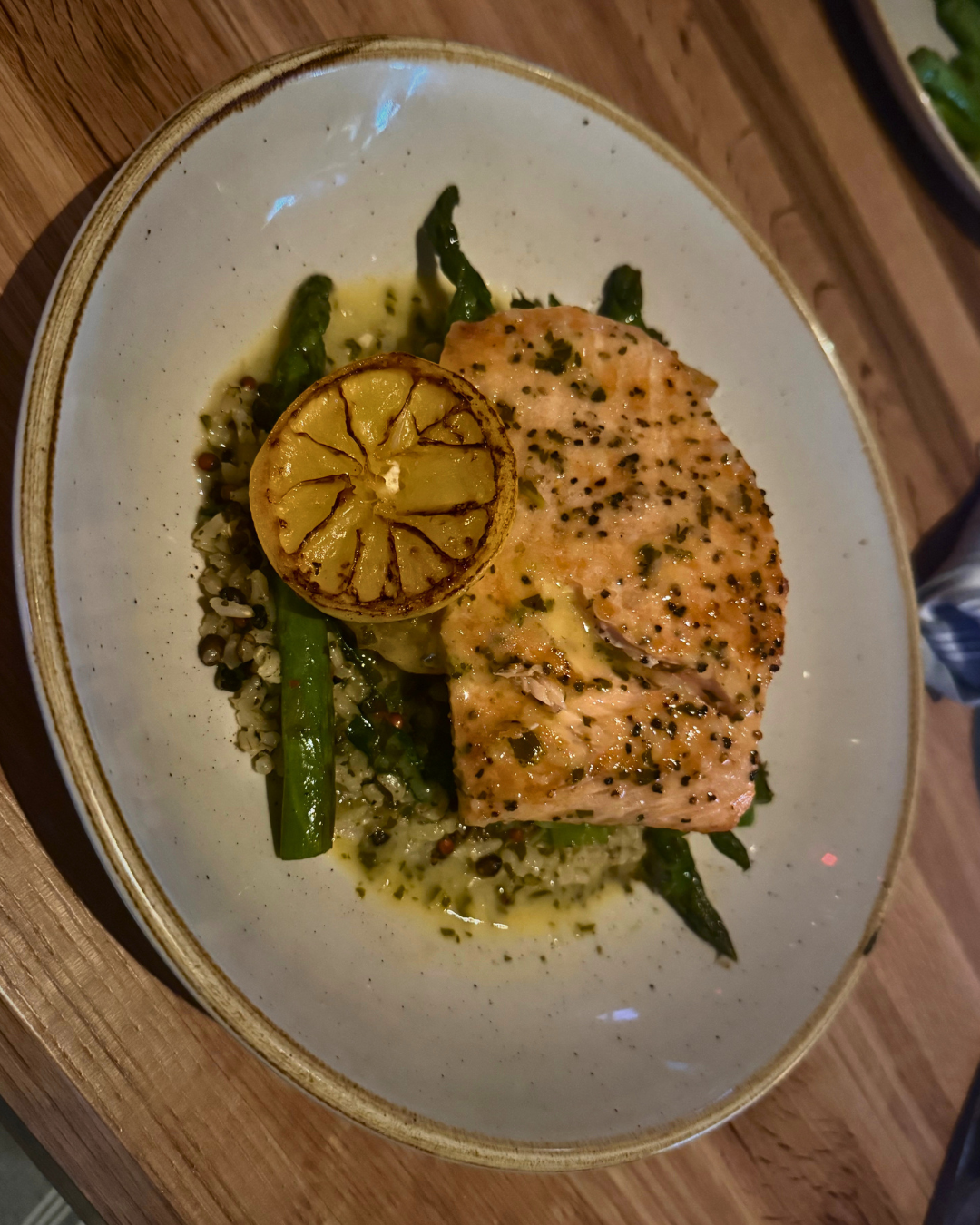
I ordered the Scottish Salmon, which the menu describes as pan-seared salmon with ancient grains, lemon herb sauce, and seasonal vegetables. It was very good. Clean, well-cooked, fresh, satisfying. The lemon herb sauce gave it brightness, the grains made it feel substantial, and the vegetables kept the plate balanced. It was not trying to be edgy or overly chef-y. It was just a solid, polished, well-executed salmon entrée.
We left happy. Actually, we left so happy that I was ready to write a review titled something like: “Moxies Has the Best Customer Service in Town.”
And then came visit number three.
Third Visit: Same Bar, Very Different Hospitality
The third visit was another spontaneous meet-up with the same girlfriend early Sunday night. She got there first and grabbed seats at the bar. The bar was not slammed. This was not one of those chaotic nights where everyone is drowning, drinks are backed up, and you give the staff extra grace because the whole room is on fire.
I sat down, and the bartender asked what I wanted to drink. I ordered a Sauvignon Blanc. There were two pour options: 6 ounces or 9 ounces, and I ordered the 9-ounce pour.
Then came the card request again. Before ordering food, before settling in, before anything else, I was asked for my credit card. Again, I understand the policy. But again, it sets a tone.
The wine came in a small carafe, and immediately it did not look like a 9-ounce pour to me. I drank it, then noticed another guest’s 9-ounce red wine nearby appeared to be poured much higher in the carafe. So I asked the bartender a simple question: was he sure mine was 9 ounces and not 6?
That should have been an easy hospitality moment.
A good answer could have been:
“Let me double-check that for you.”
Or:
“It should be 9, but I’m happy to make sure.”
Or even:
“I poured it myself, but I want you to feel good about it.”
Instead, the tone became defensive. The bartender insisted he poured exactly what I ordered and asked if he should call a manager. I said sure.
The young female manager came over, and instead of approaching the situation with curiosity, she came in with certainty. The message was essentially: I stand by my bartender.
That may be a good internal leadership instinct, but it’s not a hospitality response.
A guest asking a question about a measured pour is not an attack. It is not a personal accusation. It is a service question with a simple solution.
My girlfriend suggested they check the camera footage. The manager left to review it, and while she was gone, the situation got even more uncomfortable. The bartender essentially stopped engaging with me. He did not refill my empty water glass. He did not check in with me. Instead, he deliberately checked in only with my girlfriend, as if I had become invisible at the bar.
I eventually had to ask for a water refill myself. That part matters.
Because hospitality is not just the big apology or the manager comping something after the fact. Hospitality is also what happens in the small, silent moments after tension appears. Do you still treat the guest like a guest? Do you still refill the water? Do you still maintain basic service? Or do you punish the guest with distance because they asked a question?
In this case, it felt like the latter.
The manager returned and said the camera footage was blurry, but she was sure the bartender poured 9 ounces. Then she offered more wine, but framed it as if I was arguing over three ounces.
And that is where the experience changed.
Because the issue was never really three ounces of Sauvignon Blanc. The issue was being made to feel like a problem for asking a reasonable question. The issue was a manager escalating defensiveness instead of defusing tension. The issue was the bartender withdrawing basic service while the situation was being “investigated.” The issue was having the conversation unfold publicly at the bar, where nearby guests could hear the exchange. The issue was that this felt like the opposite of hospitality.
Where “Unreasonable Hospitality” Comes In
There is a reason the idea of unreasonable hospitality has become such a popular phrase in restaurant culture. It is not about giving away free things or letting guests walk all over staff. It is about understanding that the emotional memory of a restaurant often matters as much as the food.
People remember how they were made to feel. A manager can stand by their team and still make the guest feel respected. A bartender can be confident in their pour and still double-check without attitude. A restaurant can protect its policies and still lead with warmth.
That is the difference between service and hospitality. Service is bringing the wine. Hospitality is noticing when the guest feels uncomfortable and fixing the feeling. On the second visit, Moxies understood that. On the third visit, it absolutely did not.
Go For
Chipotle Mango Chicken if you want something flavorful, colorful, and satisfying without feeling overly heavy.
Scottish Salmon if you want a clean, well-executed entrée.
A lively dinner, a casual date night, a group meet-up, happy hour, or a downtown West Palm Beach night where you want energy without committing to fine dining.
The dining room if you want the best version of Moxies.
Be Prepared To
Hand over your card before ordering at the bar.
Double-check your check.
Confirm your seating preference if you requested standard seating with your reservation.
A lively, sometimes loud room.
And if you order wine by the ounce at the bar, be prepared to pay attention to the pour!
Want the honest scoop on restaurants in Palm Beach and beyond? Subscribe to the Dining with Maria monthly newsletter for the latest reviews, hidden gems, and what’s actually worth ordering.