Café Boulud Palm Beach: French Tradition, Palm Beach Ease
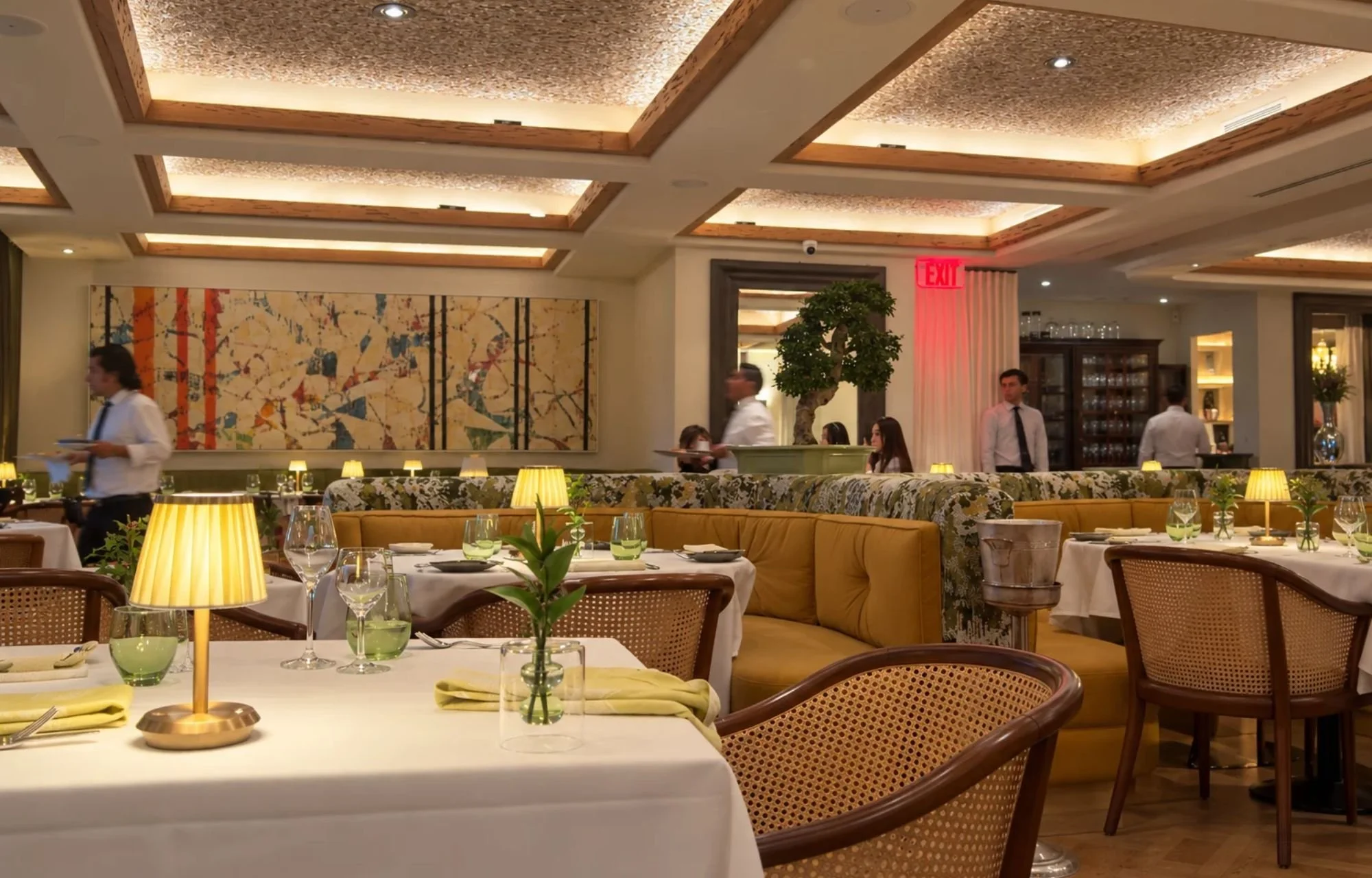
An evening of French culinary artistry, exceptional hospitality, and a century of Palm Beach history at The Brazilian Court.
I had a reservation at Café Boulud Palm Beach, along with a few reservations of my own. After reading sharply divided online reviews, particularly about service, I wondered whether Daniel Boulud's celebrated French restaurant still lived up to its reputation. Our dinner answered that question with thoughtful hospitality, a beautifully selected Sancerre, and a Loup en Paupiette I haven't stopped thinking about.
This Café Boulud Palm Beach review goes beyond the dining table to explore the restaurant's fascinating connection to The Brazilian Court Hotel, its century of Palm Beach history, distinctive architecture, and the chefs behind its celebrated French cuisine. But we'll begin with what matters most to anyone considering a reservation: what we ordered, how the food and service measured up, and whether the experience justified its reputation. Then we'll venture beyond the plate to discover the history, people, and design that make Café Boulud such a distinctive part of Palm Beach's dining scene.
The Quick Take
Best for: Refined date nights, special occasions, long Palm Beach lunches, and sophisticated gatherings
Cuisine: French-American with seasonal and locally influenced ingredients
Setting: The historic Brazilian Court Hotel
What I’d order again: Daniel’s Loup en Paupiette
Also worth ordering: Foie gras terrine, tuna tartare, garden-herb ravioli
Wine: An excellent room for a bottle of French Sancerre
Vibe: Elegant, intimate, discreet, and distinctly Palm Beach
Service: Polished, attentive, and refreshingly personal during our visit
Would I return? Absolutely. Brunch is next.
What to Order at Café Boulud Palm Beach
Café Boulud's menu is relatively concise, but after our dinner, I found that restraint is part of its appeal. Each dish seemed carefully considered, with classical French technique providing the foundation and contemporary presentation adding personality.
What impressed me most was how consistently the kitchen balanced visual artistry with flavor. Nothing felt decorative for decoration's sake. Textures, temperatures, acidity, and richness each played a clear role, and several preparations offered genuinely interesting interpretations of familiar ingredients.
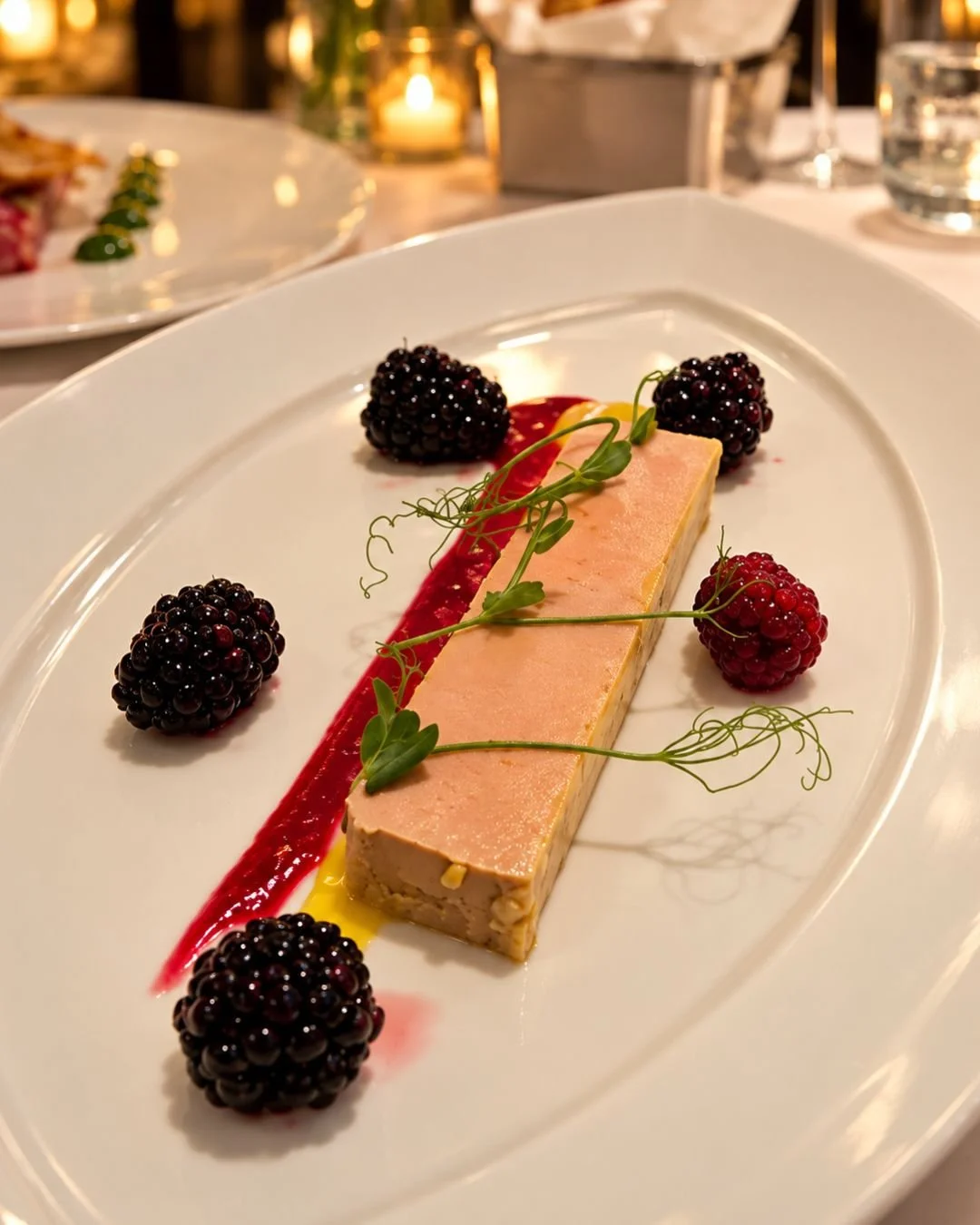
Terrine de Foie Gras
Raspberry, charcoal brioche
Our dinner began with a beautifully presented foie gras terrine, accented with vivid raspberry, fresh berries, and charcoal brioche. The foie gras was rich and silky, with the luxurious, buttery texture that makes this traditional French preparation so distinctive.
I particularly enjoyed creating my own miniature composition: a little brioche, a delicate slice of foie gras, and a berry carefully positioned on top. There is something wonderfully satisfying about a dish that lets you participate in the final presentation. The fruit's acidity balanced the richness, while the brioche added a welcome textural contrast.A little culinary artwork, assembled bite by bite.
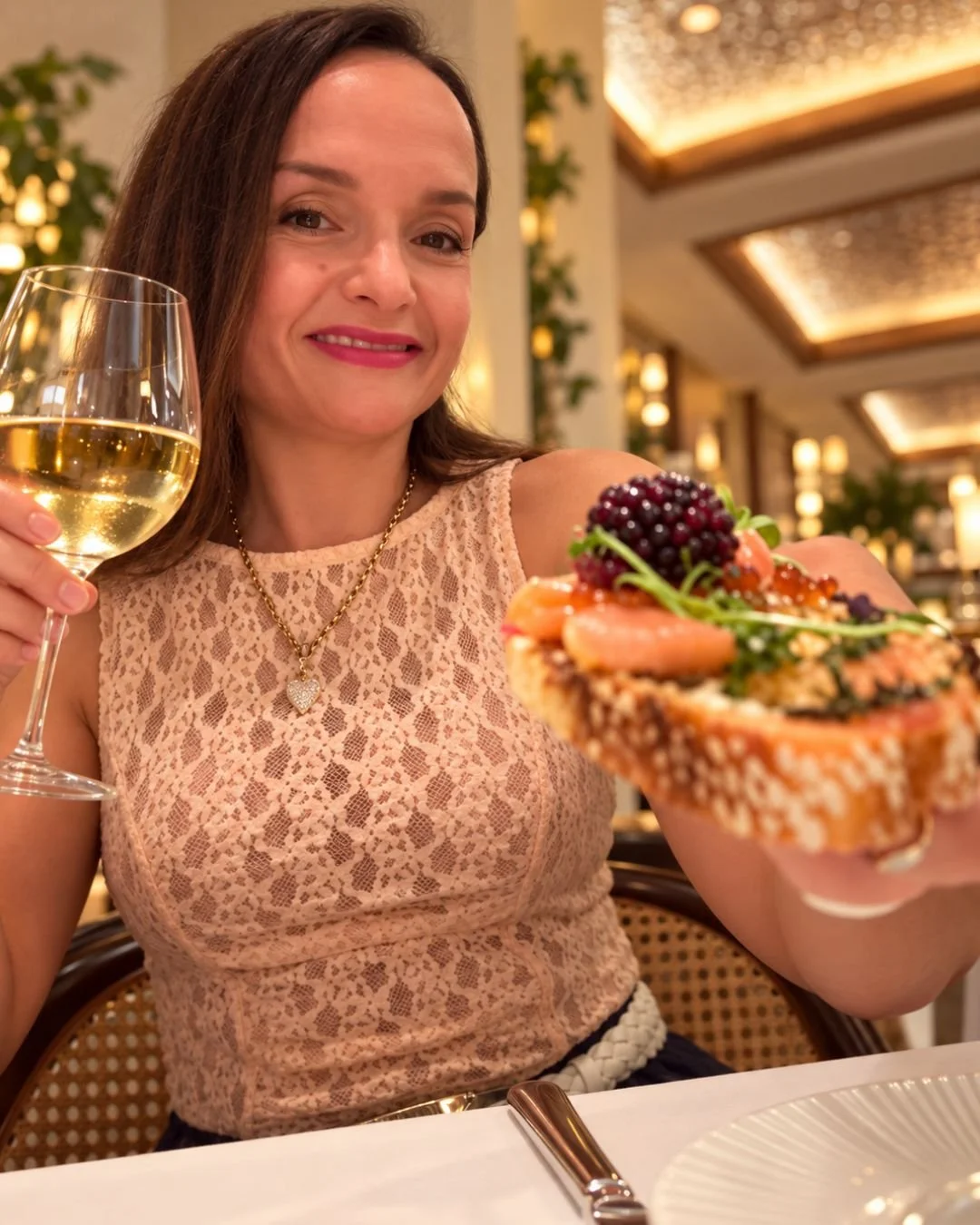
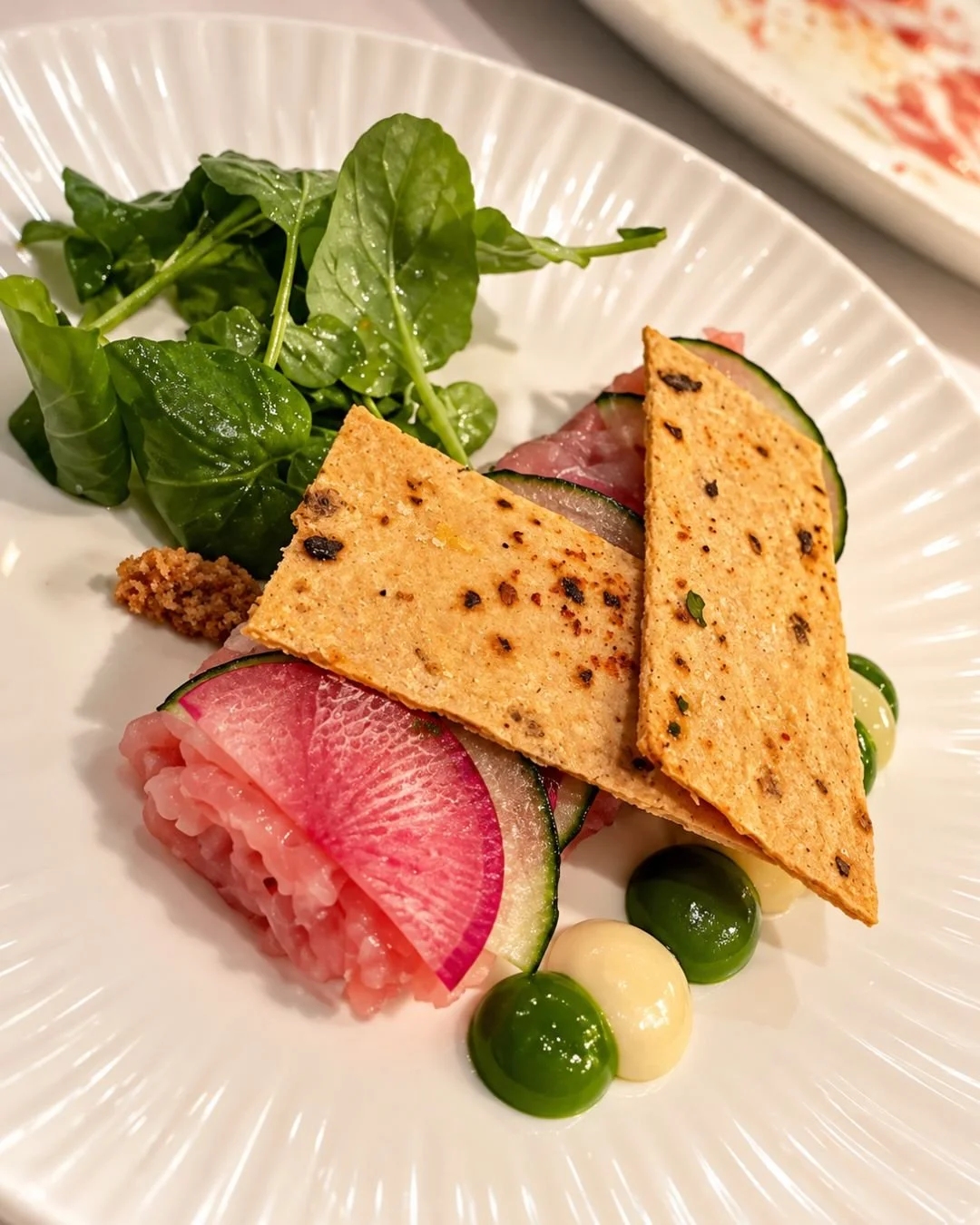
Tartare de Thon
Bluefin tuna, cucumber, Aleppo socca
The bluefin tuna tartare arrived as an intricate arrangement of finely prepared fish, cool cucumber, vivid pink radish, delicate greens, and thin, seasoned crisps. Small accents of green and pale sauces added color and moisture to a dish that already looked like a carefully composed still life.
The tuna had a wonderfully fresh, clean character, while the cucumber and radish brought brightness and crunch. The Aleppo socca, a crisp chickpea-flour preparation seasoned with Aleppo pepper, offered an especially interesting textural contrast.
No heavy dressing competed with the fish; it was a beautifully balanced combination of freshness, acidity, and texture.
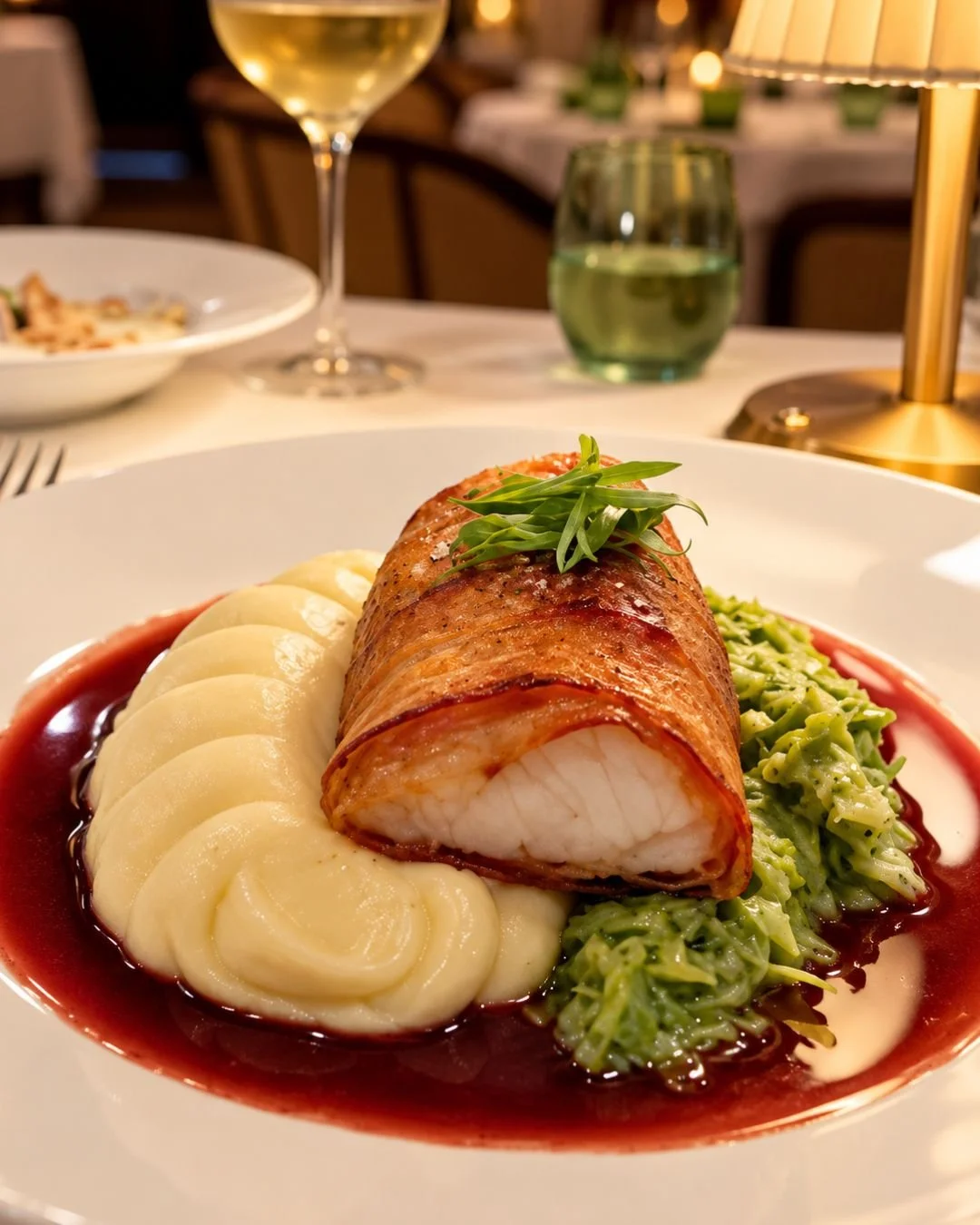
Daniel's “Loup en Paupiette”
Potato-crusted sea bass, leek, sauce meurette
Now we arrive at the dish that made me reconsider everything I thought a sea bass preparation could be.
Imagine receiving what looks like a miniature Beef Wellington, only to discover that instead of pastry-wrapped beef, you're looking at a perfectly cooked sea bass fillet encased in an intricate crust of thinly sliced potatoes.
The presentation is remarkable, but the story behind it is equally fascinating.
Daniel's Loup en Paupiette is one of Boulud's most celebrated signature creations, dating to his years at Le Cirque in the 1980s.
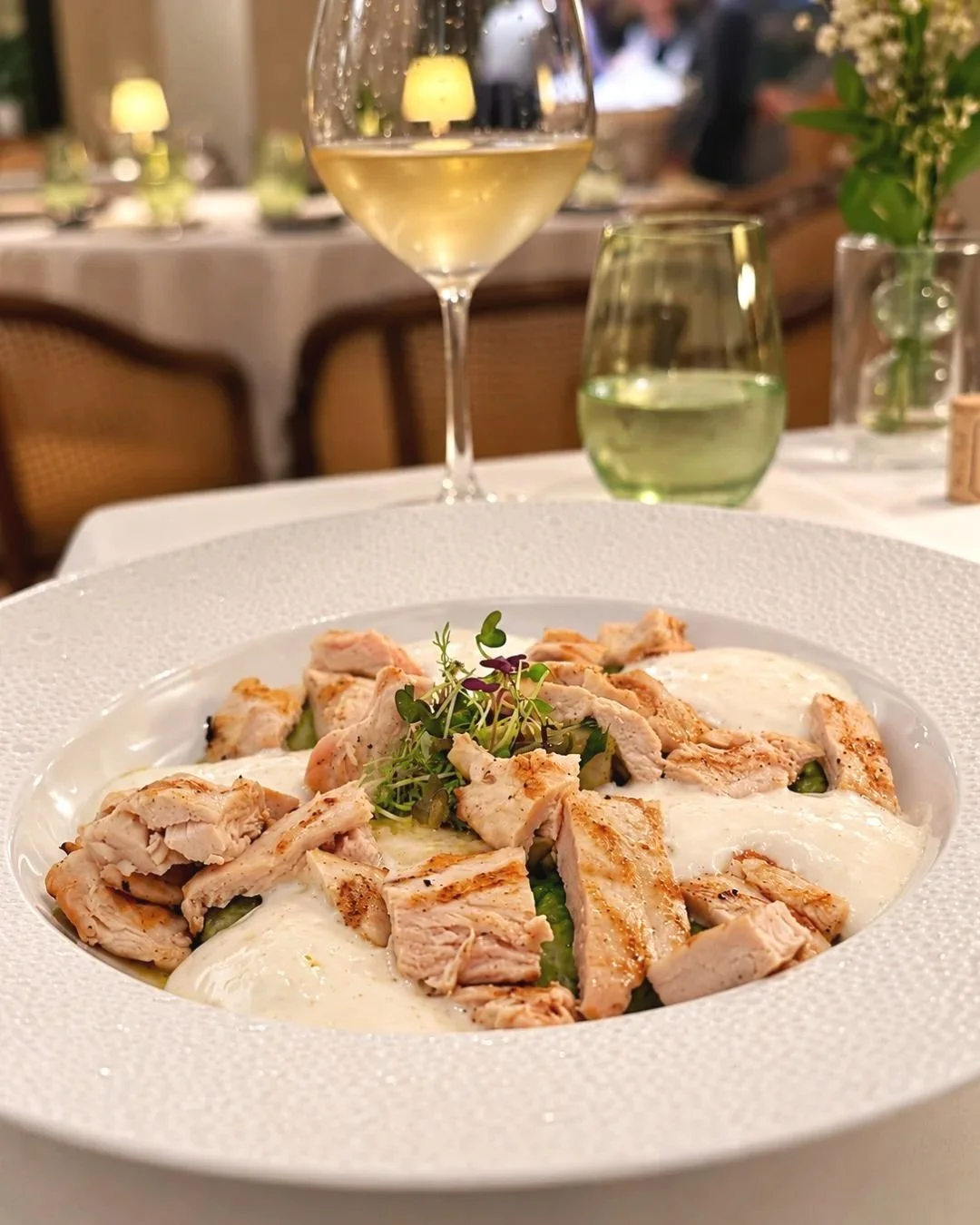
Ravioli aux Herbes du Jardin
Confit tomato, artichokes, Parmigiano espuma
My dinner companion chose the garden-herb ravioli, served with confit tomato, artichokes, and a delicate Parmigiano espuma. The latter, an airy Parmesan foam, adds the savory depth of aged cheese without the heaviness of a conventional cream sauce.
The dish offered an elegant expression of the Italian influences Chef Zabita brings to the kitchen. The pasta was thoughtfully composed, with rich cheese notes balanced by vegetables and the acidity of confit tomato.
However, the restaurant's approach to customization deserves special attention. We requested extra protein, and the kitchen happily accommodated us with seafood and meat options. It was a small gesture, but it set this experience apart from another recent dinner in Palm Beach.
During our visit to Tutto Mare Palm Beach, the restaurant declined a similar request to add protein to a pasta dish under its menu policy. At Café Boulud, a long-established fine-dining institution with an equally distinguished culinary pedigree, they handled flexibility with ease.
I found the contrast particularly interesting. Respecting a chef's culinary vision and accommodating a guest's reasonable preferences are not mutually exclusive. Sometimes, excellent hospitality is simply knowing when a little flexibility makes the evening better.
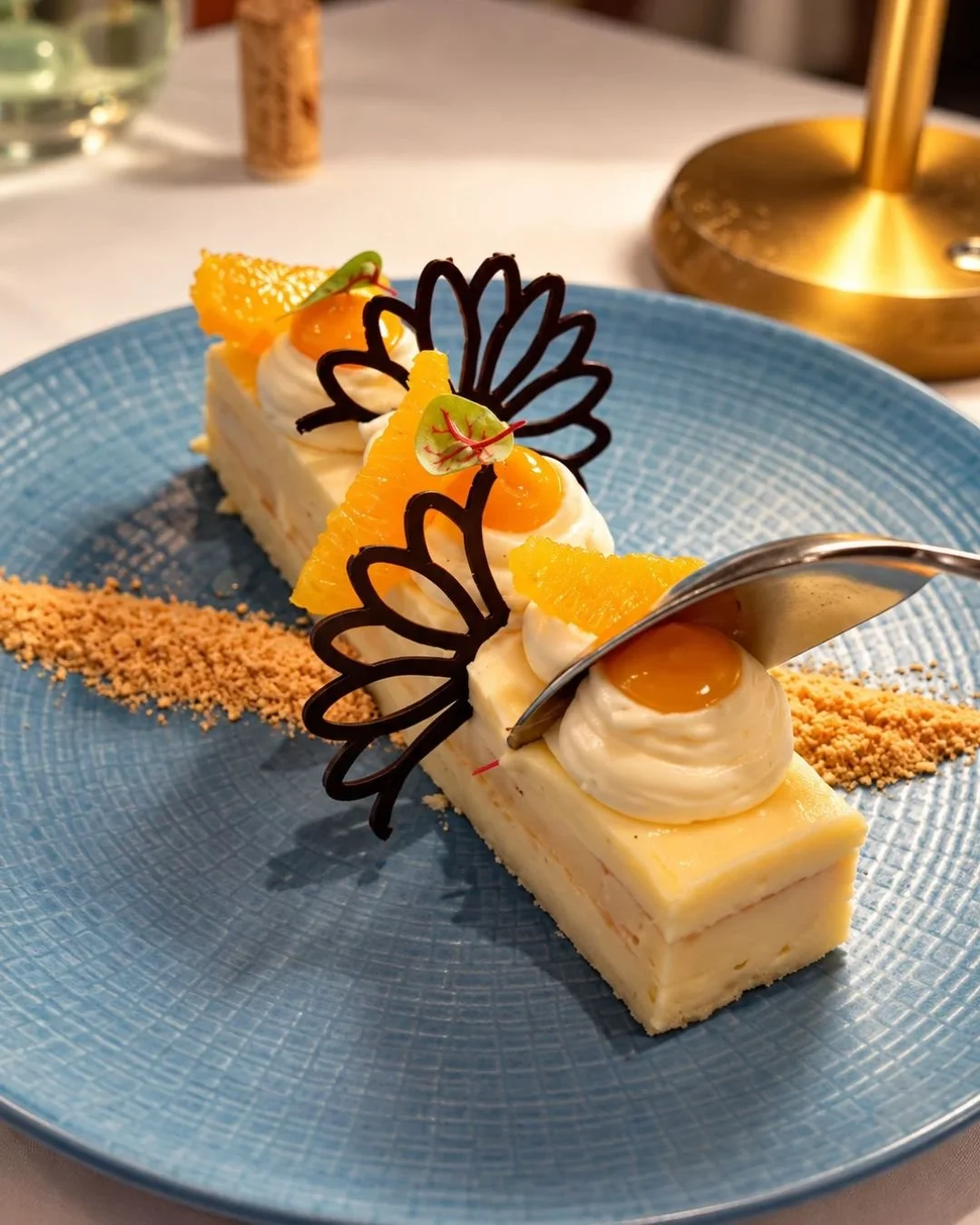
Key Lime Slice
Mango gel
Dessert concluded the evening with an elegant, contemporary interpretation of Florida's signature citrus flavors.
The key lime dessert arrived as a delicate layered creation, decorated with airy white cream, bright citrus segments, glossy mango accents, and intricate chocolate ornaments. Beneath and around the composition, a fine scattering of buttery, graham-style crumbs introduced an essential textural contrast.
I was particularly impressed by the balance. The citrus offered enough acidity to keep the dessert lively, while the soft, mousse-like layers and mango elements supplied sweetness without overwhelming the palate.
The delicate cream and crisp crumb provided just enough contrast to make each bite feel complete. The presentation was playful and almost architectural, but the flavors stayed controlled and harmonious.
It felt like an appropriate conclusion to our dinner: classical pastry craftsmanship interpreted through South Florida's lighter, tropical character.
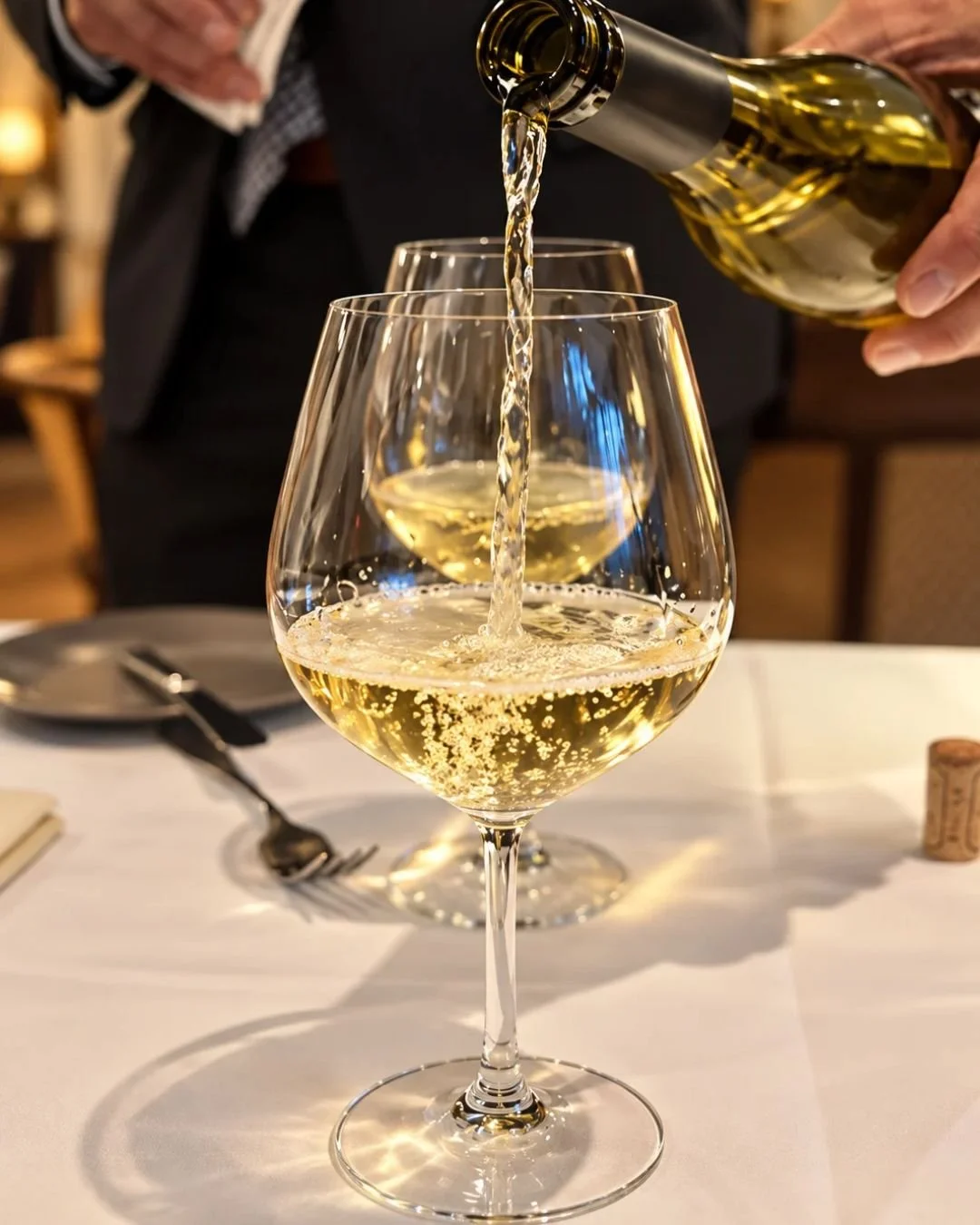
A Sancerre Kind of Room
Wine became an important part of the evening.
Head Sommelier David Sauer helped guide us toward a French Sancerre from the Loire Valley rather than simply steering us toward the most expensive bottle on the list.
It was exactly right for the meal.
Some wines simply feel at home in certain rooms, and Café Boulud is one of those places for Sancerre. The crispness and acidity worked beautifully against both the richness of the foie gras and the cleaner seafood preparations.
Interestingly enough, Café Boulud's broader wine program has earned Wine Spectator's Best of Award of Excellence, including recognition in 2026. The distinction recognizes wine lists offering depth, variety, and thoughtful selections that complement the restaurant's cuisine.
Looking for the latest dishes and pricing? View the current Café Boulud Palm Beach dinner menu →
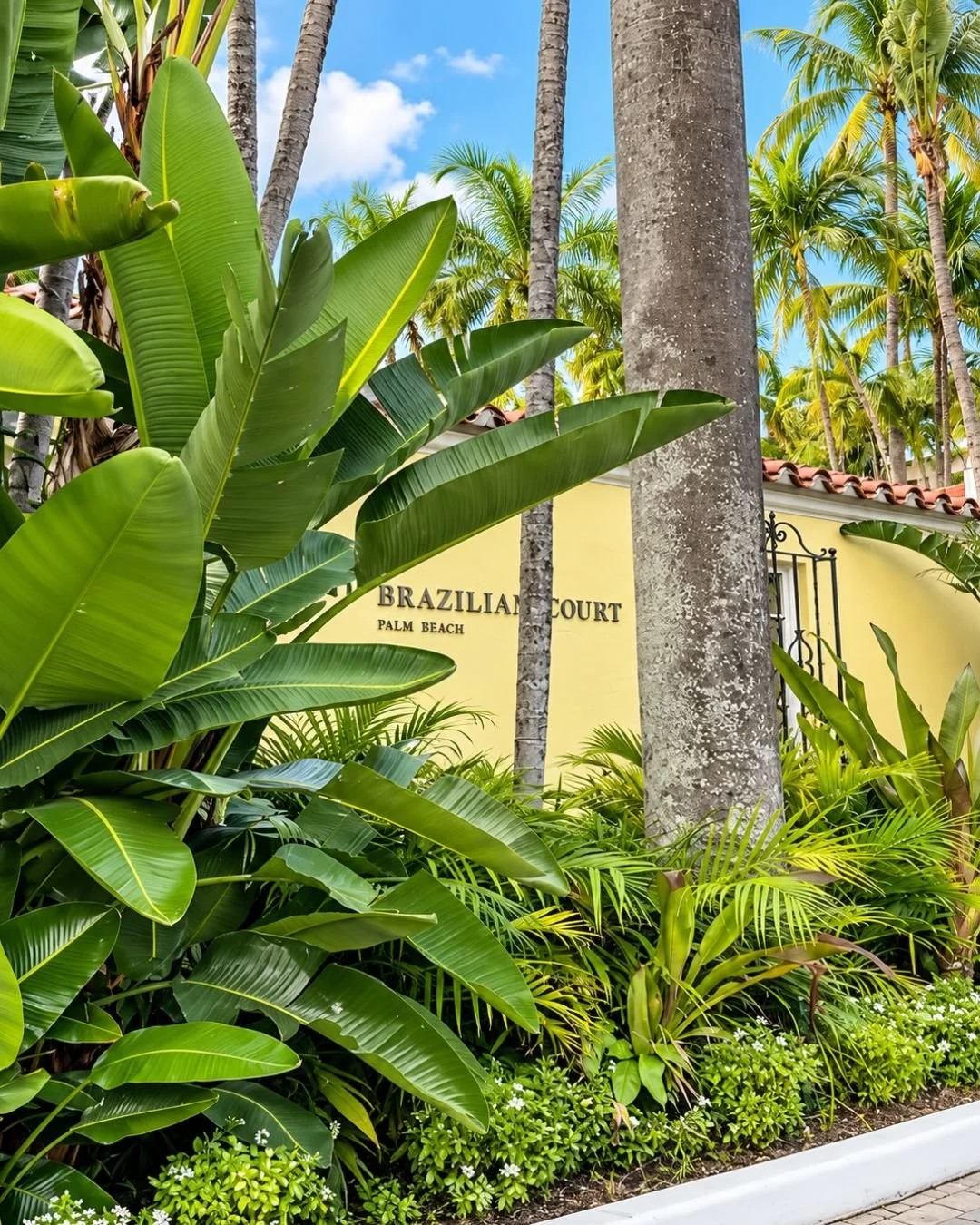
The Brazilian Court: One Hundred Years of Palm Beach Glamour
The evening begins long before you reach the restaurant. Tucked behind a pale-yellow Mediterranean façade just a few blocks from Worth Avenue, The Brazilian Court Hotel unfolds through shaded passageways, lush courtyards, bubbling fountains, and carefully preserved architectural details. The experience feels wonderfully residential, as though you've been invited into one of Palm Beach's most elegant private estates.
Opened on New Year's Day in 1926, the hotel celebrates its centennial in 2026. Its history traces back to Palm Beach's rise as an exclusive winter retreat, when privacy was as valuable as grandeur.
Rosario Candela, the Sicilian-born architect best known for his prestigious Manhattan apartment buildings along Fifth Avenue and Park Avenue, designed the original property in 1925. Rather than emphasizing an imposing street entrance, Candela arranged the original 116-apartment complex around an intimate central courtyard. Its Mediterranean Revival design featured textured stucco, arched walkways, terracotta roof tiles, ornamental ironwork, and an inward-facing layout that protected guests from the commotion beyond its walls.
In 1936, distinguished society architect Maurice Fatio, working through Treanor and Fatio, expanded the hotel with a southern wing, additional accommodations, and another courtyard. Fatio's contribution preserved the property's intimate character while introducing further architectural refinement. The complex was designated a Palm Beach landmark in 1994.
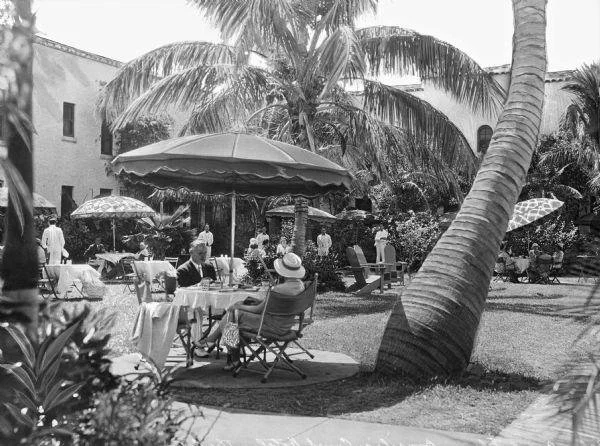
A Storied Address in Palm Beach Society
As Palm Beach became one of America's most fashionable winter destinations, the Brazilian Court carved out its own place in the island's social history. Its intimate courtyards, residential-style accommodations, and quietly elegant atmosphere attracted an extraordinary circle of visitors.
Photography source collection: Albertype Company
The Brazilian Court became a favorite retreat for Hollywood personalities and prominent society figures. Its distinguished visitors reportedly included Greta Garbo, Gary Cooper, Cary Grant, Audrey Hepburn, and members of the Kennedy family.
The attraction was not merely luxury but discretion, an increasingly valuable commodity in Palm Beach even today.
The hotel's interiors have evolved considerably. An excellent 2004 Architectural Digest feature documents its transformation after the Schlesinger family acquired the property in 2001. Designer Leslie Schlesinger, working with The Lawrence Group and interior designer Cash Guyot, introduced a more contemporary take on its original elegance. Landscape architect Mario Nievera helped rejuvenate the tropical courtyards, preserving the garden-centered architecture that makes the property so distinctive.
Today, the property operates as an intimate luxury hotel with approximately 80 rooms and suites. Current owner Bobby Schlesinger continues the family's commitment to preservation, while contemporary designer Lauren Hastings has helped introduce fresh interiors without abandoning the property's historic identity.
The Brazilian Court has managed something increasingly difficult in luxury hospitality: it has remained relevant without sacrificing the character that made it special in the first place.
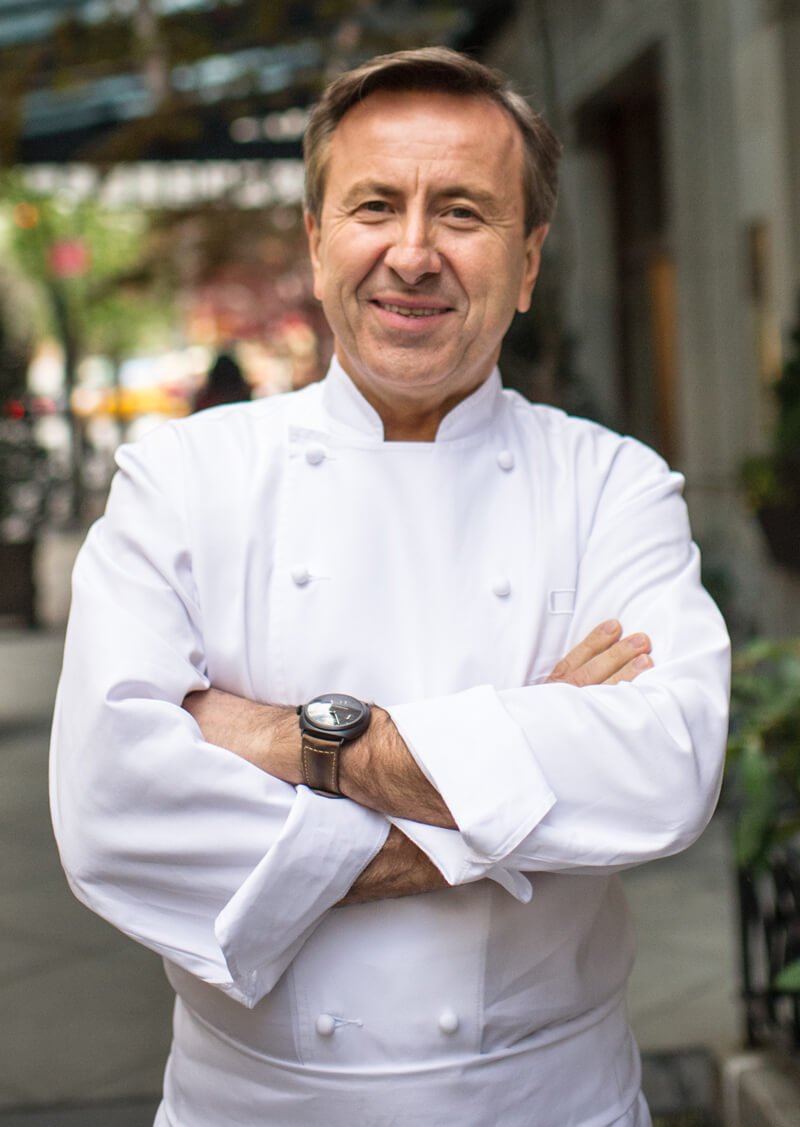
Why Daniel Boulud Fits The Brazilian Court
To understand why Café Boulud works so naturally here, it helps to understand the chef whose name appears above the door.
Daniel Boulud was born in 1955 and grew up on his family's farm in Saint-Pierre-de-Chandieu, a village outside Lyon, France. He learned his first culinary lessons from the ingredients around him and from time spent cooking with his grandmother. In a personal interview about his childhood, he recalls collecting wild mushrooms and watching his grandmother transform them into fragrant omelets with fresh garden herbs.
By fourteen, Boulud was apprenticing professionally in Lyon.
Photography by Great Chefs
He later trained with acclaimed French chefs, including Georges Blanc, Roger Vergé, and Michel Guérard, before moving to the United States in 1982.
His reputation grew considerably during his tenure as executive chef at New York’s Le Cirque, where he developed dishes that would become part of his culinary identity.
In 1993, he opened DANIEL on Manhattan’s Upper East Side. Its Michelin recognition, James Beard Foundation honors, and long-standing reputation helped establish Boulud as a defining figure in American fine dining.
Yet what makes his restaurant group interesting is that not every dining room is intended to express French cuisine in the same way. DANIEL embraces precision and ceremony. Le Pavillon explores seafood and vegetables through a more contemporary perspective. His brasseries lean into the convivial traditions of French dining. Café Boulud occupies a different space.
Why Is It Called Café Boulud?
The name honors Daniel Boulud's family roots near Lyon, where his grandparents ran a café on the family farm. When Boulud opened the first Café Boulud in New York in 1998, he brought that welcoming tradition into a more refined dining setting.
The concept has since expanded internationally, with dining rooms in New York, Palm Beach, Toronto, the Bahamas, and Riyadh, and a London opening planned for 2026. Each location interprets the philosophy through its own setting, local ingredients, and culinary personality.
Palm Beach, however, holds a particularly meaningful place in this story.
How Café Boulud Came to The Brazilian Court
In a 2023 interview with PALMER magazine, Boulud recalled falling in love with The Brazilian Court during his first visit and partnering with hotel owner Richard Schlesinger to introduce Café Boulud to South Florida in 2003.
It became his first restaurant outside New York, a significant step in expanding his hospitality group. The location made sense: many of his Manhattan guests already spent winters in Palm Beach, and the hotel's private, residential atmosphere aligned naturally with Café Boulud's philosophy.
The relationship even has a romantic footnote. As Boulud later shared in Town & Country, he first met his future wife, Katherine, while she worked as a chef at the Palm Beach restaurant. Their relationship developed later in New York. Apparently, Café Boulud has a history of arranging rather successful dinner dates.
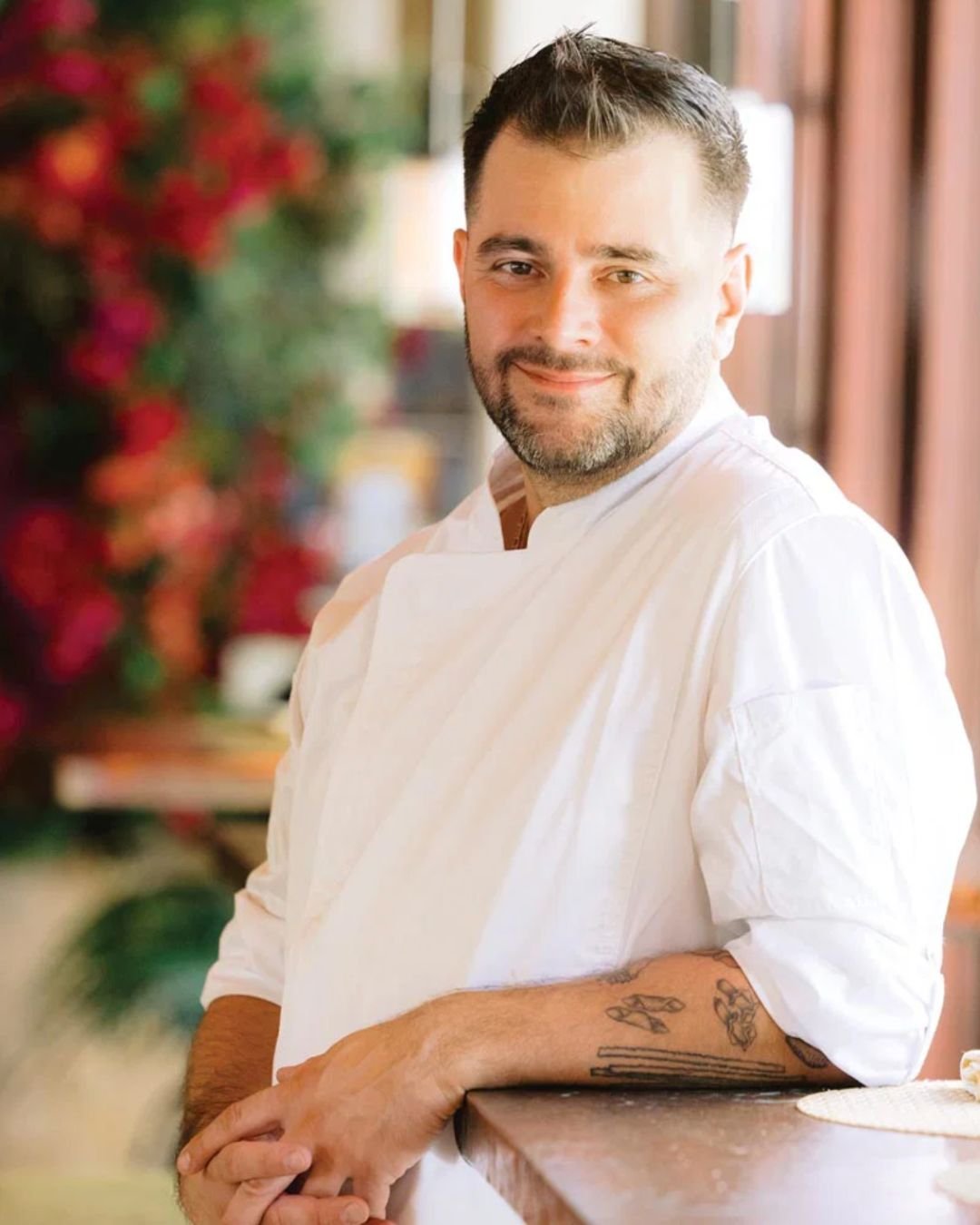
The Kitchen Today
While Daniel Boulud provides the restaurant's culinary identity, Executive Chef Christopher Zabita leads its kitchen today. Zabita joined in 2024, becoming only the fifth executive chef since the Palm Beach restaurant opened.
His background includes Disney's Victoria & Albert's, Restaurant Marc Forgione in New York, and Bar Boulud in Manhattan. Interestingly, Zabita's Italian family heritage and love of handmade pasta contribute another layer to the restaurant's French foundations.
His approach emphasizes seasonal ingredients and local sourcing, including produce from South Florida farms.
Photography by Palm Beach Illustrated
This appreciation for freshness, combined with his Italian culinary influences, helps explain why Café Boulud's menu feels classical without becoming predictable.
Zabita's emphasis on seasonal ingredients and locally sourced produce reminds me of another Palm Beach favorite, Buccan, where Chef Clay Conley's ingredient-driven menu similarly celebrates the farm-to-table philosophy. The two restaurants interpret this approach quite differently: Buccan through vibrant, globally influenced small plates, and Café Boulud through the precision and restraint of classical French technique. Paired with Zabita's Italian heritage and love of handmade pasta, this philosophy gives Café Boulud's menu a contemporary sensibility without abandoning its French foundations.
The restaurant has also continued evolving under Zabita’s leadership. In 2026, he introduced Neapolitan-style pizzas, cooked in a wood-fired oven in the courtyard, an unexpected but fitting addition from a chef who grew up with family pizza nights.
For a restaurant with more than two decades of history, it is encouraging to see a kitchen that respects its traditions while allowing room for new ideas.
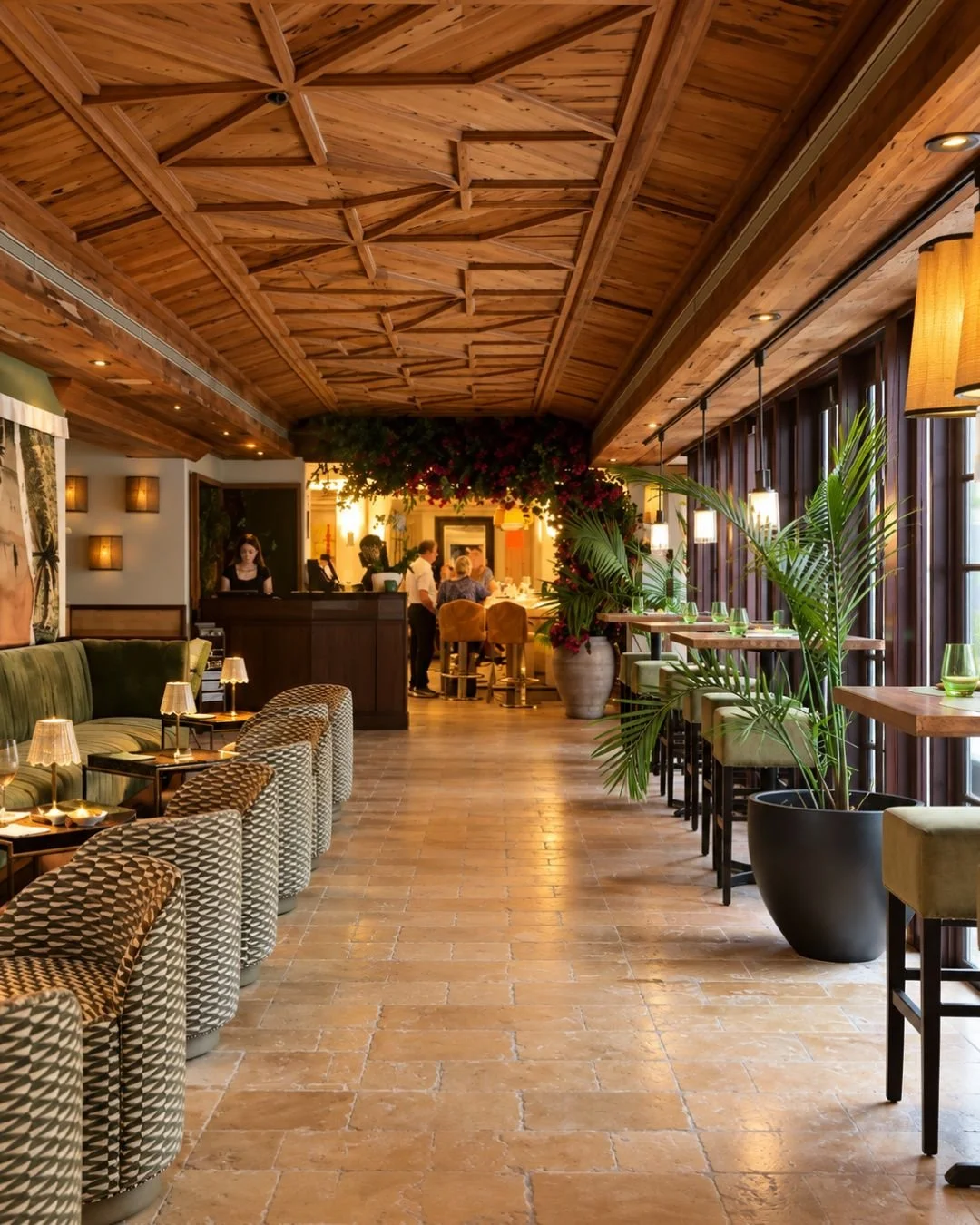
Inside Café Boulud: From Historic Courtyard to an Intimate Dining Sanctuary
Walking into Café Boulud feels like the final chapter of The Brazilian Court's architectural experience. From the hotel's welcoming entrance, guests move through softly lit lounge areas toward the intimate bar and ultimately into the main dining room. Each space has its own personality, yet the transition feels remarkably natural.
The atmosphere struck me immediately.
The dining room felt like an upscale spa translated into a fine-dining experience, a place where you might arrive for a luxurious self-care treatment, except the pampering comes with French cuisine and a carefully curated wine list.
Warm lighting, textured surfaces, generously upholstered seating, and beautifully dressed tables create a calm atmosphere. The room is sophisticated, certainly, but without the stiffness sometimes associated with formal French restaurants.
It is also wonderfully conducive to conversation. Whether you're enjoying a romantic dinner, catching up with friends, or discussing business, the setting encourages guests to settle in rather than feel hurried through their reservations.
Service: Where Luxury Becomes Hospitality
Service was the aspect of Café Boulud I watched most closely. Before visiting, I had come across contradictory guest reviews describing inconsistent experiences. Our dinner felt nothing like that.
General Manager Imre Papp leads the front-of-house team, with David Sauer serving as Head Sommelier. Their credentials are reassuring, but they don't reflect the experience guests have at the table. Hospitality is.
During our evening, the staff was warm, attentive, and present without becoming intrusive. Courses arrived at a comfortable pace. The wine guidance felt thoughtful, not transactional. They graciously handled our request to customize a dish. Nothing about the evening felt rehearsed or excessively formal.
Instead, it felt effortless, which, in a dining room operating at this level, usually means considerable behind-the-scenes coordination. That is perhaps the most persuasive form of luxury. You notice how good the service is without constantly noticing it.
Is Café Boulud Palm Beach Worth It?
I arrived curious because a strong reputation should never replace strong execution. Restaurants with decades of history can sometimes rely too heavily on the prestige they have already earned.
That is not what we experienced.
On our evening, Café Boulud delivered exactly what I hoped a restaurant of this caliber would. The service was polished but personable. The sommelier offered guidance, not a sales pitch. The kitchen transformed familiar ingredients into compositions that demonstrated real technical skill without unnecessary theatricality. The setting gave the evening a sense of place that would be difficult to recreate anywhere but The Brazilian Court.
No elaborate presentations were unsupported by flavor. No attempt to manufacture spectacle simply because luxury dining is expected to impress. Instead, the food was thoughtful, the room encouraged us to linger, and the entire experience felt remarkably comfortable despite its sophistication. That, to me, is what accomplished luxury dining should feel like.
After this dinner, Café Boulud made a convincing case for becoming one of my go-to restaurants in Palm Beach. Given the caliber of dining on this island, I don't reach that conclusion lightly.
Go For
Daniel's Loup en Paupiette: The potato-crusted sea bass is a signature dish with real culinary history and, in my view, the strongest recommendation.
A refined, intimate dining experience: The elegant room is perfect for date nights, meaningful conversations, and sophisticated gatherings.
Thoughtful hospitality and wine service: From our sommelier's Sancerre recommendation to the kitchen's willingness to personalize a dish, the experience felt gracious and accommodating.
The Brazilian Court itself: Arrive early to explore the historic courtyards, admire the architecture, and enjoy the atmosphere before dinner.
Be Prepared To
Choose from a curated menu: This is not a place with endless selections, though the kitchen was accommodating during our visit.
Pay premium dining prices: Appetizers generally sit in the upper luxury-dining range, and signature entrées reflect the restaurant's caliber. The published dinner menu includes a 20% gratuity.
Enjoy a quieter, more conversational atmosphere: This dining room favors intimacy and relaxation over a lively, high-energy social scene.
Reserve in advance: The restaurant is popular with seasonal visitors and locals, particularly during Palm Beach's busiest months.
Café Boulud Palm Beach
The Brazilian Court Hotel
301 Australian Avenue, Palm Beach, FL 33480
Cuisine: French-American
Dining: Breakfast, Lunch, Dinner & Weekend Brunch
This review reflects our independent dining experience. Menu selections, prices, and service arrangements may change.
Read More from Dining with Maria
For another perspective on the relationship between luxury dining, architectural design, and kitchen execution in Palm Beach, read my Tutto Mare Palm Beach Review.